As an Amazon Associate I earn from qualifying purchases.
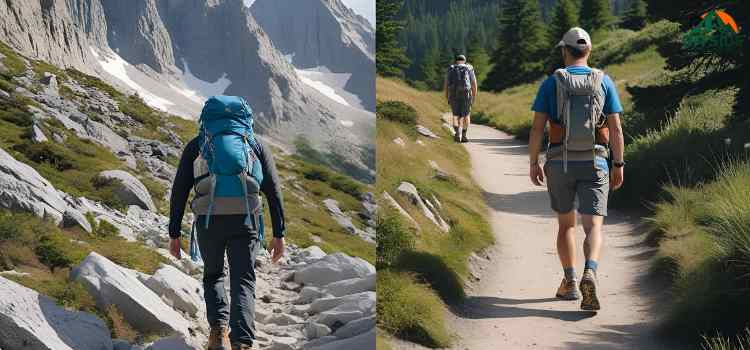
Venturing into the wilderness isn’t merely a physical escape—it’s a pact between your spirit and the soil beneath your soles. And in this sacred covenant, your choice of footgear can either elevate the journey or unravel it. Deciding between hiking boots vs trekking shoes isn’t a sartorial whim; it’s a pact of practicality rooted in stability, endurance, and topographic readiness. Let’s dissect their distinctions with precision so your next excursion becomes a triumph, not a trial.
Understanding the key differences between hiking boots vs trekking shoes is essential for any outdoor enthusiast. With the right footwear, you can optimize your hiking experience.
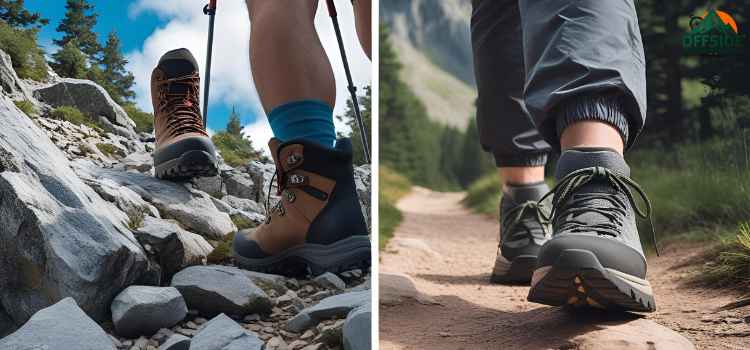
Understanding the pros and cons of hiking boots vs trekking shoes can help you avoid discomfort on the trail.
Don’t let the wrong shoes ruin your hike—make the right choice today!
Table could not be displayed.Defining Hiking Boots
When comparing hiking boots vs trekking shoes, it’s crucial to consider the terrain you’ll be navigating.
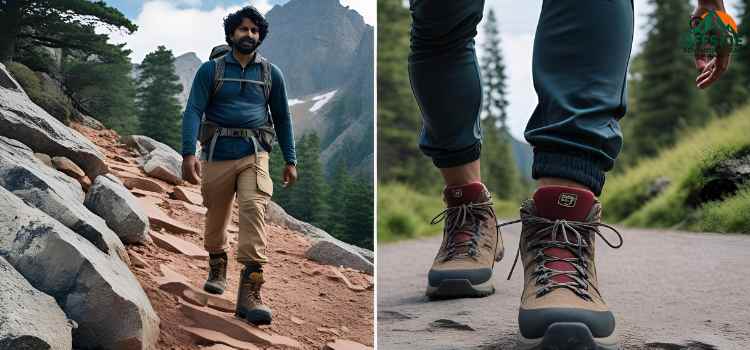
Crafted with grit and endurance in mind, hiking boots are the warhorses of the trail. Engineered for punishing landscapes and chaotic elevation, they cloak your ankles with firm guardianship and cradle your soles with thick, traction-laden platforms. Every stitch whispers “fortification.”
Hiking Boot Advantages
- Ankle Armoring: For jagged ridgelines and disjointed terrain, these provide a fortress-like hold.
- Rugged Lifespan: Wrought from unyielding materials, they’re sculpted to endure seasons of abuse.
- Hydro Shielding: Many models boast hydrophobic membranes that repel dampness like a seasoned scout dodges pitfalls.
- Load-Bearing Support: With reinforced midsoles and robust shanks, they laugh in the face of hefty packs.
For prolonged escapades, summit quests, or backwoods meandering, boots become your unspoken ally.
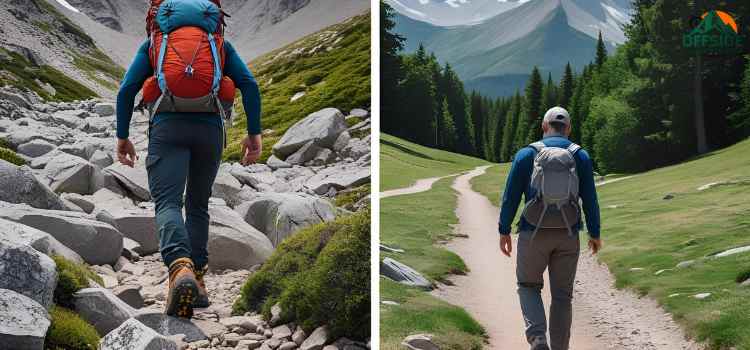
Boots or shoes? The debate between hiking boots vs trekking shoes could define your next trail adventure. Explore your best fit today!
Trekking shoes dance on the edge of agility and comfort. These are not the brute sentinels of the mountain but the nimble messengers of the forest trail. Featherlight, bendable, and welcoming from first wear, they suit the casual hiker or the scenic stroller.
Perks of Trekking Shoes
- Weightless Grace: Their airy build means your legs carry you further before fatigue latches on.
- Fluid Flexibility: They adapt to your foot’s motion like a second skin.
- Airy Construction: Say goodbye to swamp-foot—these keep your steps cool and crisp.
- No Grueling Break-In: Strap in and stride—comfort isn’t delayed, it’s instant.
For park paths, sunlit meadows, or low-altitude ambles, trekking shoes strike a brilliant balance of ease and efficiency.
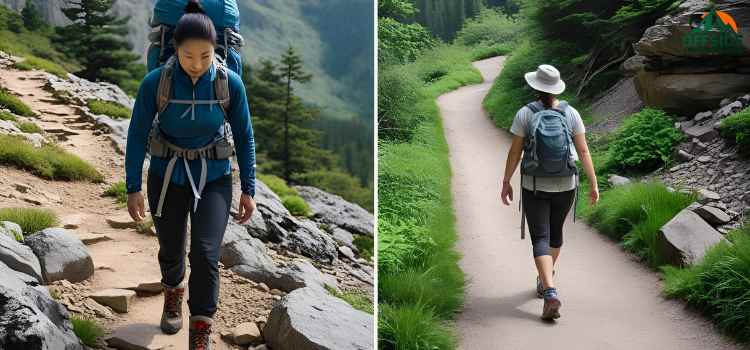
Boots or shoes? Your next trail depends on it. Explore your best fit today!
Contrasting the Core – Hiking Boots vs Trekking Shoes
- Heft & Harmony
Trekking shoes float on your feet; hiking boots anchor you with purpose. One is crafted for comfort; the other, for conquest. - Topographical Tenacity
Boots mock boulders, sludge, and snowdrifts. Shoes, though nimble, are best where the path is forgiving and predictable. - Safeguard & Solidity
Boots extend bastion-like ankle and toe defense. Shoes, ever the minimalists, trade fortification for foot freedom. - Moisture Defense
Boots often wield waterproof fortresses. Shoes dabble in water resistance, but prolonged deluge? They surrender. - Adaptation Period
Trekking shoes are trail-ready straight from the box. Boots demand a courting period—but once won, they’re molded to your form like a glove of leather.
Comparison Table Hiking Boots vs Trekking Shoes
Here’s a professional comparison table highlighting the key differences between Hiking Boots and Trekking Shoes:
| Feature | Hiking Boots | Trekking Shoes |
|---|---|---|
| Weight | Heavier; designed for durability and support | Lightweight; reduces foot fatigue |
| Ankle Support | High ankle coverage for maximum stability on uneven terrain | Minimal to no ankle support; more natural movement |
| Terrain Compatibility | Ideal for rugged, rocky, muddy, or snowy trails | Best for well-maintained, dry, and flat trails |
| Flexibility | Rigid build; less flexible but more protective | Highly flexible; allows easy foot motion |
| Breathability | Less breathable due to thick and waterproof materials | Highly breathable; better for warm conditions |
| Water Resistance | Often fully waterproof with sealed seams or membranes | Usually water-resistant, not ideal for heavy rain |
| Durability | Long-lasting; can withstand harsh conditions | Less durable; not built for extreme terrain |
| Break-In Period | Requires time to mold to your feet | Minimal break-in time; comfortable out of the box |
| Load Support | Excellent; designed to support heavy backpacks | Limited; not suitable for carrying heavy loads |
| Best For | Long-distance treks, mountain trails, winter hikes | Day hikes, travel, casual hiking, and warm weather |
| Comfort Level | Stable but can feel bulky or stiff initially | High comfort and mobility for short to medium hikes |
| Beginner-Friendly? | Yes, for serious trails—but requires patience during break-in | Yes; affordable and easy for those new to hiking |
When Hiking Boots Reign Supreme
Ultimately, understanding hiking boots vs trekking shoes will guide you in making the best decision for your outdoor activities.
- Multi-day expeditions with loaded rucksacks
- Trails laced with debris, frost, or elevation
- Journeys requiring leg stability and tactical grip
- You demand armor, not mere covering
When Trekking Shoes Steal the Spotlight
- Brief hikes on manicured paths or flatland
- Lightweight travel under sunny skies
- Breathability and comfort outrank fortification
- You need agility over bulk
A common question arises: hiking boots vs trekking shoes, which should you choose based on your hiking style?
Starter Gear for New Explorers
Embarking on your first hiking escapade? Trekking shoes are forgiving mentors—cost-effective, airy, and uncomplicated. But if ambition tempts you into rugged frontiers, don’t shy away from boots—they may just be the trustworthy commander you didn’t know you needed.
Ready to hit the trail? Choose the right footwear and hike with confidence!
In conclusion, the hiking boots vs trekking shoes debate is pivotal for ensuring comfort and performance on your hikes.
Final Musing
Ultimately, the choice between hiking boots vs trekking shoes should align with your hiking goals.
There is no universal victor in this footwear feud—only relevance to terrain, trip length, and traveler’s need. Whether you opt for the silent stealth of trekking shoes or the indomitable resolve of hiking boots, let comfort and safety be your north star. Your feet, ever humble servants, will repay your wisdom in miles well traveled.
Read more : Tactical Boots vs. Hiking Boots: Unveiling the Differences
For more insights, check out the differences in hiking boots vs trekking shoes and make an informed choice.
Don’t underestimate the importance of choosing between hiking boots vs trekking shoes for your next adventure!