
As an Amazon Associate I earn from qualifying purchases.
There is an old saying among outdoor enthusiasts: “Your trip is only as good as your feet.” You can have the most expensive backpack and the lightest tent, but if your feet are covered in painful blisters, your outdoor adventure will quickly turn into a nightmare.
Choosing the perfect footwear is the most critical decision a beginner can make. However, walking into an outdoor store or browsing online can be overwhelming. Should you buy heavy-duty boots, lightweight trail runners, or waterproof hiking shoes?
In this comprehensive guide, we will break down exactly how to select the right hiking shoes and understand the core differences between each footwear type. Additionally, we will provide practical, field-tested tips on how to choose the Right Hiking Shoes to help you find that perfect fit. By following these guidelines, you can ensure your feet are protected and comfortable on the trail.
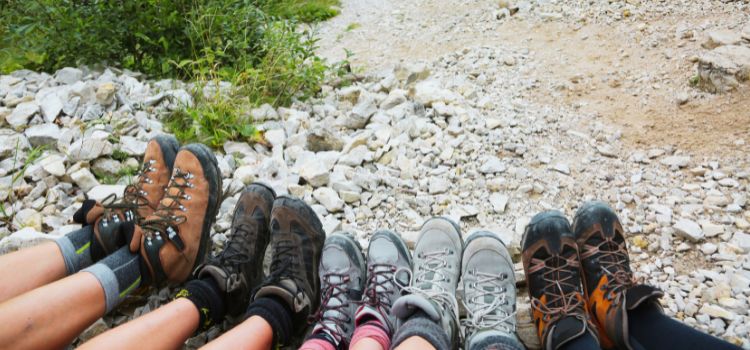
Top 6 Women’s Hiking Shoes: Side-by-Side Comparison
Every hiker’s feet tell a different story. Whether you need heavy-duty ankle support for carrying a 30-pound pack or a plush, wide toe box to keep your toes happy on long day hikes, choosing the right footwear comes down to matching your trail conditions. Here is how our top 6 handpicked women’s hiking shoes stack up side-by-side:
| Salomon X Ultra 4 GTX | Best Overall All-Rounder | 11 mm | ~1 lb 8.1 oz | GORE-TEX® | Advanced Chassis™ for unmatched ankle & midfoot control |
| La Sportiva Spire GTX | Best Technical / Heavy Load | 8 mm | ~1 lb 10.2 oz | GORE-TEX® Surround™ | 360-degree underfoot venting + heavy boot-like stability |
| Merrell Moab 3 | Best Value / Casual Trails | 11.5 mm | ~1 lb 13 oz | Optional (Mesh / GTX) | Plush out-of-the-box comfort with zero break-in period |
| On Cloudrock Low | Best Hybrid / Fast Hikes | 9 mm | ~1 lb 7.4 oz | 100% On Membrane | Sleek trail-to-town look with a rigid, protective platform |
| HOKA Speedgoat 6 | Best Max Cushioning | 5 mm | ~16.4 oz | Non-Waterproof (Breathable) | Thick shock-absorbing foam paired with Vibram® Megagrip |
| Altra Lone Peak 8 | Best Wide Fit / Natural Stride | 0 mm (Zero-Drop) | ~18.3 oz | Non-Waterproof (Quick-Dry) | Original FootShape™ wide toe box lets toes splay naturally |
Trail Real-Talk: If you hike primarily in hot, dry weather or cross frequent rivers, skip heavy waterproof liners. Non-waterproof models like the Speedgoat 6 or Lone Peak 8 breathe significantly better and dump water fast once you’re across the stream!
The Main Types of Hiking Footwear
Before diving into brands or aesthetics, you need to analyze the specific environment you plan to explore. From our experience on the trail, hiking footwear generally falls into three main categories, each serving a unique purpose:
A. Hiking Shoes
- What they are: Low-cut models with flexible midsoles. They are significantly sturdier than regular sneakers but much lighter than traditional hiking boots.
- Best for: Well-maintained trails, casual day hikes, and beginners carrying lighter daypacks.
- Pros: Lightweight, excellent breathability, and zero break-in time out of the box.
B. Trail Running Shoes
- What they are: Ultralight running shoes engineered with aggressive sole treads, deep lugs, and rock plates for off-road traction.
- Best for: Fast-paced hikers, thru-hikers, dry weather conditions, and anyone prioritizing agility.
- Pros: Extremely lightweight, flexible, and they dry out quickly after water crossings.
C. Hiking Boots
- What they are: Mid-to-high-cut boots that fully wrap around your ankles, featuring stiff midsoles for heavy-load support.
- Best for: Rough, rocky terrain, multi-day backpacking trips, or unpredictable winter trail conditions.
- Pros: Maximum ankle stability, exceptional durability, and solid protection against mud and debris.
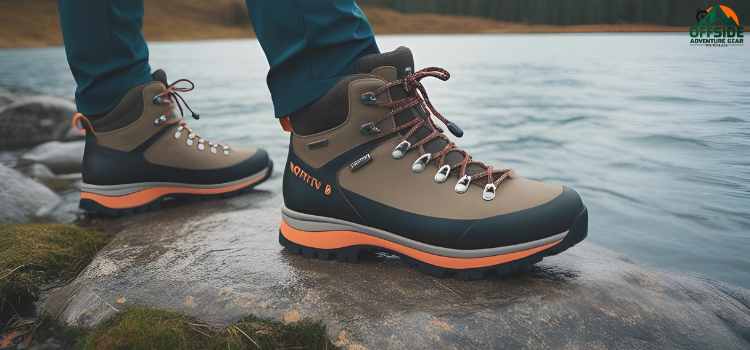
Waterproof vs. Breathable: Which Do You Need?
When shopping for gear, you will constantly see shoes featuring a “GTX” (Gore-Tex) or similar proprietary waterproof label. While waterproof shoes sound superior, they are not ideal for every scenario.
- Choose Waterproof Shoes if: You hike in cold climates, consistent rain, muddy trails, or shallow stream crossings. They seal out external moisture effectively.
- Choose Non-Waterproof (Breathable) Shoes if: You hike in hot, dry, or humid conditions. Waterproof membranes trap sweat inside, causing damp feet and friction—the leading cause of blisters. Breathable mesh lets heat escape rapidly.

Essential Tips to Find the Perfect Fit
An ill-fitting shoe is a genuine trail hazard that can ruin your journey. Follow these field-tested tips when trying on new pairs:
- Size Up for Swelling: Feet naturally expand after hours of continuous walking. We recommend purchasing hiking footwear a half-size larger than your everyday shoes.
- The Finger Test: Unlace the shoe and slide your foot forward until your toes touch the front. You should easily fit your index finger behind your heel.
- Test with Real Trail Socks: Avoid thin cotton socks. Always try footwear with moisture-wicking merino wool socks. (Check out our comprehensive [Backpacking Checklist for Beginners] for sock recommendations).
- Shop Late in the Day: Feet swell throughout the day due to gravity and movement. Trying on shoes in the late afternoon provides the most accurate trail fit.
Don’t Skip the Crucial Break-In Period
Taking a fresh pair of hiking shoes straight out of the box onto a challenging 10-mile trail is a major mistake. Even modern lightweight footwear requires a brief adjustment period.
Wear your new shoes around the house, during daily errands, or on short neighborhood walks. This allows the internal foams to soften and conform to your foot’s unique shape, ensuring a comfortable, blister-free trail experience.
Top Hiking Shoes for Women: Handpicked Reviews
Now that you know how to assess trail footwear, let’s explore top-tier options specifically engineered for female hikers. Women’s feet generally feature a narrower heel-to-forefoot ratio. Models designed around female anatomy prevent internal heel slippage, reducing friction and blister risks across technical mountain terrain.
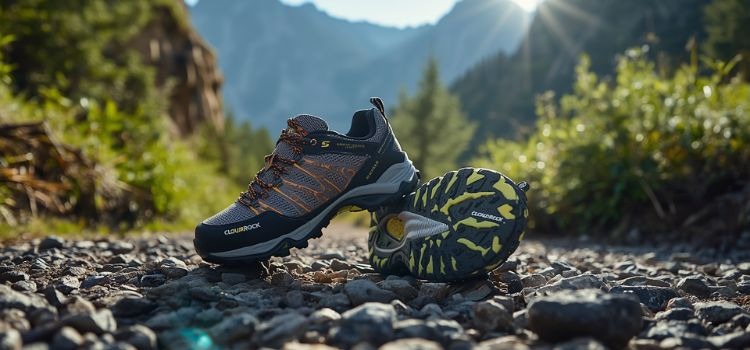
1. Cloudrock Low Waterproof
The Cloudrock Low Shoes is a high-performance hybrid combining the stability of a hiking boot with the agility of a lightweight trail runner. Built with a rigid platform, it provides exceptional stability on uneven mountain paths.
Core Specifications:
- Price: $200
- Weight (Pair): ~1 lb 7.4 oz (Women’s)
- Midsole: Helion™ superfoam with Speedboard®
- Outsole: Re-engineered Missiongrip™ rubber
- Waterproofing: 100% On Waterproof Membrane
Pros:
- ✅ Rugged Protection: Heavy-duty rubber toe cap shields feet from sharp rocks.
- ✅ High Flood Line: 3.87-inch clearance allows confident shallow stream crossings.
- ✅ Zero Break-In: Plush heel collar prevents chafing right out of the box.
- ✅ Lightweight Upper: Reduces leg fatigue during extended day hikes.
- ✅ Versatile Aesthetics: Stylish design transitions smoothly from trail to casual wear.
Cons:
- ❌ Traps Heat: Waterproof liner gets warm on dry summer days.
- ❌ Debris Traps: Sole channels can occasionally catch small gravel.
- ❌ Firm Cushioning: Steadier and stiffer than standard squishy road runners.
Fit Tip: The Cloudrock Low runs slightly narrow. We recommend going up a half size to accommodate sock thickness and natural foot swelling.
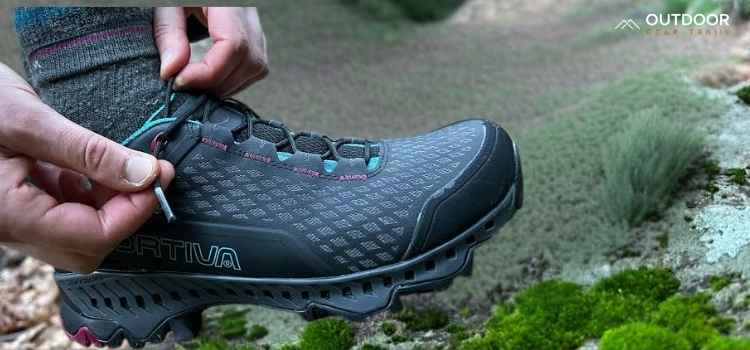
2. La Sportiva Women’s Spire GTX
For hikers who desire the unyielding support of a backpacking boot without the restrictive height of an ankle collar, the Spire GTX excels. Designed in Italy, it easily handles rough terrain, scree fields, and muddy paths.
Core Specifications:
- Price: $219
- Weight (Pair): ~1 lb 10.2 oz (Women’s)
- Waterproofing: GORE-TEX® Surround™ (360-degree ventilation)
- Outsole: Vibram® XS Trek with Impact Brake System™
- Upper Material: High abrasion-resistant Nano-Cells 2.0™ mesh
Pros:
- ✅ Exceptional Support: Stiff EVA midsole carries heavy 30+ lb loads easily.
- ✅ 360° Breathability: GORE-TEX Surround vents heat underfoot and through uppers.
- ✅ Vibram Traction: Opposing lug angles act as effective brakes on steep descents.
- ✅ Durable Perimeter: PU TechLite toe cap protects against harsh trail impacts.
- ✅ Roomier Toe Box: Accommodates natural foot splay on long-distance treks.
Cons:
- ❌ Heavier Weight: Sits heavier on foot than ultra-light trail runners.
- ❌ High Stack Height: Tall sole structure feels slightly elevated during fast scrambling.
- ❌ Premium Price: Higher upfront investment compared to entry-level footwear.
Trail Verdict: The Spire GTX offers outstanding durability and complete waterproof protection. It is a ideal choice for technical mountain terrain and heavy-pack backpacking trips.
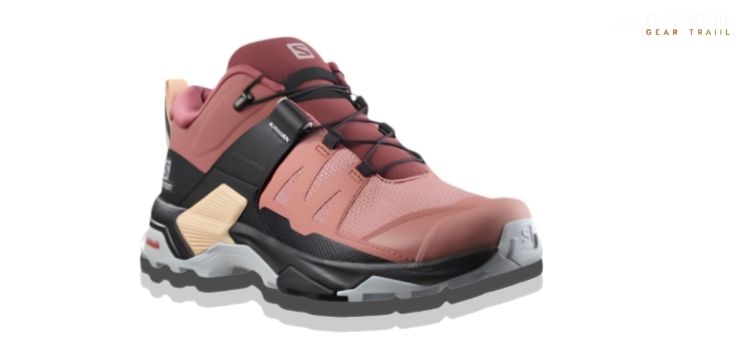
3. Salomon X Ultra 4 GTX
The Salomon X Ultra 4 GTX strikes a balance between trail-running agility and the technical chassis of a traditional hiking boot. It features an upgraded Advanced Chassis™ that targets lateral joints to optimize stability without restricting movement.
Core Specifications
- Price: ~$160
- Weight (Pair): ~1 lb 8.1 oz
- Waterproofing: GORE-TEX® membrane
- Outsole: All Terrain Contagrip®
- Lacing System: Quicklace® single-pull system
| Pros | Cons |
| ✅ Superior Midfoot Stability: Advanced Chassis prevents ankle rolls on uneven terrain. | ❌ Quicklace Durability: The thin lace cord can wear down faster than woven laces. |
| ✅ Aggressive Mud Grip: Chevron lugs dig deep into loose soil and wet descents. | ❌ Narrow Fit Profile: Can feel tight across wider forefeet or high insteps. |
| ✅ Lightweight Agility: Moves as fast as a trail runner with boot-like support. | ❌ Stiffer Underfoot Ride: Less squishy cushioning compared to maximalist shoes. |
| ✅ Reliable Waterproofing: Full GTX bootie keeps feet dry through wet brush and mud. | |
| ✅ Secure Heel Lock: Wings wrap around the heel to prevent forward foot slide. |
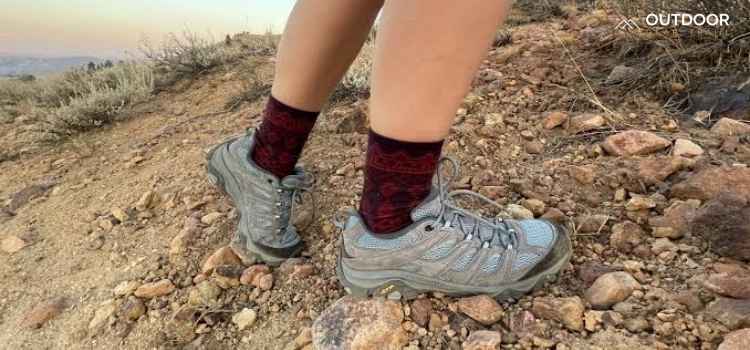
4. Merrell Moab 3 Women’s
Known as the “Mother of All Boots,” the Merrell Moab 3 is legendary for out-of-the-box comfort. It features a supportive molded nylon arch shank and a kinetic fit contoured footbed.
Core Specifications
- Price: ~$120 (Non-waterproof) / ~$140 (Waterproof)
- Weight (Pair): ~1 lb 13 oz
- Waterproofing: Available in both Non-Waterproof Mesh and Waterproof versions
- Outsole: Vibram® TC5+ rubber
- Upper: Pigskin leather and breathable mesh
| Pros | Cons |
| ✅ Out-of-the-Box Comfort: Zero break-in period required thanks to plush padding. | ❌ Bulky Aesthetics: Wider, traditional design feels heavier on foot. |
| ✅ Excellent Arch Support: Molded nylon shank reduces foot fatigue on long walks. | ❌ Slower Drying Time: Suede and leather uppers retain moisture when soaked. |
| ✅ Budget-Friendly Value: Offers high durability at an accessible price point. | ❌ Less Technical Grip: Lugs perform better on dirt than on wet, slick rock. |
| ✅ Wide Size Availability: Offered in standard and wide width options. | |
| ✅ Durable Leather Upper: Pigskin suede handles trail scraping and abrasions well. |
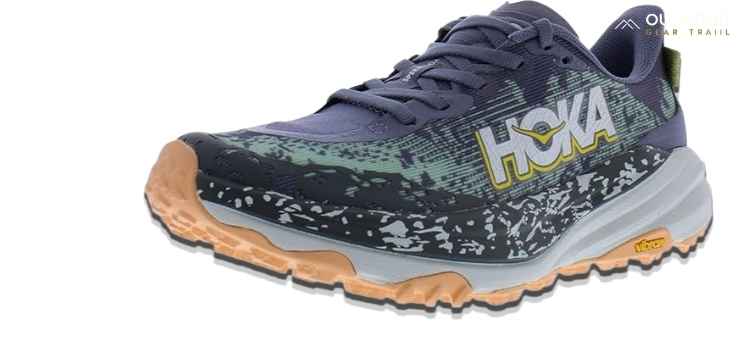
5. HOKA Speedgoat 6
The HOKA Speedgoat 6 is built for maximal underfoot protection on long trail miles. Designed with a thick stack height, an updated responsive midsole foam, and aggressive Vibram® Megagrip traction, it minimizes foot fatigue across technical and loose ground.
Core Specifications
Outsole: Vibram® Megagrip with 5 mm Traction Lugs
Price: ~$155
Weight (Pair): ~16.4 oz (~8.2 oz per shoe)
Heel-to-Toe Drop: 5 mm
Waterproofing: Non-Waterproof (Breathable woven mesh; Gore-Tex version sold separately)
| Pros | Cons |
| ✅ Maximal Shock Absorption: Thick stack cushioning protects joints from impact on rocky terrain. | ❌ Narrow Midfoot Fit: The snug, locked-in design can feel tight for wide feet. |
| ✅ Exceptional Wet/Dry Traction: Vibram Megagrip lugs hold fast on slick surfaces. | ❌ Reduced Ground Feel: Thick midsole stack absorbs bumps but limits direct trail feedback. |
| ✅ Lightweight Construction: Saves weight while offering full-coverage underfoot protection. | ❌ Thin Gusseted Tongue: Minimal padding on top of the tongue requires careful lacing. |
| ✅ Durable Woven Upper: Resists tearing from rocks and trail debris better than soft mesh. | |
| ✅ Propulsive Meta-Rocker: Curved sole geometry encourages a smooth, energy-efficient stride. |
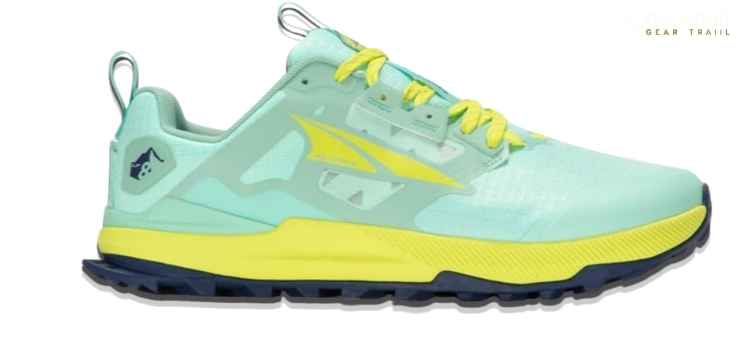
6. Altra Lone Peak 8
The Altra Lone Peak 8 is a favorite among thru-hikers and trail runners who prioritize natural foot mechanics. Built with Altra’s signature Original FootShape™ fit and a zero-drop platform, it lets your toes splay naturally while keeping your heel and forefoot level with the ground.
Core Specifications
- Price: ~$140
- Weight (Pair): ~18.3 oz (Women’s) / ~21.4 oz (Men’s)
- Heel-to-Toe Drop: 0 mm (Zero-Drop)
- Stack Height: 25 mm
- Upper: Refined Ripstop Mesh
- Outsole: MaxTrac™ Rubber with TrailClaw™ Lugs
| Pros | Cons |
| ✅ Natural Toe Splay: Ultra-wide toe box prevents squished toes and accommodates natural foot swelling on long hikes. | ❌ Sloppy on Side-Slopes: The extra volume allows the foot to shift laterally on steep off-camber traverses. |
| ✅ Zero-Drop Alignment: 0 mm heel-to-toe drop promotes low-impact posture and natural stride mechanics. | ❌ Transition Required: Moving from high-drop shoes to zero-drop can strain calves and Achilles tendons initially. |
| ✅ Upgraded Ripstop Durability: Refined mesh upper resists trail abrasion and snagging better than prior models. | ❌ Moderate Wet-Rock Grip: MaxTrac compound is sticky on dry dirt, but offers less traction than Vibram Megagrip on wet rock. |
| ✅ Quick-Drying Drainage: Drains water rapidly after stream crossings so uppers don’t log heavy water weight. | |
| ✅ Built-In GaiterTrap™: Integrated attachment points allow seamless integration of trail gaiters to keep debris out. |
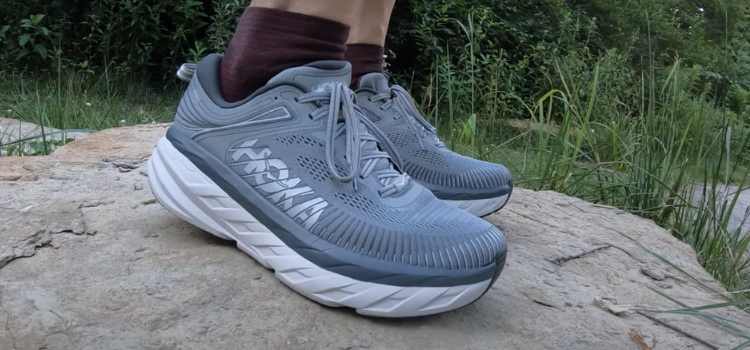
HOKA’s maximalist cushioning versus Altra’s natural foot-shape & zero-drop platform.
| Feature / Attribute | HOKA Speedgoat 6 | Altra Lone Peak 8 |
| Primary Focus | Max Cushioning & Speed | Natural Foot Motion & Comfort |
| Price | ~$155 | ~$140 |
| Weight (Per Pair) | ~16.4 oz (~8.2 oz per shoe) | ~18.3 oz (~9.1 oz per shoe) |
| Heel-to-Toe Drop | 5 mm (Elevated Heel) | 0 mm (Balanced/Zero-Drop) |
| Stack Height | 38 mm (Heel) / 33 mm (Forefoot) | 25 mm (Even throughout) |
| Toe Box Fit | Snug & Narrow (Locked-in feel) | Original FootShape™ (Ultra-Wide) |
| Outsole Compound | Vibram® Megagrip (5 mm Lugs) | MaxTrac™ Rubber (TrailClaw™ Lugs) |
| Underfoot Cushioning | High / Plush & Shock-Absorbing | Moderate / Ground-connected |
| Upper Material | Woven Textile Mesh | Refined Ripstop Mesh |
| Gaiter Attachment | No integrated trap | GaiterTrap™ included |
Which shoe is better for your specific trail environment?
| Your Priority / Trail Condition | Best Choice |
| Maximal grip on wet rock & mud | HOKA Speedgoat 6 |
| Wide feet / Preventing blistered toes | Altra Lone Peak 8 |
| Heavy knee or joint impact protection | HOKA Speedgoat 6 |
| Natural foot feel & quick-drying mesh | Altra Lone Peak 8 |
Ready to Hit the Trail?
Investing time into finding the right footwear ensures your focus stays on enjoying the wilderness rather than dealing with foot fatigue. Prioritize fit, terrain requirements, and comfort above everything else when selecting your next pair.
What’s Next? Now that your footwear is sorted, prepare for your next wilderness stay! Check out our guide on [Camping for Beginners] to set up camp with confidence.