How to Carry a Heavy Camping Chair on a Hike Comfortably
As an Amazon Associate I earn from qualifying purchases.
I once hauled a steel-frame camp chair up a switchback trail, strapped to my pack with a bungee cord. By the second mile, it had swung into my elbow about two hundred times, and I was seriously considering leaving it behind a rock.
The chair wasn’t the real problem. My carry method was.
If you want to carry a heavy camping chair without wrecking your shoulders or your mood, you need a plan before you leave the car. Here’s what works, based on the mistakes I’ve made so you don’t have to.
Quick takeaway
Keep the chair close to your spine, balance the weight on both sides, and secure it so it can’t swing. That fixes most of the pain.
Why Heavy Camping Chairs Feel So Awkward on the Trail
A heavy-duty chair is built for comfort and high weight limits, not for walking. That means a bulky frame, an uneven shape, and often a weight of 8 to 15 pounds or more.
Three things make it miserable on a hike:
- Swing and sway. A loose chair shifts with every step and throws off your balance.
- Uneven load. Hanging it off one side pulls your whole body sideways.
- Pressure points. Thin carry straps dig into one shoulder and cut off the feeling in your hand.
Once you know what’s going wrong, the fixes are simple.

Check the Weight Before You Commit
Put the chair on a scale. Seriously, do it.
Add it to the rest of your gear and ask yourself if the total is reasonable for the distance. A chair that feels fine in the driveway feels very different after four miles uphill.
If your total pack weight is already high, a heavy chair may not be worth bringing on longer routes. For a short hike to a lake or viewpoint, it’s usually fine. For anything over a few miles with real elevation, think twice. If you’re still building your kit, our guide to backpacking gear for beginners shows where the weight usually creeps in.
Pack the Chair Inside Your Backpack (If It Fits)
This is the most comfortable option when it works.
A chair inside your pack sits close to your back and moves with you. Nothing dangles, nothing snags on branches, and nothing bangs your legs.
How to do it:
- Fold the chair as flat and tight as possible.
- Slide it against the back panel of your pack, vertically, so the weight stays near your spine.
- Pack soft items (clothes, a sleeping bag) around it to stop it from poking you.
- Keep heavier gear low and centered so the pack doesn’t pull backward.
Most heavy-duty chairs are too big for a standard daypack. A larger pack in the 40 to 55 liter range handles them better.
Strap It to the Outside the Right Way
When the chair won’t fit inside, external carrying works fine if you do it properly.
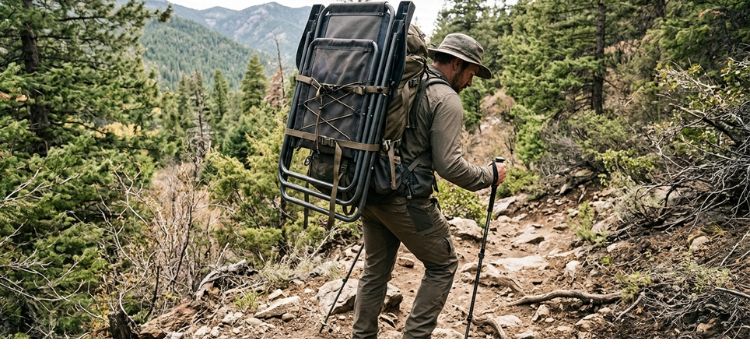
Vertical on the back is the best spot. Run the chair down the center of the pack, using the compression straps or side straps. Keeping it centered stops the side-to-side swing.
Tips that make a difference:
- Cinch it tight at two points, one near the top and one near the bottom.
- Tuck loose straps and the carry bag cord so they don’t flap.
- Keep the chair’s legs or frame pointing down, not sticking out sideways.
- Don’t block the pack’s hip belt or your arm movement.
Skip the bungee cord trick I used. Cord stretches, and a stretchy attachment is a swinging attachment.
Use a Better Carry Strap
Most chairs ship with a thin strap that’s fine for walking from the car to a campsite and terrible for a hike. Swap it for something wider, or add padding:
- Wide padded sling. Spreads the load across your shoulder instead of one narrow line.
- Cross-body carry. Wearing the chair diagonally keeps it off one shoulder and frees your arms.
- Backpack-style chair bag. Some heavy-duty chairs come with, or can be fitted with, shoulder straps on both sides. This is the most comfortable of the strap options.
Switch shoulders every 15 to 20 minutes if you’re using a single sling. It sounds small, but it stops the burning feeling that builds up.
Numb hands and sore legs are also a sign your chair is the wrong fit once you sit down. If that sounds familiar, read why camping chairs cut off leg circulation and how to fix it.
Balance the Rest of Your Load
A well-strapped chair still changes how your pack sits. Adjust for it.
- Move heavier items closer to the middle of your back.
- Tighten the hip belt so your hips carry most of the weight, not your shoulders.
- Re-check the sternum strap to keep the pack from shifting.
If you feel pulled backward, the chair is probably too far from your body. Pull it in tighter.
Choose a Lightweight Alternative for Longer Hikes
Sometimes the best solution is not finding a better way to carry your existing chair. It’s choosing a lighter chair.
Traditional oversized camping chairs are designed primarily for comfort and convenience. They are not always suitable for backpacking.
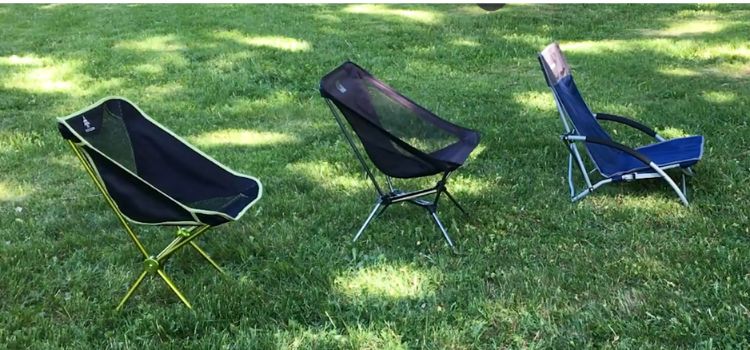
Consider these alternatives:
| Chair type | Best use | Main advantage |
|---|---|---|
| Oversized folding chair | Car camping and picnics | Extra seating space |
| Compact folding chair | Short hiking trips | Easier transportation |
| Lightweight backpacking chair | Backpacking | Reduced carrying weight |
| Minimalist camping stool | Short breaks | Compact design |
| Inflatable camping seat | Lightweight travel | Packs down small |
Before choosing a replacement, compare the packed dimensions, weight, setup time, stability, and maximum supported load.
A lightweight chair is not automatically the best choice if it does not provide the comfort or support you need.
Test Your Setup Before Leaving Home
Never wait until you reach the trail to discover that your camping chair is uncomfortable to carry.
Do a simple equipment check before your trip.
Pack your backpack with everything you plan to take, attach the chair, and walk around your neighborhood.
Pay attention to:
- Shoulder pressure.
- Hip belt comfort.
- Backpack stability.
- Chair movement.
- Loose straps.
- Any sharp edges touching your backpack.
Try walking up and down a few stairs if you can do so safely.
If the chair makes your backpack uncomfortable or unstable, change the attachment position or consider a lighter option.
Common Mistakes to Avoid
Carrying it by the handle the whole way. Your hand goes numb and your grip fails right when the trail gets rough.
Hanging it off one side. It looks easy, but it twists your posture and tires your back faster.
Leaving the straps loose. Even a little slack becomes a big swing over a few miles.
Packing the chair last. If you stuff it in after everything else, it ends up in an awkward spot. Plan your pack around it first.
Ignoring the trail. Narrow paths with branches and rocks punish wide, dangling gear. If the trail is tight, keep the chair tucked inside or flat against your back.
Gear Types That Make Carrying Easier
You don’t need to buy anything new, but if your chair keeps causing trouble, a few options help:
- Compact heavy-duty chairs that fold small and still support higher weight limits.
- Chairs with padded shoulder straps built for walking, not just car camping.
- A larger hiking backpack with external compression straps.
- A padded carry sling you can attach to the chair you already own.
Look for a chair that balances weight capacity and packed size. A bigger weight rating usually means a heavier frame, so pick what you actually need. If you do need the extra capacity, an oversized camping chair with a 500 lb capacity is worth a look, as long as you plan the carry before you go.
When a Heavy Chair Is Not Worth It
Be honest about the trip. For an overnight backpacking route with big climbs, a heavy chair can ruin the experience. A lighter seat, or a simple sit pad, may be the smarter call.
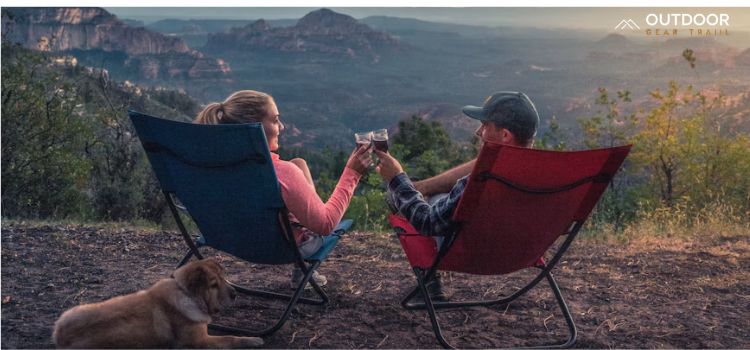
For a short day hike to a scenic spot where you plan to sit for an hour, the chair is worth it. Match the gear to the day.
Quick Checklist Before You Hit the Trail
- Chair folded tight and secure
- Carried close to your back, centered
- Padded strap or pack-mounted
- Hip belt snug
- No loose cords or straps
- Total weight checked
Final Verdict
Carrying a heavy camping chair on a hike doesn’t have to hurt. Keep it close, keep it centered, and keep it tight. Do that, and the chair goes back to being what it’s supposed to be: a comfortable seat at the end of a good walk.
Need a chair that takes the weight?
If your current chair can’t handle the load, check out our oversized 500 lb capacity camping chair.
See the Oversized ChairFAQs
What is the best way to carry a heavy camping chair on a hike?
Pack it vertically against your back, either inside a larger backpack or strapped to the outside center with compression straps. This keeps the weight close to your spine and stops it from swinging.
Can I strap a camping chair to the outside of my backpack?
Yes. Use at least two secure attachment points and keep the chair centered. Avoid stretchy cords, which let it bounce.
How do I stop a camping chair from hurting my shoulder?
Use a wide padded strap, wear it cross-body, or switch shoulders regularly. A backpack-style carry system spreads the weight more evenly than a single thin strap.
How heavy is too heavy for a hiking camp chair?
It depends on your distance and total pack weight. As a rough guide, a chair over about 10 pounds becomes tiring on longer or hilly routes, so save it for short, easy hikes.
Is it better to carry the chair by hand or on my back?
On your back. Your arms stay free for balance, and your hand won’t go numb on longer walks.