
As an Amazon Associate I earn from qualifying purchases.
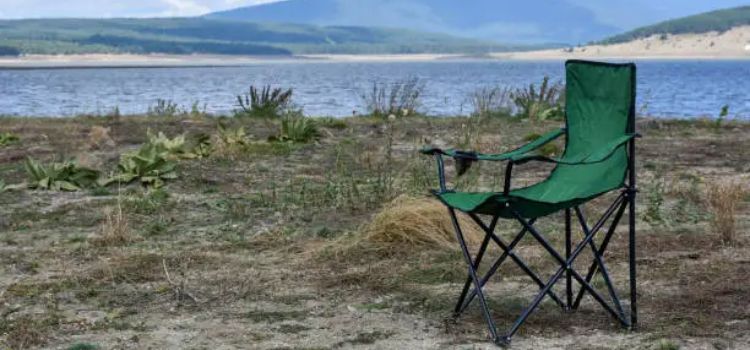
You finally sit down with a hot drink, lean back, and feel it: one leg slowly sinking. Then the chair tips sideways, your coffee is on your knee, and you’re re-leveling a seat that was supposed to be the relaxing part of the trip. To avoid this, you need to learn how to stop camping chair sinking in sand or mud.
It happens on beaches, wet meadows, lakeshore mud and even a lawn after rain. The fix is simple once you know what’s going wrong and how to stop camping chair sinking.
Why Your Chair Sinks and How to Stop Camping Chair Sinking
It comes down to weight spread over area. A hiking-style folding chair puts a full adult’s weight on four small feet, often just a few square centimeters in total. Your shoe sole is dozens of times bigger, which is why you don’t sink when you walk.
Soft ground gives way when that pressure gets too high. Sand shifts, wet soil turns to paste, and grass roots hold nothing once the soil underneath is soaked.
The fix is almost always one of two things: make the feet bigger, or make the ground firmer.
The Core Solution: Step by Step
1. Test the ground before you unfold the chair.
Press your heel into the spot and twist. If your heel sinks more than about a centimeter, the chair will sink more. Move a few meters and test again.
2. Choose a better spot.
- Damp, packed sand near the water holds better than dry loose sand up the beach (but stay above the tide line).
- On grass, pick a spot with short, dense turf, not a tussocky patch or a low pocket where water collects.
- Avoid the dripline under trees after rain. The ground there stays saturated.
3. Prep the surface.
Stomp the area flat with your boots. Kick away loose sand, pine needles and leaf litter. A packed, level patch the size of your chair does half the work.
4. Add surface area under the feet. Match the fix to the ground:
Read more : 5 Best Camping Chairs for Backpacking (Trail-Tested & Reviewed
| Ground | Best fix |
|---|---|
| Dry loose sand | Chair-sized mat or wide clip-on feet |
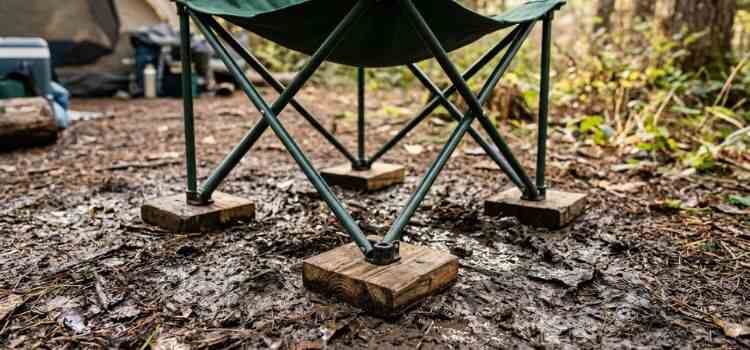
| Wet sand / mud | Wide feet or a rigid base (thin plywood or plastic cutting board squares) |
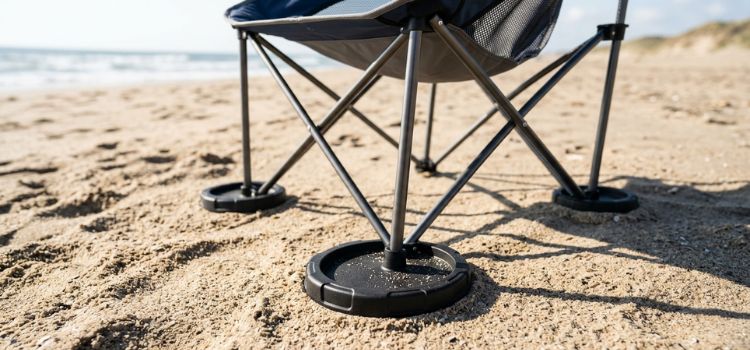
| Soft lawn / wet meadow | Wide feet, foot pads, or light balls on the feet |
| Snow | Flat pads or wide feet, plus compacting the snow first |
If you’re improvising, cut a flexible plastic cutting board or a piece of old closed-cell foam pad into four squares of roughly 10-15 cm (4-6 in), one per foot. Don’t use an inflatable pad. It will pop on a sharp stone. Make a small notch or pocket so each foot sits in the pad and can’t skate off.
5. Sit down slowly.
Lower your weight onto the chair gradually, with your feet planted. A hard drop is what drives one leg deep.
6. Re-check after you stand up.
Every time you get up, look at all four feet. Reset anything that has sunk before you sit again, because a chair that has already tilted sinks faster on the low side.
Common Mistakes and Insider Tips
Mistake: relying on tennis balls on loose sand.
Balls help on firm-ish grass and dirt, but on loose sand they dig in and can roll off the leg when you shift. A flat pad does more.
Mistake: buying clip-on feet without checking leg size.
Many clip-on feet only fit thin round or cross-type legs. Some popular chairs have thicker legs and won’t take them. Measure your leg diameter before you buy.
Mistake: sitting on a slope.
Sinking and tilting feed each other. Even a gentle slope sends your weight to the downhill feet, and they dig in first. Level the ground or use the flattest spot, not the prettiest view.
Tip: pack the fix with the chair.
Foot pads or clip-on feet that live in the chair’s carry bag get used. The ones left in the car don’t.
Tip: don’t use rocks or logs as foot pads in protected areas.
Moving natural material around a campsite isn’t always allowed, and a rock under one leg can bend aluminum legs or create a pivot point. Carry your own pad instead.
Safety note: a chair that sinks unevenly twists under load. Repeated sideways strain can bend legs or stress joints, and a sudden tip can hurt someone, especially near a fire ring or a stove. Keep the chair level, and don’t lean back on two legs on soft ground.
Read more : Best Oversized Mesh Camping Recliner with Cup Holder
Gear That Solves the Problem
You don’t need a new chair, but the right type of add-on makes this easy:
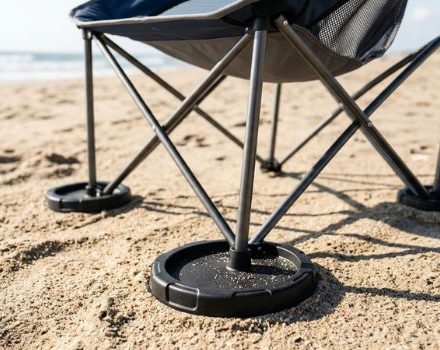
- Clip-on wide chair feet: snap onto the bottom of thin round legs and multiply ground contact. Check leg-diameter compatibility first.
- Chair-sized ground mats / anti-sink pads: a fabric or plastic base with sleeves or pockets for each foot. Good for sand and swampy ground.
- Wide-footed or flat-base chairs: a better choice if you camp on soft ground most of the time.
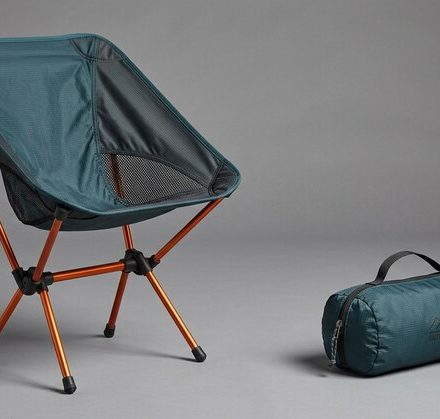
- Low-profile chairs with a wide stance: a lower seat height and broad base are harder to tip than tall, narrow chairs.
- A ground sheet or tarp: helps on wet grass and spreads load if you use the chair inside a large tent.
Quick Answers
What’s the cheapest way to stop a chair sinking in sand?
Squares of closed-cell foam or flexible plastic under each foot, with a notch to hold the leg.
Do tennis balls or wiffle golf balls work?
They help on grass and soft dirt, mostly. On loose sand a flat pad is more reliable.
Will sinking damage my chair?
It can. Uneven sinking puts sideways stress on legs and joints, and repeated tipping can bend aluminum tubing.
Does body weight matter?
Yes. Heavier users need larger pads or wider feet, and should check the chair’s weight rating as well as the add-on’s.
Can I use my chair on a tent groundsheet?
Yes, and pads help there too, since small feet can concentrate load and wear the floor.
Keep Your Seat Level and Enjoy It
Sinking is one of the easiest camp annoyances to fix. Test the ground, pick a firmer spot, give each foot a wider base, and sit down with care. Do that and your chair stays level on wet grass, sand and lakeshore mud, and your drink stays in the cup.
Read more : Padded Mesh Oversized Folding Chair Review: Is It Worth It?