
As an Amazon Associate I earn from qualifying purchases.
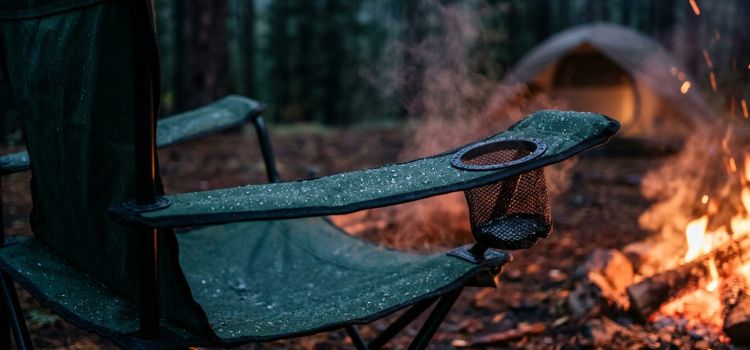
You sit down by the fire, and the seat soaks through your pants. Or it’s pouring, camp is half packed, and your chair is dripping on the tailgate.
You can’t fold it away wet, because that is how camp chairs end up smelling like a damp basement. But you don’t need a sunny day to fix it either. Here’s the method that works in the field.
How to Dry a Wet Camping Chair, Step by Step
1. Get the bulk water off first.
Open the chair fully, then flip it upside down and shake it hard. Water pools in the seat fabric and runs into the leg tubes. Tip each leg down and let it drain.
2. Blot, don’t rub.
Press a microfiber towel or an old camp towel into the seat, back, and armrests. Pressing pulls water out. Rubbing just spreads it. If you have padded armrests or a quilted seat, squeeze each one flat between two towels.
3. Clear the hidden water spots.
Check these before moving on:
- Foot caps and the bottom of each leg
- Hinges and folding joints
- Seam lines where fabric meets the frame
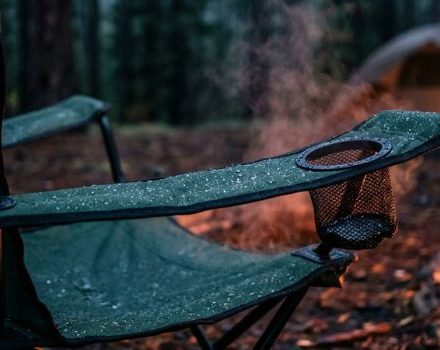
- Cup-holder pockets and side pouches
- The carry bag (turn it inside out)
4. Open it up and get air on both sides.
Airflow matters more than heat. Set the chair so wind can pass under and behind the fabric:
- Prop it open on a picnic table edge, tailgate or rock, not flat on wet ground
- Hang it from a branch, guyline or clothesline by the frame or a handle
- Stand it on its back legs, leaning against a vehicle, so water drains and air flows
5. Find a breeze, not a furnace.
Shaded wind beats hot sun in a closed spot. If the sun is out, great, but rotate the chair so one side doesn’t bake.
6. Check it’s actually dry.
Surface dry is not dry. Press a dry paper towel into the thickest padded areas, under the armrests and into the seat seams. If it picks up any moisture, keep drying. Then sniff the foam and fabric. Any sour smell means moisture is still in there.
Rough drying times in decent airflow (these vary with humidity and temperature):
- Mesh or thin nylon: under an hour
- Standard polyester: one to three hours
- Padded or quilted seats: several hours, sometimes overnight
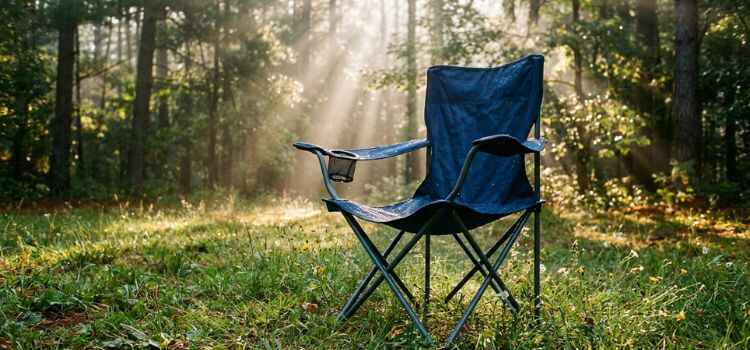
Drying It When You Can’t Wait Around
On the drive home: don’t bag it. Lay the chair open or loosely folded across the back seat or in an open tailgate area, crack the windows, and keep it away from damp sleeping bags and clothes. A damp chair in a closed car humidifies everything near it.
At home: set it open in a garage or on a porch with a fan blowing across it. Fans work better than heaters, and they won’t stress the fabric coating or glue.
In a tent or vestibule overnight: open the chair and stand it near the vestibule door with the flap half open. It won’t dry completely, but it will stop the water from pooling.
Read more : Best Oversized Mesh Camping Recliner with Cup Holder
Expert Tips and Common Mistakes
Mistake: bagging it “just for now.”
This is how mildew starts. A damp chair in a carry bag for a few hours is a mold factory. Pack the bag separately and dry both before reassembling.
Mistake: drying it near a fire.
Nylon and polyester melt, and sparks burn holes. Even close, steady heat can weaken coatings and stitching. Keep it at least a few feet from the flames.
Mistake: wringing or twisting.
Wringing out padded seats can tear internal foam and stress stitching. Squeeze and press instead.
Tip: dry the frame, not just the fabric.
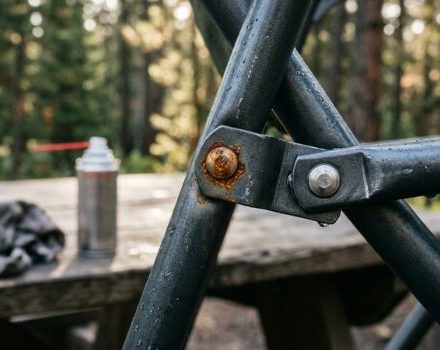
Steel frames rust from the inside, where water sits in the tubes and around rivets. Always drain the legs, wipe the frame, and leave the chair open until the joints are dry.
Tip: rinse salt off first.
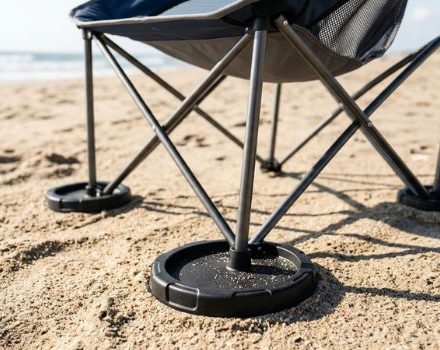
If the chair got wet at the beach or in salt spray, rinse it with fresh water before drying. Drying salt water into the fabric leaves crystals that wear the threads and corrode the metal.
A wet camping chair isn’t ruined. Shake it, blot it, drain the legs, and give it moving air. Check the hidden spots and never bag it damp.
Safety note: a wet chair can also be slippery and unstable. Check that the lock and legs are fully seated before you sit.
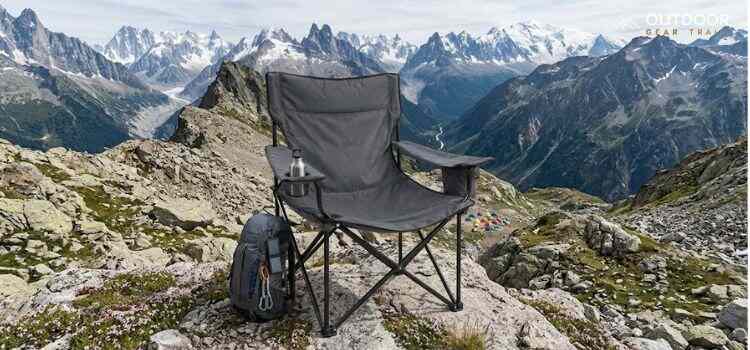
Gear That Makes Drying Easier
You don’t need much, but a few things help:
- A microfiber camp towel for blotting seat and armrests
- Paracord or a compact clothesline for hanging chairs off a tree or tarp
- A small tarp to create a dry staging area at camp
- Quick-dry mesh or thin polyester chairs instead of thick padded ones, if wet weather is common where you camp
- Vented or mesh carry bags, or a bag with drain holes, so moisture doesn’t get trapped
- Chairs with open or drainage-friendly leg ends so water doesn’t pool in the tubes
Quick FAQs
Can I sit on a damp chair?
Yes for a short time, but it’ll feel cold and the dampness stays trapped. Dry it first for comfort and to protect the fabric.
Can I use a hairdryer?
Only on low heat from a distance, and keep it moving. High heat can warp coatings and melt synthetic fibers.
Can I put a camp chair in the dryer?
No. The frame can bend, damage the drum, and the heat can weaken the fabric and stitching.
It still smells musty after drying. What now?
Wipe the fabric with a mix of white vinegar and water, let it sit for 15 to 20 minutes, rinse lightly and dry it in open air. Avoid bleach.
How long can a wet chair sit before mildew starts?
It depends on temperature and humidity, but mildew can start within a day or two, faster in warm, humid conditions or when the chair is bagged.
Keep It Simple
Do that every time and your chair will last for years instead of seasons.