How to Add Neck and Head Support to a Standard Camp Chair
As an Amazon Associate I earn from qualifying purchases.
You sit down by the fire, lean back, and your head tips straight over the top of the chair. Ten minutes later your neck aches and you are sitting bolt upright just to stay comfortable. If that sounds familiar, you are not alone. Most standard folding camp chairs stop at shoulder height, which leaves your head and neck with nothing to rest on.
The good news is that you do not need to buy a new chair. With a travel pillow, a few straps, or a simple sewing project, you can add real head and neck support to the chair you already own. This guide walks through why the problem exists, what to check before you start, and five proven ways to fix it, from a two-minute no-tools hack to a custom-fitted headrest.
Why Standard Camp Chairs Lack Head and Neck Support
Basic folding chairs are designed around three priorities: low weight, small packed size, and low cost. A tall, supportive backrest adds fabric, frame length, and bulk, so manufacturers cut it short. Many chair backs end somewhere between the middle of your back and your shoulder blades.
For short sits, that is fine. But for longer stretches, such as an evening at the campfire, a day at a sports field, or hours by a lake, an unsupported head causes problems:
- Neck strain. Your neck muscles work constantly to hold your head up or keep it from falling backward over the frame.
- Poor posture. People slouch forward or perch on the edge of the seat to compensate.
- Trouble relaxing or dozing. You cannot nap, read, or stargaze comfortably when your head has nowhere to go.
Adding a headrest solves all three. It lets your head rest in a neutral position, so your neck muscles can switch off.

Before You Start: Check Your Chair
A few quick checks will save you time and keep you from picking a fix that does not suit your chair.
1. Measure the backrest height
Sit in the chair and note where the top of the backrest hits you. If it reaches at least your shoulder blades, most add-on methods will work. If it ends at your mid-back or lower, you will need a method that extends above the frame (Methods 3 and 5).
2. Look at the top of the frame
Is the top edge a straight horizontal bar, a curved tube, or a fabric sleeve? Straps and clips grip a straight or gently curved bar best. A fabric-only top edge needs a method that hooks over or ties around the frame.
3. Check the weight rating and stability
Your added support will pull the chair backward slightly when you lean on it. Make sure the chair sits level on firm ground, and do not add anything that raises the center of gravity dramatically. If the chair already feels tippy, fix that first.
4. Know your sitting position
Some people sit upright, others recline. A headrest works best when it sits level with the back of your head or the base of your skull when you are in your natural position, not your best posture. Sit the way you actually sit, then measure.

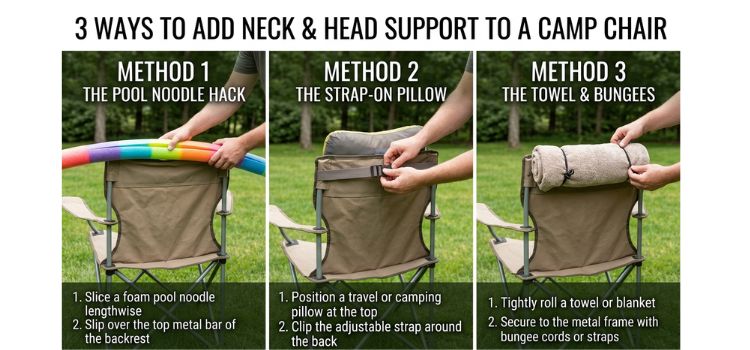
Strap-On or Clip-On Camping Pillow (Fastest Fix)
This is the easiest option and the one most campers try first.
What you need: A small camping or travel pillow with built-in straps, loops, or a hook-and-loop closure, or an inflatable pillow you can attach with a strap.
How to do it:
- Sit in the chair and mark where the back of your head naturally rests.
- Place the pillow against the top of the chair back at that height.
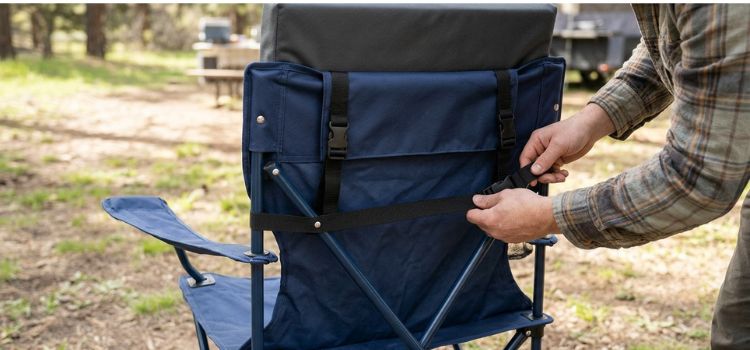
- Wrap the straps around the top bar of the frame and tighten them until the pillow does not slide.
- Lean back to test. Adjust the height up or down until your head sits level, not tilted forward or backward.
Pros: Very fast, removable, packs small, no tools.
Cons: Cheap pillows can slip, and some straps are too short for thick frames.
Tip: If the pillow slips, add a strip of non-slip shelf liner between the pillow and the chair back for extra grip.
DIY No-Sew Headrest With a Travel Pillow
No straps on your pillow? You can build the same thing with items you probably own already.
What you need:
- A U-shaped neck pillow or a small rectangular pillow
- Two adjustable straps, such as luggage straps, ratchet straps, or hook-and-loop cable ties
- Optional: bungee cord or elastic hair ties as backups
How to do it:
- Position the pillow flat against the top of the chair back, where your head rests.
- Loop one strap around the pillow and the upper frame bar, then cinch it snugly.
- Add the second strap lower or at the opposite end of the pillow to stop it from rotating.
- Test your position and tweak until it feels stable.
A U-shaped pillow can also be reversed so the open side faces forward, cradling the sides of your neck. This is helpful if you tend to doze off.
Pros: Cheap, uses what you have, easy to take apart for storage.
Cons: Not as tidy as a purpose-built headrest, and straps need occasional re-tightening.
Sew a Slip-On Headrest Cover
If you are comfortable with a basic sewing machine (or even hand stitching), a slip-on headrest gives a clean, custom fit and works well for chairs with a short back.
What you need:
- Outdoor or canvas fabric, about 1/2 yard
- Polyester fiberfill or a foam insert
- Hook-and-loop tape, webbing, or sturdy cord
- Thread, scissors, and pins
How to do it:
- Measure. Measure the width of the chair top and decide how tall you want the headrest. A common size is about 12 to 14 inches wide and 8 to 10 inches tall, but fit it to your chair.
- Cut two panels of fabric with about 1/2 inch added on every side for seams.
- Cut two or three strips of webbing (or hook-and-loop tape) for attachment points.
- Sew the panels right sides together, leaving one side open. Sew the webbing into the seam so it extends out from the back.
- Turn right side out and stuff firmly with fiberfill or insert foam.
- Close the opening with a hidden stitch.
- Attach by tying or fastening the webbing around the top bar of the chair.
For a chair with a very short back, you can sew an extender panel that hangs from the frame and holds the pillow higher up. Use a thin piece of rigid material, such as a plastic cutting board, inside a fabric pocket to keep it from sagging.
Pros: Custom fit, durable, can match your gear.
Cons: Takes time and some sewing skill.
Read more : Why Do Camping Chairs Cut Off Leg Circulation? (And How to Fix It)
Pool Noodle or Foam Neck Roll
This is a lightweight, waterproof, budget-friendly option that suits beach and lakeside use, where fabric pillows get wet.
What you need:
- One pool noodle (or closed-cell foam)
- A serrated knife or scissors
- Fabric cover or an old towel (optional, for comfort)
- Straps or elastic cord
How to do it:
- Cut the noodle to about the width of your chair back, usually 14 to 18 inches.
- Wrap it in a soft towel or slide it into a fabric sleeve so it does not feel rubbery against your neck.
- Strap it horizontally across the top of the chair back so it sits behind your neck.
Because it is firmer than a pillow, a noodle works best as a neck support rather than a full head cradle. If you prefer more cushion, combine it with a small pillow.
Pros: Waterproof, very cheap, quick to make.
Cons: Firm, less comfortable for long sits unless padded.
Buy a Purpose-Made Headrest Attachment or a Chair With One Built In
If DIY is not your style, there are two store-bought routes.
Universal headrest attachments. These are straps-and-cushion accessories designed to fit a wide range of folding chairs. Check the product’s maximum and minimum frame width and make sure it fits your chair before you buy.
Camp chairs with a built-in headrest. Chairs often labeled as “high back,” “padded,” or “with headrest” come with the support included. They are bulkier and heavier than basic chairs, so they suit car camping, tailgating, and sports sidelines better than backpacking.
What to look for when buying:
- Adjustability. A headrest that moves up and down fits more people.
- Padding. Foam or thick fiberfill is more comfortable than thin fabric.
- Material. Quick-dry, weather-resistant fabric holds up outdoors.
- Weight and pack size. Matter most if you carry your gear far.

Getting the Positioning Right
Even the best headrest will not help if it is in the wrong spot. Use these guidelines:
- Aim for neutral alignment. Your ears should sit roughly over your shoulders, with your chin neither tucked nor tipped up.
- Support the base of the skull. The headrest should meet the lower back of your head and upper neck, not push your head forward.
- Keep it level with the chair back. If your head is pushed forward by the pillow, lower or thin it.
- Add lumbar support too. A small rolled towel at the lower back keeps your spine in a natural curve and makes the head support work better.
- Recheck after settling in. Fabric chairs stretch and shift. Adjust after the first 10 to 15 minutes.
Safety and Stability Tips
- Do not lean the chair back on two legs. Added weight at the top can make tipping more likely.
- Check your straps for wear before each trip, especially if they carry load.
- Avoid anything that blocks your view or hearing in settings where you need to stay aware, such as near a road or water.
- Keep the chair away from the fire. Foam and synthetic fabrics burn or melt easily.
- Pay attention to pain. If neck discomfort continues even with a headrest, stop and talk to a healthcare professional.
Care and Storage
- Let any pillow or foam dry completely before packing it, to avoid mildew.
- Wash fabric covers according to their care label.
- Store straps loosely wound, not knotted.
- Keep the headrest in a dry bag to protect it from dust and moisture between trips.
Which Method Should You Choose?
| If you want… | Try |
| The fastest, cheapest fix | Method 1 or Method 2 |
| A custom, long-lasting build | Method 3 |
| Something waterproof for the beach | Method 4 |
| No DIY at all | Method 5 |

Frequently Asked Questions
Can I add a headrest to any camp chair?
Most folding camp chairs can take an add-on headrest. The main requirements are a sturdy top bar or frame to attach to, and enough stability to handle the extra leverage when you lean back.
What is the best pillow for a camp chair headrest?
A compact pillow with some loft, either a travel neck pillow or a small camping pillow, works well. Choose one that straps on easily and is quick-drying if you camp in damp conditions.
How do I stop a pillow from slipping off my chair?
Use two straps instead of one, add non-slip shelf liner between the pillow and chair, and tighten the straps after you sit down and settle in.
Will a headrest make my chair tip over?
It can shift your center of gravity slightly. Keep the chair on level, firm ground, and avoid leaning far back.
Is a neck pillow enough for long periods of sitting?
It can help a lot, but it is not a replacement for movement. Stand and stretch every so often, especially after an hour or more of sitting.
Final Thoughts
A standard camp chair does not have to mean a sore neck. Whether you strap on a travel pillow in two minutes, sew a custom headrest on a rainy afternoon, or invest in a chair that has support built in, the right setup lets you lean back, relax, and enjoy the view. Start with the simplest method, adjust until your head rests naturally, and upgrade only if you need to.