How to Store Folding Camping Chairs Properly During Winter
As an Amazon Associate I earn from qualifying purchases.
Most camping chairs don’t die on the trail. They die in the garage. Think about how it usually goes. The last trip ends, you toss the chair in the trunk, and later you wedge it behind the paint cans. Come spring, you open it up and find a musty smell, orange freckles on the frame, and a seam that’s started to fray.
Winter storage isn’t complicated, but a few small habits decide whether your chair lasts three seasons or ten. If you want to successfully store camping chairs winter after winter without the hassle of mold and rust, here is the routine I’d follow.
Why Winter Storage Matters More Than You’d Think
Cold itself isn’t the main enemy. Moisture is.
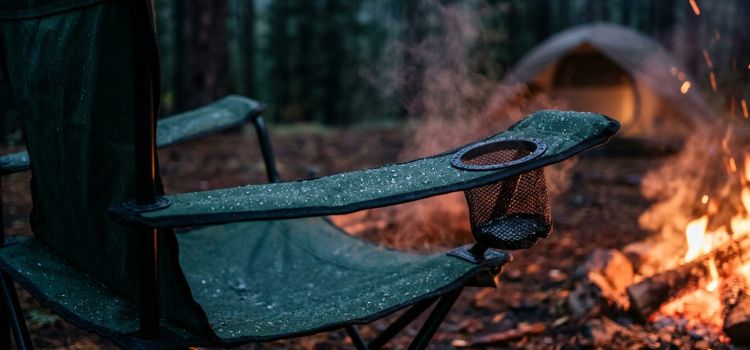
A chair that goes into storage even slightly damp will grow mildew, rust at the joints, and develop that sour smell that never fully leaves. Add temperature swings in a garage or shed, and condensation forms right on the metal and fabric.
Three things usually do the damage:
- Trapped moisture causes mold, mildew, and rust.
- Freeze-thaw cycles stress welds, rivets, and plastic parts.
- Compression (heavy stuff stacked on top) bends frames and creases fabric.
Fix those three and you’ve handled 90% of winter damage.
Clean the Chair Before You Store It
Don’t skip this because the chair “looks fine.” Dirt, sunscreen, food crumbs, and sweat feed mildew over the months it sits.
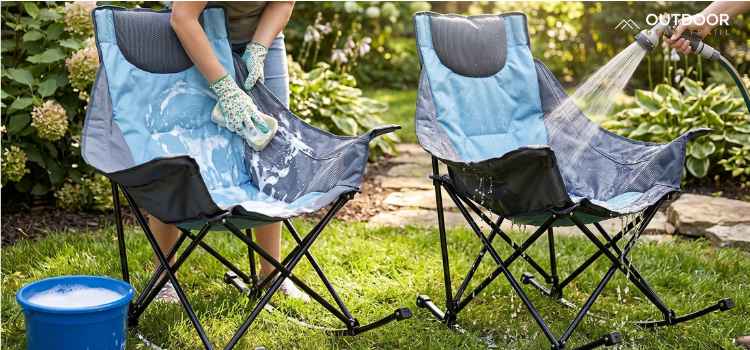
- Shake out loose dirt and sand. Open the chair fully and tap it upside down.
- Wipe the frame with a damp cloth and a drop of mild dish soap.
- Scrub the fabric gently with a soft brush and the same soapy water. Skip harsh cleaners, since they can break down waterproof coatings.
- Rinse with a cloth dampened in clean water so no soap residue stays behind. Residue attracts dirt.
- Pay attention to the cup holder, armrests, and seams. That’s where gunk hides.
If your chair has mesh panels, our guide on cleaning mold and sweat from mesh camping chairs walks through the details.
Dry It Completely (This Is the Step That Matters)
If you only do one thing from this article, do this.
Leave the chair fully open in a dry, airy spot for at least 24 hours. A sunny day outside is great, but avoid leaving it in harsh direct sun for days, because UV weakens fabric over time. Shade with good airflow is the safer choice.
Then check the places water likes to hide:
- Where the legs meet the frame
- Inside the seat sleeves and stitched pockets
- Under the armrest caps
- The fold hinges
Press a dry paper towel into those spots. If it comes away damp, give it more time. “Almost dry” is how mildew starts.
Check for Damage Now, Not in April
While the chair is clean and open, take two minutes to inspect it. It’s far easier to deal with problems in winter than the night before a trip.
- Frayed stitching or small tears: fix with a bit of outdoor-grade fabric repair tape or a few stitches
- Loose rivets or wobbly joints: tighten what you can, and replace the chair if the frame is bending
- Surface rust: rub it off with fine steel wool, then add a thin coat of clear lacquer or a drop of light machine oil on the joints
- Sticky or squeaky hinges: a little silicone-based lubricant helps (avoid heavy grease, which collects grit)
Choose the Right Storage Spot
Where you store the chair matters nearly as much as how you prep it.
Good spots:
- A closet or a shelf inside your home
- Under a bed or in a spare room
- A dry basement (if it doesn’t get damp)
- A well-sealed, climate-stable storage area
Spots to avoid:
- Outdoor sheds with no insulation
- Garages that flood or sweat in winter
- Next to a water heater or furnace (too much heat can warp plastic and weaken fabric)
- Directly on a concrete floor, which wicks moisture upward
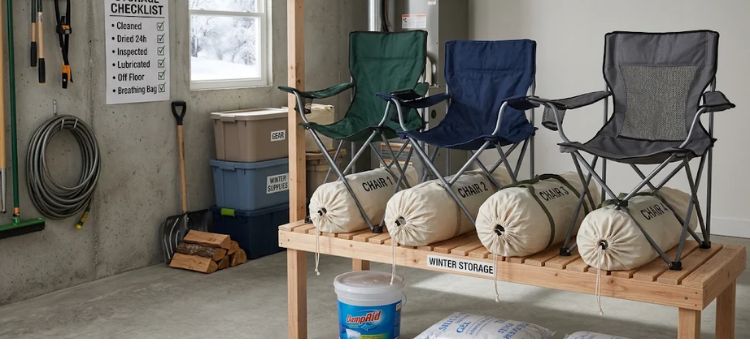
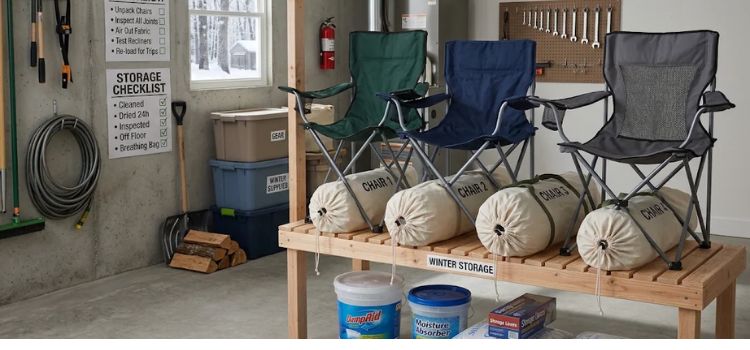
If a garage is your only option, put the chair on a shelf or hook off the ground, and add a moisture absorber nearby.
Fold, Pack, and Protect
Close the chair the way the manufacturer intended and don’t force it. If it’s stiff, something is wrong, so recheck for dirt or damage.
Then choose your cover:
- Original carry bag: fine if the chair is bone dry, though many bags trap moisture, so leave it slightly open
- Breathable cotton or canvas bag: my first choice for long storage
- Plastic bin with a lid: good protection from pests and dust, but add a silica gel pack or two to absorb moisture
- Avoid sealed plastic bags, since they hold condensation like a terrarium
For a group of chairs, hang them on wall hooks by the carry strap, or stand them upright in a corner. If you stack them, put the heaviest chairs at the bottom and never load heavy gear on top of a folded chair. Compression bends frames and leaves permanent fabric creases.
Special Cases
Chairs with cup holders or foam armrests: Remove any detachable accessories and store them dry separately, since foam holds moisture the longest.
Zero-gravity and reclining chairs: These have extra cords and pivot points. Store them folded loosely rather than tightly cinched, so the cords don’t stretch.
Chairs used near salt water or sand: Rinse the frame with fresh water first. Salt speeds up corrosion, and fine sand inside joints acts like sandpaper. Our guide on how to protect a camping chair from rust covers this in more detail.
Quick Winter Storage Checklist
- Shake out dirt and sand
- Wash fabric and frame with mild soap
- Dry fully for 24 hours, open
- Inspect stitching, rivets, and joints
- Treat rust spots and lubricate hinges lightly
- Fold and place in a breathable bag or bin with silica gel
- Store indoors, off the floor, with nothing heavy on top
Common Mistakes to Avoid
- Packing it away wet or “mostly dry.” This is the number one cause of mold.
- Storing in a sealed plastic bag. It traps moisture.
- Leaving it in a hot car or near a heater. Heat damages coatings and plastic.
- Ignoring small rust spots. They spread quietly all winter.
- Piling heavy gear on top. Frames bend and fabric creases.
FAQs
Can I leave camping chairs in a cold garage over winter?
Yes, if the garage stays dry and the chair is fully clean and dry before storage. Elevate it off the floor and use a moisture absorber. If the garage is damp, bring the chairs inside.
Should I store camping chairs folded or open?
Folded, in most cases, since it saves space and protects the fabric from dust. For zero-gravity or heavily padded chairs, don’t cinch them too tight.
How do I stop my camping chair from getting musty?
Dry it completely before storage, use a breathable bag, and add silica gel packs. If it already smells, wash with a mix of mild soap and white vinegar, then dry thoroughly.
Is it okay to use the original carry bag for storage?
Yes, but only if the chair is completely dry. Leave the bag unzipped slightly for airflow, or use a breathable cotton bag instead.
Can freezing temperatures damage camping chairs?
Rarely on their own. The real problems are moisture that freezes and expands in joints, and plastic parts that turn brittle. A dry chair handles cold fine.
Final Thoughts
Storing your chair properly takes about half an hour of work, and most of that is waiting for it to dry. In return, you get a chair that opens smoothly, smells like nothing, and is ready the moment the weather turns. Clean it, dry it fully, give it breathing room, and keep it off the floo