
As an Amazon Associate I earn from qualifying purchases.
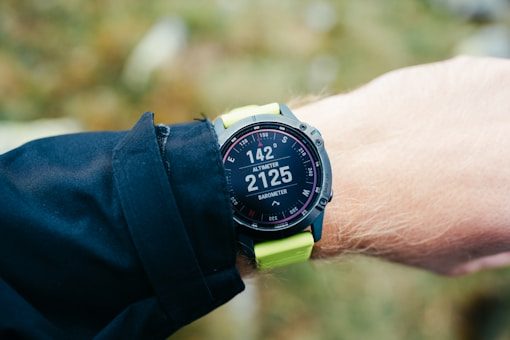
A good personal GPS tracker for hiking can be more than a way to see where you are on a trail. When you hike beyond cellular coverage, the right device can help you navigate, share your location, send messages, check in with family, or call for emergency assistance. This guide reviews the best personal GPS trackers for hiking without cell service.
But there is an important distinction many hikers miss: a GPS navigator, personal GPS tracker, and satellite communicator are not necessarily the same device.
Your phone may know your location without cell service because GPS positioning does not require a cellular signal. However, sending your location to another person, receiving messages, or triggering an SOS generally requires a communication connection such as cellular or satellite service.
For this guide, we focused on devices that make sense for hikers who want dependable location awareness and, where applicable, communication or emergency capabilities beyond normal cell coverage.
Choosing the best personal GPS trackers for hiking without cell service ensures you stay safe and connected, even off the grid.
Our Top Picks
| Product | Best For | Key Strength |
|---|---|---|
| Garmin inReach Mini 2 | Best overall | Compact satellite communication and SOS |
| Garmin GPSMAP 67i | Best navigation | Full-featured GPS plus inReach |
| Garmin inReach Messenger | Best for communication | Simple off-grid messaging and tracking |
| ZOLEO Satellite Communicator | Best messaging alternative | Smartphone-based satellite messaging |
| SPOT Gen4 | Best simple tracker | Straightforward location tracking and SOS |
| Garmin eTrex Series | Best budget navigation | Simple GPS navigation without cellular service |
| Smartphone + offline GPS app | Best low-cost setup | Uses existing phone hardware |
Best Personal GPS Trackers for Hiking Without Cell Service
These devices are designed to withstand harsh outdoor conditions, featuring rugged designs that can handle bumps, drops, and exposure to the elements. Many models offer long battery life, ensuring they can keep you connected for extended periods during your adventures. Additionally, some trackers include features like route planning and real-time tracking, allowing friends or family to monitor your progress. When selecting a device, consider factors such as weight, ease of use, and specific features that align with your hiking needs. With the right personal GPS tracker in hand, you can embark on your hiking journey with confidence and peace of mind.
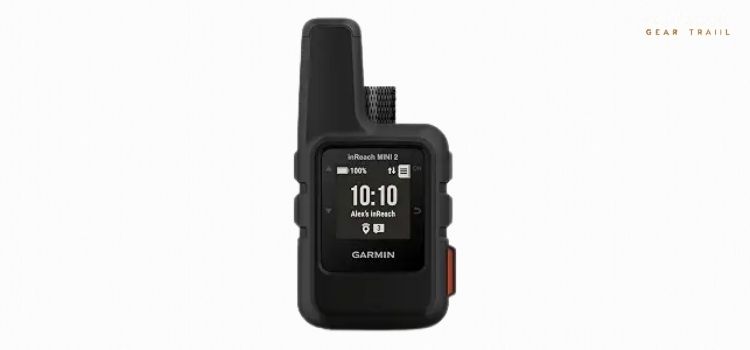
1. Garmin inReach Mini 2 — Best Overall Personal GPS Tracker for Hiking Without Cell Service
The Garmin inReach Mini 2 is one of the most compelling choices for hikers who want a small device that combines GPS positioning with satellite communication.
It weighs about 100 grams and has an IPX7 water rating. Garmin lists up to 14 days of battery life under specific tracking conditions with a clear view of the sky, although real-world battery life depends heavily on tracking frequency, satellite visibility, messaging, and other usage.
The biggest advantage is its inReach satellite communication system. It supports two-way messaging, interactive SOS, location sharing, and tracking when paired with an active service plan.
Why we like it
- Compact and lightweight
- GPS and Galileo positioning
- Interactive SOS capability
- Two-way satellite messaging
- Location sharing
- Long battery life for its size
- IPX7 water resistance
- Works beyond cellular coverage
- Compatible with Garmin Explore
What could be better
- The small screen is not ideal for detailed map navigation
- Satellite communication requires a service plan
- It is more expensive than a basic GPS navigator
- Heavy messaging and frequent tracking can reduce battery life
Best for
The inReach Mini 2 is particularly attractive for solo hikers, backpackers, thru-hikers, and anyone who regularly ventures outside cellular coverage.
If your main priority is personal safety and communication rather than a large navigation screen, this is our top pick.
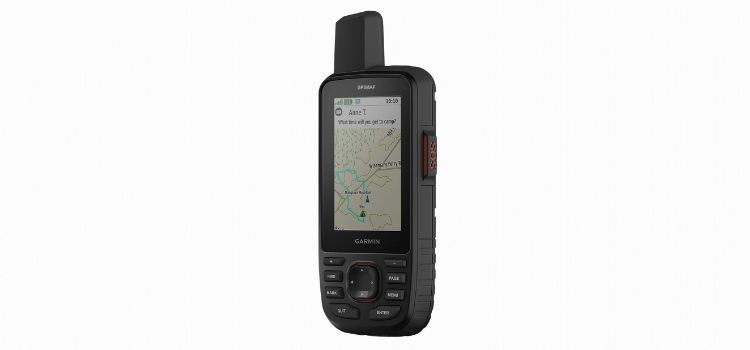
2. Garmin GPSMAP 67i — Best GPS Tracker for Serious Backcountry Hiking
If you want something closer to a traditional handheld hiking GPS while still having satellite communication, the Garmin GPSMAP 67i is a much more comprehensive option.
It combines detailed navigation features with Garmin inReach technology, making it suitable for hikers who want mapping, route planning, tracking, messaging, and SOS capability in one rugged device.
The GPSMAP 67i has a 3-inch color display, preloaded TopoActive maps, a 3-axis compass, barometric altimeter, multi-band positioning, and IPX7 water resistance. Garmin lists up to 180 hours in GPS mode and up to 165 hours with inReach tracking enabled at a 10-minute tracking interval. Expedition mode can extend rated battery life considerably further.
Why we like it
- Excellent navigation capabilities
- Large color display
- Preloaded topographic maps
- inReach satellite communication
- Interactive SOS
- Multi-band GNSS
- Electronic compass
- Barometric altimeter
- Very long battery life
- IPX7 water resistance
- Rugged outdoor construction
What could be better
- Heavier than compact satellite communicators
- More expensive
- More features mean a steeper learning curve
- Probably excessive for casual day hikers
Best for
Choose the GPSMAP 67i if navigation is just as important as emergency communication.
For serious backpacking, mountaineering, remote hiking, and long-distance trail use, it offers a much more complete navigation package than a simple personal tracker.
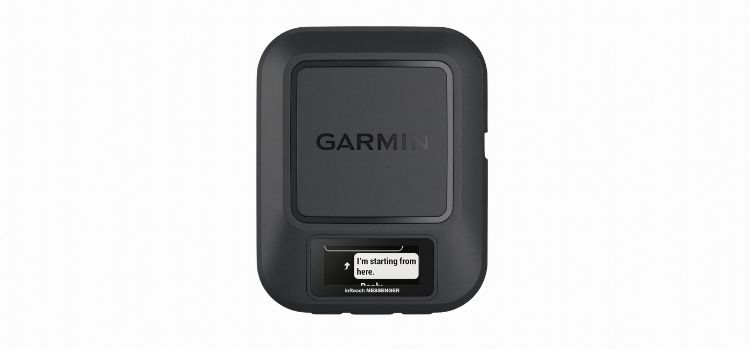
3. Garmin inReach Messenger — Best for Off-Grid Communication
Not every hiker needs a large navigation screen.
If your smartphone already handles maps and you mainly want a reliable way to communicate outside cell coverage, a compact satellite communicator can make more sense.
The Garmin inReach Messenger is designed around that concept. It provides satellite communication, location sharing, tracking, and SOS functionality while allowing your phone to serve as the primary interface for many tasks.
This type of setup can be particularly useful for hikers who already use an offline mapping app but want a separate communication device for emergencies.
Why we like it
- Compact design
- Satellite communication
- SOS capability
- Location sharing
- Useful companion to a smartphone
- Designed for off-grid communication
- Better suited to communication than complex navigation
What could be better
- Not a replacement for a full handheld GPS
- Requires a compatible service plan for satellite features
- Smartphone dependence for some functions
Best for
The inReach Messenger makes sense for hikers who already prefer smartphone navigation but want a dedicated off-grid communication device.
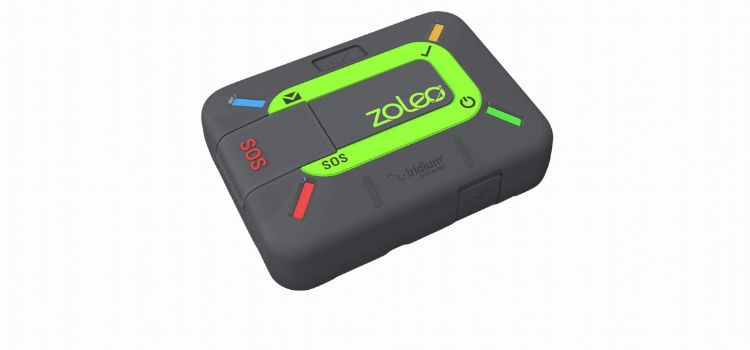
4. ZOLEO Satellite Communicator — Best Smartphone-Friendly GPS Tracker
The ZOLEO Satellite Communicator takes a slightly different approach.
Instead of trying to replace your smartphone, it extends your phone’s communication capabilities beyond cellular coverage using satellite connectivity.
ZOLEO uses the Iridium satellite network for communication outside mobile coverage and can also use cellular or Wi-Fi connectivity when available. Its features include two-way messaging, SOS alerts, check-ins, weather information, and location sharing through its companion app.
The current ZOLEO specification lists a 150-gram weight, IP68 dust and water resistance, MIL-STD 810G shock resistance, and more than 200 hours of battery life under its specified standby conditions.
Why we like it
- Simple smartphone integration
- Two-way satellite messaging
- SOS alerting
- Check-in feature
- Location sharing
- IP68 protection
- Long battery life
- Uses Iridium satellite connectivity
What could be better
- Requires an active subscription for satellite messaging and SOS
- Not a full-featured handheld navigation GPS
- Best experience depends on your smartphone
- Adds another device to charge and carry
Best for
ZOLEO is an excellent option for hikers who think of their phone as their main navigation device but want reliable communication and emergency capabilities when there is no cell service.
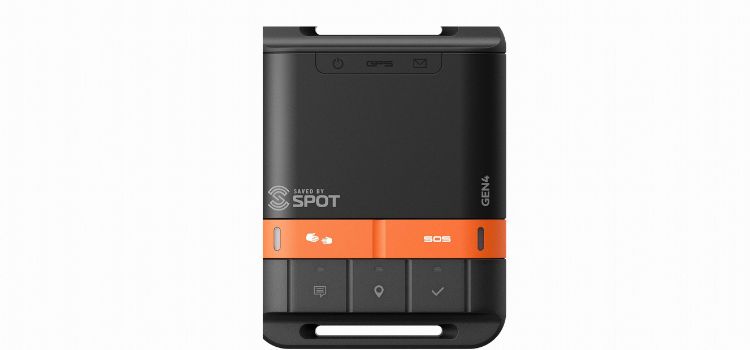
5. SPOT Gen4 — Best Simple Personal Tracker
For hikers who want straightforward tracking and emergency communication without a large navigation device, the SPOT Gen4 is another option worth considering.
Its main appeal is simplicity. Rather than trying to provide the extensive mapping capabilities of a handheld GPS, this type of tracker focuses on location-based communication and safety.
That makes it especially relevant for hikers who want to let family or friends know where they are while traveling through areas with unreliable cellular coverage.
Why we like it
- Simple concept
- Designed for outdoor tracking
- Compact form factor
- Useful for location sharing
- Emergency communication features
- Suitable for hikers who do not need advanced maps
What could be better
- Not designed to replace a dedicated navigation GPS
- Requires a service subscription for satellite services
- Less versatile than a full GPS communicator
Best for
Consider a simple satellite tracker if your priority is letting others follow your journey and having an emergency communication option, rather than detailed route navigation.
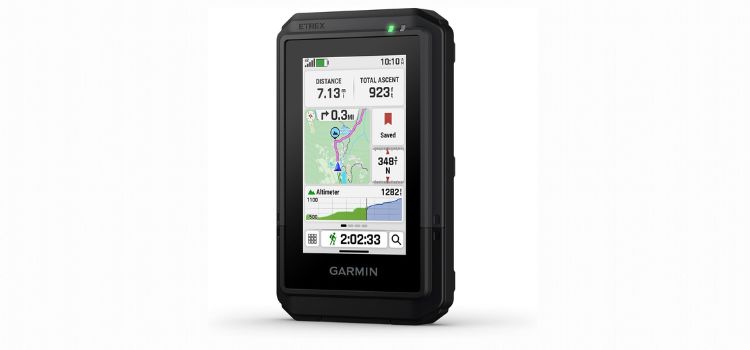
6. Garmin eTrex Series — Best Budget GPS Navigation Option
If you mainly need GPS navigation and do not require satellite messaging, a Garmin eTrex device can be a more affordable approach.
The important thing to understand is that a basic handheld GPS does not automatically provide the same communication capabilities as a satellite communicator.
A handheld GPS can determine your position without cell service. You can use it to navigate routes, mark waypoints, record tracks, and return to previously saved locations.
However, if you need to send an SOS or message someone from an area without cellular coverage, you need a device with satellite communication capabilities.
Why we like it
- Useful for offline navigation
- Does not depend on cellular towers for GPS positioning
- Generally simpler than a satellite communicator
- Good for waypoint and route navigation
- Suitable for hikers who already carry a separate emergency device
What could be better
- No cellular or satellite messaging on basic models
- No automatic SOS capability
- Features vary significantly between eTrex models
- Not the best choice if emergency communication is your primary concern
Best for
A basic handheld GPS is best for hikers who want reliable offline navigation without paying for satellite communication features.
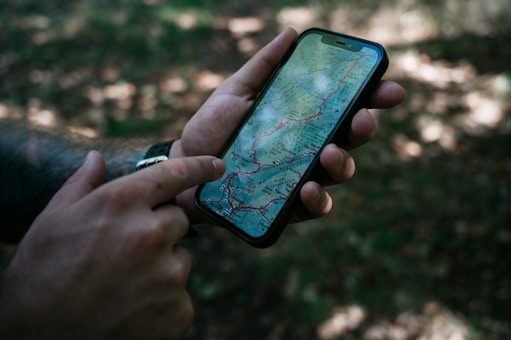
7. Smartphone With Offline GPS Maps — Best Low-Cost Option
Before buying a dedicated GPS tracker, consider what your current smartphone can already do.
A phone can determine its location using satellite positioning even when it has no cellular service. The problem is that navigation and communication are two different things.
You can download maps before your hike and use GPS positioning while offline. But without a cellular or satellite connection, your phone generally cannot send your live location to someone else.
Battery life is another concern.
GPS use, a bright display, downloaded maps, camera use, weather apps, and other background functions can drain a phone much faster than normal.
Why we like it
- You may already own one
- Excellent screen
- Easy-to-use mapping apps
- Offline maps can work without cell service
- No additional hardware for basic navigation
- Useful backup navigation tool
What could be better
- Battery can become a major limitation
- Less rugged than many dedicated GPS devices
- No satellite SOS unless the phone and service support it
- Cellular location sharing does not work without connectivity
- Easy to become overly dependent on technology
Best for
A smartphone is excellent for day hikes and well-prepared routes, particularly when combined with downloaded offline maps and a power bank.
For remote or high-consequence adventures, however, I would not rely on a phone as your only navigation and emergency system.
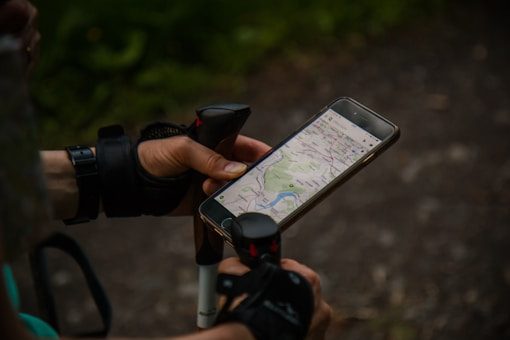
Personal GPS Tracker vs Handheld GPS vs Satellite Communicator
This is probably the most important section of this guide.
The phrase GPS tracker is often used to describe several different types of outdoor devices.
| Device Type | GPS Location | Offline Maps | Location Sharing | SOS | Satellite Messaging |
|---|---|---|---|---|---|
| Smartphone | Yes | Yes | Sometimes | Depends on device/service | Depends on device/service |
| Basic handheld GPS | Yes | Usually | No | No | No |
| Personal GPS tracker | Yes | Limited | Yes | Some models | Some models |
| Satellite communicator | Yes | Limited/varies | Yes | Yes | Yes |
| GPS + satellite communicator | Yes | Yes | Yes | Yes | Yes |
For example, the Garmin GPSMAP 67i combines full GPS navigation with inReach communication, while the inReach Mini 2 puts more emphasis on compact satellite communication.
That difference matters when deciding what to buy.
Do GPS Trackers Work Without Cell Service?
Yes, but there is an important distinction.
GPS positioning itself does not require a cell tower. A GPS device can determine its location by receiving signals from navigation satellites.
However, sending that location to another person does require a communication network.
A basic GPS can tell you where you are without cell service.
A satellite communicator can determine your location and then transmit messages or location information through a satellite network.
A cellular tracker may know its location but be unable to send that information until it reconnects to a cellular network.
That is why satellite communicators are particularly valuable for remote hiking.
What Should You Look for in a Personal GPS Tracker for Hiking?
1. Satellite communication
If you regularly hike beyond cell coverage, satellite communication should be near the top of your checklist.
It can allow you to communicate or trigger an SOS even when your phone shows no service.
2. Emergency SOS
For solo hiking and remote adventures, SOS capability can be one of the most important features.
Remember that SOS systems generally depend on an active service plan and satellite visibility.
3. Battery life
A tracker is not useful if its battery dies halfway through your trip.
Look at realistic battery performance rather than relying solely on the maximum advertised figure.
Tracking frequency, messaging, satellite visibility, temperature, and screen usage can all affect battery life.
4. Water resistance
Rain is part of hiking.
Look for a device with appropriate water and dust protection, particularly if you hike in wet climates or frequently cross streams.
For example, the GPSMAP 67i carries an IPX7 water rating, while ZOLEO lists IP68 protection and MIL-STD 810G shock resistance.
5. Weight
Every piece of electronics adds weight to your backpack.
If you are an ultralight hiker, a 100-gram communicator may be much more attractive than a 230-gram handheld GPS.
The Garmin inReach Mini 2 weighs approximately 100 grams, while the GPSMAP 67i weighs approximately 230 grams.
6. Offline maps
If navigation is important to you, make sure your device supports the maps you actually need.
A satellite communicator may be excellent for SOS and messaging but less convenient for detailed map navigation.
7. Subscription cost
This is an easy expense to overlook.
Some satellite communication devices require an ongoing service plan to send messages, use tracking features, or access SOS services.
Calculate the total ownership cost rather than comparing hardware prices alone.
How We Evaluated These GPS Trackers
For this guide, we focused on the features that matter most when hiking away from reliable cellular coverage.
We considered:
- GPS positioning
- Satellite communication
- Emergency SOS
- Location sharing
- Battery life
- Water resistance
- Device weight
- Offline navigation
- Mapping capability
- Ease of use
- Subscription requirements
- Suitability for solo and remote hiking
We also separated navigation devices from communication devices, because buying the wrong type can leave a hiker with a device that does not perform the job they expected.
Manufacturer specifications can change, so check the current product page and service-plan details before purchasing.
Are Personal GPS Trackers Worth It for Hiking?
For casual hiking close to towns and populated areas, you may not need a dedicated tracker.
A smartphone with offline maps, a power bank, and basic navigation skills may be sufficient.
The situation changes when you hike:
- Alone
- In remote wilderness
- Beyond cell coverage
- On multi-day backpacking trips
- In mountainous terrain
- On unfamiliar trails
- In areas with rapidly changing weather
In those situations, a dedicated GPS communicator can provide an additional layer of safety.
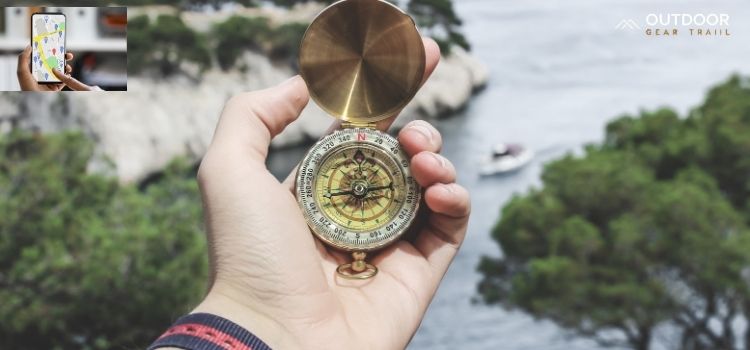
It should not replace preparation, navigation skills, a physical map, or a compass. Technology can fail, batteries can run out, and satellite connections can be obstructed.
GPS Tracker or Satellite Communicator: Which Should You Buy?
If your priority is basic location tracking, a simpler GPS tracker may be enough.
If you want detailed offline navigation, choose a handheld GPS.
If you want SOS and two-way communication outside cell coverage, choose a satellite communicator.
And if you want all three capabilities in one device, a product such as the Garmin GPSMAP 67i is worth considering.
For most hikers who want a compact safety device rather than a large navigation unit, the Garmin inReach Mini 2 is our preferred choice.
Best Personal GPS Tracker for Hiking: Our Verdict
The Garmin inReach Mini 2 is our top overall choice for hikers who want a compact personal GPS device with off-grid communication and emergency capabilities.
Its combination of small size, GPS positioning, two-way satellite messaging, location sharing, and SOS makes it particularly well suited to solo hikers and backpackers traveling beyond cellular coverage.
If detailed navigation is equally important, step up to the Garmin GPSMAP 67i. Its larger display, topographic mapping, compass, altimeter, multi-band positioning, and long battery life make it a better fit for serious backcountry navigation.
For smartphone-focused hikers, ZOLEO is another compelling option because it combines satellite messaging, SOS, check-ins, and location sharing with a phone-based app experience.
Ultimately, the best personal GPS tracker for hiking is not necessarily the device with the most features. It is the one that matches your route, communication needs, navigation requirements, and willingness to maintain a satellite service plan.
Frequently Asked Questions
What is the best personal GPS tracker for hiking?
The Garmin inReach Mini 2 is our top overall choice for hikers who want a compact device with GPS positioning, satellite messaging, location sharing, and SOS capability. Hikers who need advanced mapping should consider the Garmin GPSMAP 67i instead.
Can a GPS tracker work without cell service?
Yes. GPS positioning does not depend on cellular towers. However, sending your location to another person requires a communication connection. Satellite communicators can transmit location and messages through satellite networks when cellular service is unavailable.
Is a GPS tracker better than a phone for hiking?
It depends on the hike. A phone provides a larger screen and excellent mapping, but a dedicated GPS or satellite communicator can provide better battery management, ruggedness, navigation reliability, or off-grid communication.
Do GPS trackers need a subscription?
Not all GPS devices require subscriptions. Basic GPS navigators can generally be used without cellular or satellite service. Satellite communicators typically require an active service plan for satellite messaging, tracking, or SOS features.
What is the best GPS tracker for solo hiking?
For solo hiking beyond cell coverage, a satellite communicator with SOS and location-sharing capabilities is generally more useful than a basic GPS navigator. The Garmin inReach Mini 2 is a strong compact option.
Can I use my phone as a GPS without service?
Yes. Your phone can use satellite positioning and downloaded offline maps without cellular service. However, you generally cannot send your live location or messages through cellular networks when there is no signal.
What is the difference between a GPS tracker and a satellite communicator?
A GPS tracker primarily determines and may transmit your location. A satellite communicator provides two-way communication via satellite, often including SOS, messaging, check-ins, and location sharing.
Is a handheld GPS still useful for hiking?
Absolutely. A handheld GPS can provide reliable offline navigation, waypoint management, route tracking, and mapping without depending on cellular coverage. Models with satellite communication add another level of backcountry safety.
Should I carry a physical map and compass?
Yes. Electronic navigation should be treated as a tool rather than your only safety system. A physical map and compass provide an important backup if your electronic device is damaged, lost, or out of battery.
Final Takeaway
A personal GPS tracker can be one of the most useful pieces of technology in your hiking pack, especially when your route takes you beyond cell service.
For simple navigation, a handheld GPS or smartphone with offline maps may be enough. For remote adventures where communication and emergency assistance matter, a satellite communicator is the better investment.
For most hikers looking for a compact all-around safety device, the Garmin inReach Mini 2 stands out. For advanced navigation and communication in one rugged unit, the Garmin GPSMAP 67i is the stronger choice.
Before heading into the backcountry, charge your device, download your maps, test the navigation and messaging features, understand the subscription requirements, and carry backup navigation equipment.
Technology can make hiking safer—but preparation remains your most important piece of gear.
Read more: How to Read a Trail Map: A Beginner’s Guide to Trail Navigation