As an Amazon Associate I earn from qualifying purchases.
Whether you’re sipping hot coffee after a chilly night in the backcountry or whipping up a full pancake breakfast for six at a state park, the right stove completely changes your outdoor kitchen setup. Few things ruin a trip faster than an underpowered burner struggling against a light breeze, or a heavy dual-burner setup weighing down your backpack on a steep trail. In this Ultimate Camp Stove Guide, we’ll walk through how to choose the right stove for your specific trip style.
Finding the right camp stove comes down to three main factors: weight, fuel efficiency, and cooking capacity. Below, we break down the primary stove types, key selection factors, and top-tier models to help you pick the best setup for your needs.
How We Tested These Stoves: Over the past three seasons, our team fielded 8 different camp stoves across various outdoor conditions—ranging from 20°F chilly alpine mornings to windy, open ridges. We evaluated each stove based on real-world boil times (using 1L of 50°F water), fuel consumption, flame control for simmering, and overall durability in a packed trail bag.
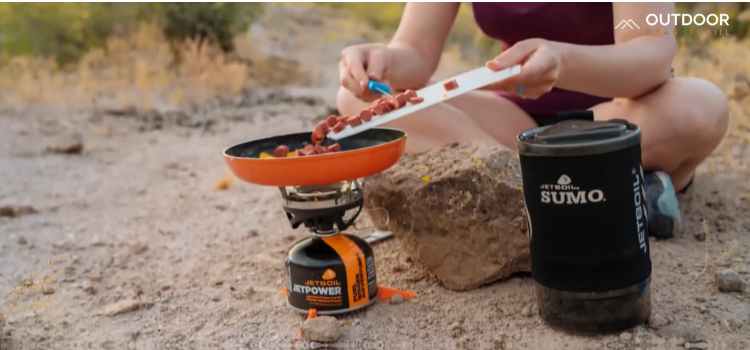
Types of Camping Stoves (Canister, Propane & Wood)
Understanding fuel sources and stove designs is the best place to start. Every style comes with clear trade-offs depending on whether you’re hauling gear in a vehicle or carrying it on your back.
| Stove Type | Primary Fuel | Best Used For | Key Advantage | Main Trade-Off |
| Canister Stoves | Isobutane / Propane Blend | Backpacking, Solo Trips | Ultralight, compact, easy to operate | Wind sensitive, less stable for large pots |
| Propane Stoves | 1 lb Green Propane Cylinders | Car Camping, Group Trips | High heat output, precise control, wide cooking area | Heavy, bulky, requires vehicle transport |
| Wood / Biomass Stoves | Twigs, Sticks, Wood Pellets | Wilderness Survival, Bushcraft | Infinite free fuel, eco-friendly | Slower boil times, useless when wet |
Read more: Top 10 Best Camping Cookware Sets of the Year
For those planning their next outdoor adventure, refer to the Ultimate Camp Stove Guide for expert tips and stove recommendations.
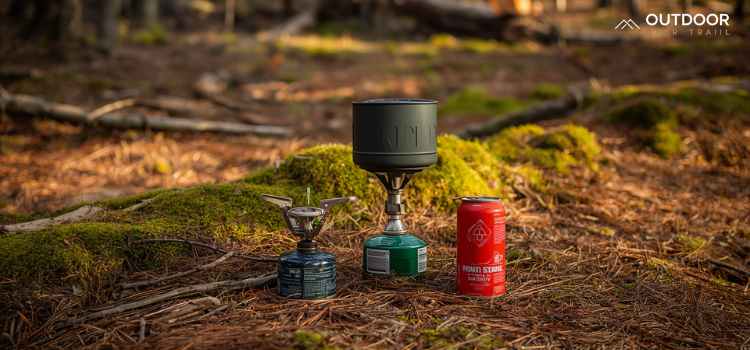
Quick Comparison: Backpacking & Camping Stove Categories
| Category | Fuel Source | Best Used For | Avg. Weight | Key Benefit |
| Single-Burner Canister | Isobutane/Propane Canister | Ultralight Backpacking, Thru-Hiking | 2 – 4 oz | Lightweight, fast boil times |
| Heavy-Duty Propane | 1 lb Propane Cylinder | Car Camping, Family Trips | 10 – 14 lbs | High heat, dual burner control |
| 3-Burner Stoves | 1 lb / 20 lb Propane Tank | Basecamps, Large Groups | 25 – 60 lbs | Massive cooking surface |
| Folding Stoves | Propane / Butane Blend | Overlanding, Van Life | 9 – 12 lbs | Packs flat, saves trunk space |
| Wood & Biomass | Twigs, Sticks, Wood Pellets | Bushcraft, Survival, Off-Grid | 9 – 16 oz | Infinite free fuel, no canisters needed |
1. Single-Burner Canister Stoves (Best for Backpacking)
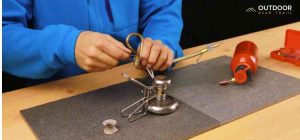
Canister stoves remain the go-to choice for backpackers. They thread directly onto small isobutane-propane canisters, offering fast boil times and flame control in a package that fits easily into a pot or jacket pocket.
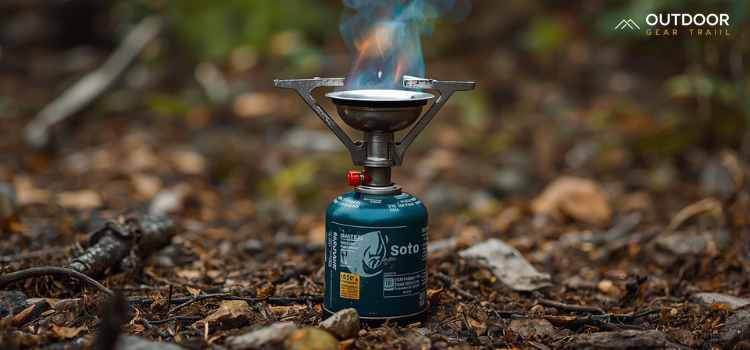
Soto WindMaster
The Soto WindMaster is a top recommendation for trail cooking thanks to its recessed burner design, built-in micro-regulator, and reliable performance in windy ridge conditions.
| PROS | CONS |
| ➕ Top-notch simmering ➕ Decent performance-to-weight ratio ➕ Wind resistant ➕ Micro-regulator handles cold weather ➕ Reliable built-in igniter | ➖ Less compact than other models ➖ Pot supports aren’t fixed to the stove ➖ Higher price tag |
Field Note: During a gusty 15 mph wind test on an exposed ridge, the WindMaster boiled a liter of water in just under 4 minutes without needing an external windscreen. The concave lip around the burner head genuinely works at preventing wind blowouts.
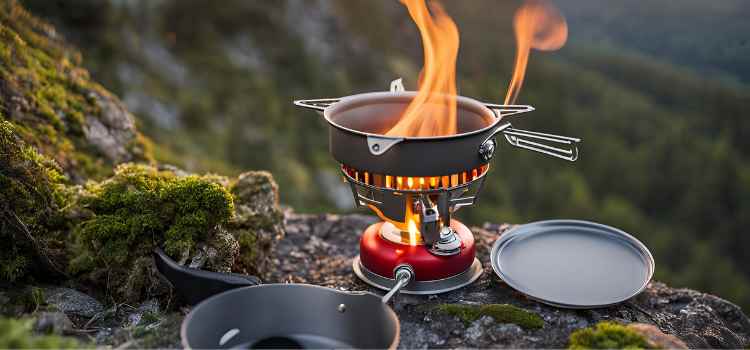
MSR PocketRocket 2
A staple among hikers for years, the MSR PocketRocket 2 provides straightforward boiling power in a lightweight, durable frame that won’t break the bank.
| PROS | CONS |
| ➕ Ultra-compact folding design ➕ Fast 3.5-minute boil time ➕ Featherlight trail weight (2.6 oz) ➕ Rugged stainless steel build ➕ Budget-friendly price point | ➖ Requires an external lighter ➖ Sensitive to strong gusts ➖ Narrow pot support base |
2. Heavy-Duty Propane Stoves (Best for Car Camping)
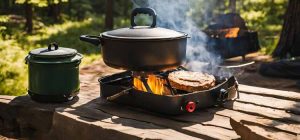
When weight isn’t an issue and you’re cooking for family or friends, dual-burner propane stoves bring standard home-kitchen cooking power directly to your campsite table.

Camp Chef Everest 2X
Equipped with dual high-output burners, the Camp Chef Everest 2X handles large pots and heavy iron pans easily, making it a reliable pick for group campsite cooking.
| PROS | CONS |
| ➕ Massive 40,000 total BTUs ➕ Fits two 12-inch skillets easily ➕ Matchless ignition dials ➕ Built-in three-sided windscreen ➕ Heavy-duty steel grates | ➖ Heavy 12 lb frame ➖ High fuel consumption on high heat ➖ Bulky storage footprint |
Field Note: When cooking breakfast for four at a state park campground, the dual 20k BTU burners cooked bacon on a heavy 12-inch cast-iron skillet on one side while simmering coffee on the other without hot-spot scorching.
3. 3-Burner Camp Stoves (Best for Large Groups)
3-Burner stoves are heavy-duty, freestanding cook stations built for feeding groups, hunting camps, and scout troops when cooking multiple dishes simultaneously is a must.
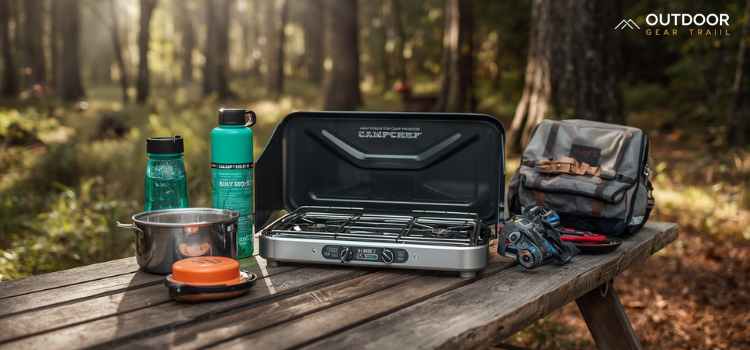
Camp Chef Pro 90X 3-Burner Stove
Featuring three cast-aluminum burners, the Pro 90X acts like a mobile outdoor kitchen range for basecamps, allowing you to run a griddle, pot, and kettle all at once.
| PROS | CONS |
| ➕ Massive 90,000 total BTU output ➕ Adjustable leveling legs ➕ Folding side prep tables ➕ Modular accessory support ➕ Matchless start on each knob | ➖ Extremely heavy frame (~60 lbs) ➖ Requires 20 lb propane tank ➖ Takes up substantial trunk space |
4. Folding Camp Stoves (Best Space-Saving Design)
Folding stoves utilize hinged, collapsible frames to provide a full two-burner cooking area while folding down into a compact footprint for transit.
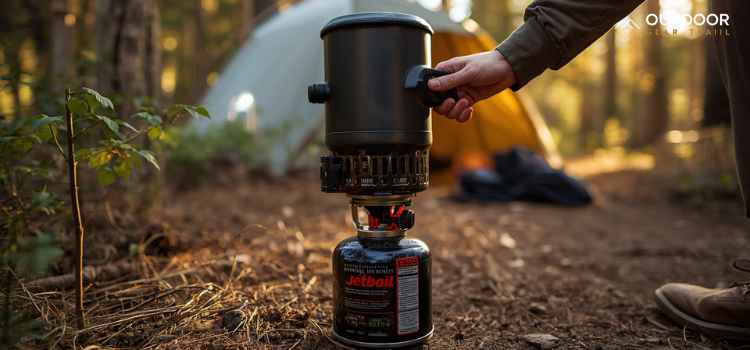
Jetboil Genesis Basecamp System
The Jetboil Genesis uses a clamshell folding design that nests two full-sized burners down into a padded travel case, making it ideal for van life and overland rigs.
| PROS | CONS |
| ➕ Clamshell space-saving design ➕ Precise low-simmer control ➕ Link-port system expandable ➕ Padded carry case included ➕ Easy slide lever ignition | ➖ High initial investment cost ➖ Windscreen needs careful positioning ➖ Central hinge requires maintenance |
5. Wood & Biomass Burning Stoves (Off-Grid Fuel Independence)
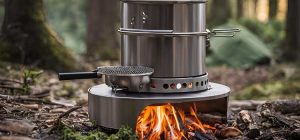
Wood-burning biomass stoves skip gas canisters entirely, burning small twigs, pinecones, and dry wood found around your campsite for reliable cook fuel.
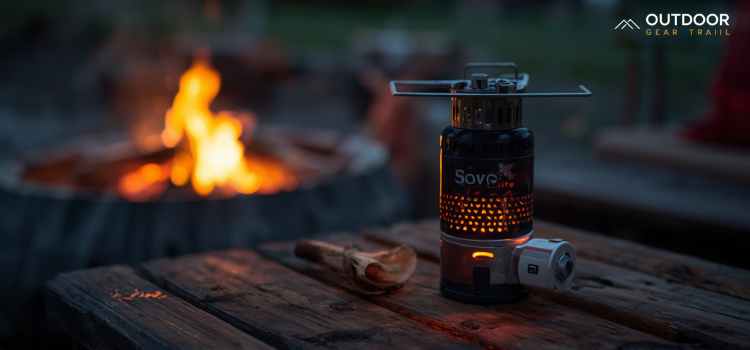
Solo Stove Lite
Using a double-wall ventilation design, the Solo Stove Lite pulls air through its bottom vents to create a secondary combustion burn that minimizes smoke production.
| PROS | CONS |
| ➕ Infinite free fuel on trails ➕ Low-smoke gasifier airflow ➕ Eco-friendly (no gas canisters) ➕ Nests neatly in standard pots ➕ Rugged stainless steel build | ➖ Hard to light wet or damp wood ➖ Leaves dark soot on cookware ➖ Restricted during fire bans |
Field Note: In our trail testing, finding dry pine twigs took about 5 minutes of foraging. Once lit, the double-wall ventilation kicked in within 90 seconds, creating a nearly smokeless flame that boiled 500ml of water in roughly 8 minutes.
How to Choose a Camp Stove (Fuel, Weight & Burner Count)
Narrowing down the right stove comes down to matching its setup with how you travel and cook. Focus on these three core practical areas:
1. Fuel Availability & Climate Conditions
- Isobutane / Propane Canisters: Great for 3-season backpacking. They run clean and burn hot, but cold temperatures (below 32°F / 0°C) drop pressure inside the canister, slowing boil times unless your stove includes a pressure regulator.
- 1 lb Propane Cylinders: Ideal for car camping. Propane maintains steady pressure in freezing temps and canisters are easy to find at hardware stores and gas stations.
- Wood & Biomass: Best for off-grid trips or minimalists who don’t want to carry liquid fuel. Keep in mind that finding dry wood in rain or snow takes extra work.
2. Weight and Packed Size
For backpacking, every ounce counts. Lightweight single canister stoves weigh between 2 to 3 ounces and pack inside a camping cup. Integrated stove systems (burner and pot combined) weigh 10 to 15 ounces and maximize fuel economy. Propane tabletop stoves weigh 10 to 15 pounds and belong in your vehicle storage setup.
3. Burner Count and Pan Space
- Single-Burner Stoves: Simple setups designed for boiling water for freeze-dried meals, coffee, or quick single-pot meals for 1 to 2 people.
- Two-Burner Stoves: Perfect for groups or family camping. You can boil pasta water on one side while frying up sides on the other.
Real-World Fuel Consumption Cheat Sheet
| Trip Type & Duration | Recommended Fuel Setup | Expected Usage |
| 2-Day Solo Backpacking | 1x 100g Isobutane Canister | Boils ~6–8 liters (6 hot meals/coffees) |
| 4-Day Solo Backpacking | 1x 230g Isobutane Canister | Boils ~14–16 liters of water |
| Weekend Car Camping (4 People) | 2x 1 lb Green Propane Bottles | 2 breakfasts & 2 dinners on a 2-burner stove |
Maintenance Tips for Long-Lasting Stoves
- Check O-Rings: Inspect the rubber seal inside canister threads before every trip. Dried out or cracked O-rings cause dangerous fuel leaks.
- Clean Piezo Igniters: If your auto-igniter stops sparking, gently wipe the ignition needle with an alcohol swab to remove carbon buildup.
- Soot Removal: If using biomass or wood stoves, wipe down pot bottoms with a drop of biodegradable soap prior to cooking for easier cleanup later.
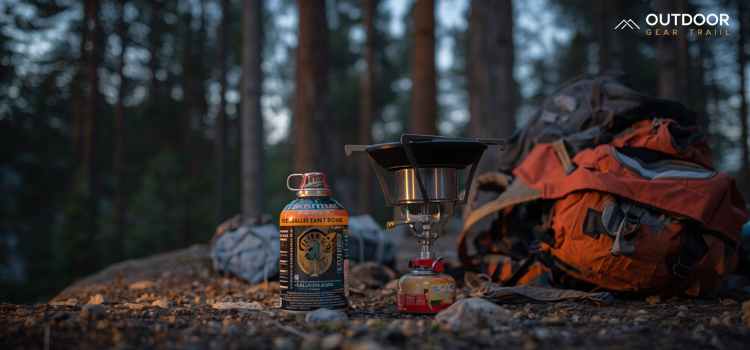
Canister vs Propane Camp Stoves: Which One Do You Need?
Deciding between canister and propane stoves usually comes down to transport method. Here is a quick breakdown to narrow down what fits your trip best:
                  ┌──────────────────────────────┐
│ What style of camping        │
│ are you doing?               │
└──────────────┬───────────────┘
│
┌───────────────┴───────────────┐
▼                               ▼
[ Backpacking / Hiking ]            [ Car Camping / RVs ]
│                               │
▼                               ▼
Canister Stove System              Propane Stove System
• Lightweight (2–3 oz)             • Heavy Output (10k–20k BTUs)
• Compact Isobutane Fuel           • 2-Burner Cooking Surface
• Fast Boiling Performance         • Standard 1 lb Cylinders
Choose a Canister Stove if:
- You’re packing gear on your back for long trail miles.
- Your menu revolves around rehydrated meals, instant coffee, or simple one-pot dishes.
- Pack volume and weight are top priorities.
Choose a Propane Stove if:
- You park right at your campsite or drive an RV or overland vehicle.
- You cook detailed meals using cast iron, skillets, or broad stockpots.
- You’re cooking for three or more people regularly.
For a detailed breakdown of specific models, check out our Eureka Camp Stove Evaluation.
Top Recommended Camp Stoves for Every Trip
Here is a quick summary of recommendations based on trail and campsite experience:
- Best Overall for Backpackers: Soto WindMaster — Combines lightweight portability with excellent wind performance and reliable push-button ignition.
- Best Value for Minimalists: MSR PocketRocket 2 — A tough, simple classic that offers fast boiling power at an affordable price point.
- Best Overall for Family Camping: Camp Chef Everest 2X — Twin 20,000 BTU burners that easily handle large pans and breezy weather.
- Best Budget Two-Burner: Coleman Cascade Classic — Simple, reliable, and easy to wipe clean after camp meals.
Frequently Asked Questions
1. Why are canister stoves preferred for backpacking?
Canister stoves offer a practical balance of low weight, fast boil times, and ease of use. They screw on directly with no fuel priming needed, burning cleanly without leaving heavy soot on your pot bottoms.
2. How long does a standard 100g backpacking fuel canister last?
A standard 100g (3.5 oz) isobutane-propane canister usually provides 60 to 75 minutes of burn time at moderate flame levels, which boils roughly 10 to 12 liters of water depending on wind and outside temps.
3. Do canister stoves work in cold freezing temperatures?
Standard canister stoves slow down below freezing (32°F / 0°C) as internal canister pressure drops. Stoves with a micro-regulated valve (like the Soto WindMaster) maintain pressure far better in cold conditions.
4. Can I use a propane stove for backpacking?
Green 1 lb propane bottles are too heavy and bulky for trail backpacks. Propane stoves are best reserved for car camping, overland setups, or basecamps.
5. Are wood-burning stoves allowed during wilderness fire bans?
Usually no. During active Stage 1 or Stage 2 fire bans, open wood burning—including biomass wood stoves—is restricted. Only stoves featuring an instant shut-off valve (like canister or propane units) are allowed.