
As an Amazon Associate I earn from qualifying purchases.
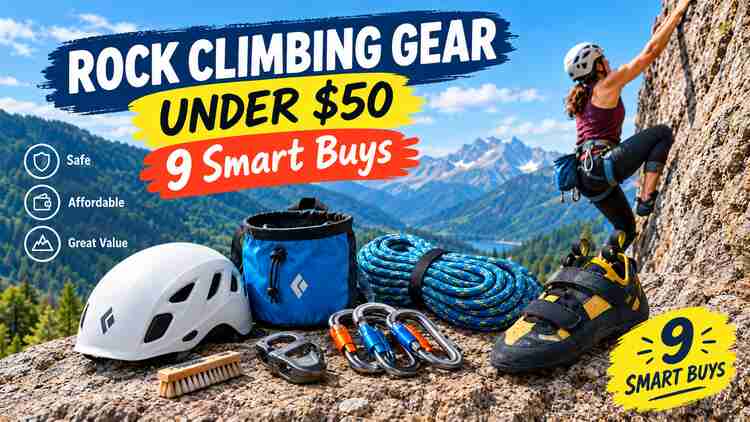
You don’t need a $400 haul to start climbing. A few smart, cheap accessories make every session cleaner, more comfortable and more fun.
This guide covers the best rock climbing gear under $50, sorted by price so you can build a kit that fits your budget. We also cover the stuff you should never cheap out on.
Safety First: What Not to Buy Cheap
Some gear is worth the money. Skip bargain bins and used listings for anything that holds your body weight in a fall.
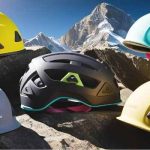
- Ropes, harnesses and helmets: Buy new, from a known brand, with UIAA or CE certification.
- Used safety gear: You can’t see hidden wear, so don’t gamble on it.
- Uncertified carabiners: Decorative or keychain carabiners are not load-rated.
Everything below falls into the “supporting kit” category. That’s where $50 goes furthest.
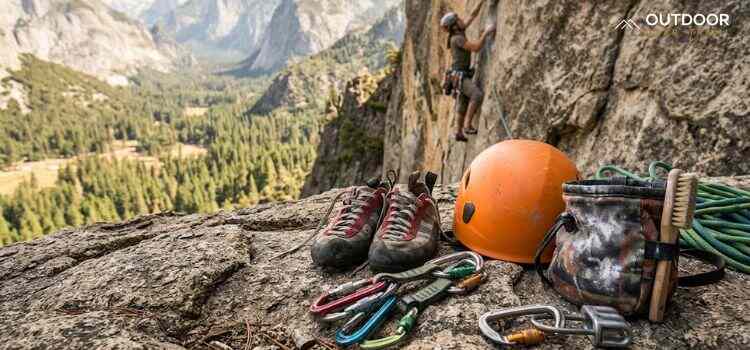
Best Climbing Gear Under $50 by Price
Under $10: The Essentials
1. Climbing Tape (about $4-$9)
Finger tape protects skin and supports sore joints. Metolius is a popular name, and thin colored tapes cost even less.
2. Boar’s Hair Climbing Brush (about $9-$10)
A stiff brush clears chalk and grit from holds. The Metolius Razorback is a common pick. Indoors it keeps holds grippy, and outdoors it protects the rock.
3. Refillable Chalk Ball (about $6)
A mesh chalk ball cuts the mess and keeps you in good standing with gyms that ban loose chalk. Black Diamond makes a well-known one.
$10-$25: The Core Kit
4. Loose Chalk (about $10 for 200 g)
Loose chalk gives the best grip per dollar. Pair it with a ball for gym days.
5. Chalk Bag With Belt (about $15-$25)
This is the first thing every beginner should own. Look for a drawcord closure, a pile lining and a brush loop. Mojo’s zip chalk bag, for example, sits right around $18, and a spare belt runs about $5.
6. Skin Salve (about $7-$15)
Dry, cracked fingertips end climbing days early. A small salve bar repairs skin overnight, and a metal nail file smooths sharp edges before they split.
7. Screwgate Locking Carabiner (about $12-$20, certified only)
Great for racking gear or clipping your chalk bag. Always check for the UIAA or CE mark, and never use it as a safety link unless you’ve been taught how.
$25-$50: Worth the Splurge
8. Chalk Bucket (about $25-$45)
If you boulder, a bucket stays upright, holds more chalk and is easier to reach into. It’s heavier and bulkier than a bag, so it suits bouldering better than rope climbing.
9. Rope Bag or Tarp (about $20-$45)
Dirt and grit shorten a rope’s life. A tarp or bag keeps it clean and easier to carry.
10. ATC-Style Belay Device (about $20-$45)
Many certified tube-style devices land close to the top of this budget. Get one that matches your rope diameter, and learn to use it with a qualified instructor.
Chalk Bag vs. Chalk Bucket: Which One Do You Need?
Choose a chalk bag if you climb with ropes, sport climb or trad climb. It clips to your harness and stays out of the way.
Choose a bucket if you mostly boulder. It sits on the ground, holds more chalk and stays open for both hands.
Not sure yet? Start with a bag. It’s cheaper and works for almost everything.
Read more :10 Best Climbing Shoes For Beginners With Wide Feet
Are Climbing Starter Sets Worth It?
Several brands sell bundles with a chalk bag, chalk ball, brush and tape in one pack. They’re convenient and often cheaper than buying each piece separately.
The trade-off is quality. Bundle components can be thin, so check reviews for stitching, drawcord strength and liner thickness. If you want a longer-lasting kit, buying the bag and brush separately from a climbing brand is usually the safer route.
Review: Chalk Bag + Brush Combo (Best First Purchase)
If you buy only two things, make it a chalk bag and a boar’s hair brush. Together they usually cost $25-$35, and you’ll use both every session.
What to Look For
A wide, stiff opening makes chalking up fast. A pile lining holds chalk on your fingers, and a tight drawcord keeps dust out of your pack. For the brush, look for dense boar’s hair bristles and a handle long enough to reach into pockets.
Where Budget Models Fall Short
Thin liners flatten over time, and loose drawcords leak chalk. Zippered pockets are usually the first part to wear out on cheaper bags.
Pros and Cons
Pros
➕ Affordable enough to upgrade later without regret
➕ Works for gym, bouldering and outdoor climbing
➕ Lightweight and easy to pack
➕ Improves grip and keeps holds cleaner
➕ Available in tons of colors and styles
Cons
➖ Cheaper fleece liners can shed or flatten over time
➖ Drawcords on budget models may loosen with heavy use
➖ Small sizes need frequent chalk refills on long routes
Key Takeaway
Best Budget Pick: Chalk Bag + Boar’s Hair Brush
Under $35 for the pair. Better grip, cleaner holds and a setup you’ll use every session, whether you climb indoors or outdoors.

A $50 Starter Kit You Can Build Today
- Chalk bag with belt: about $18
- Loose chalk (200 g): about $10
- Boar’s hair brush: about $9
- Climbing tape: about $5
- Skin salve: about $7
That’s roughly $49. Rent shoes and a harness at the gym until you’re sure you’ll stick with climbing.
Read more : 5 Best Climbing Belay Devices You Can Buy with Installment Plans
Frequently Asked Questions
What climbing gear should a beginner buy first?
Start with a chalk bag, chalk and a brush. They’re cheap and improve your grip right away. Rent shoes and a harness until you know you’ll keep climbing.
Can you buy safe climbing gear under $50?
Yes, for accessories and some certified hardware like screwgate carabiners and belay devices. Ropes, harnesses and helmets usually cost more, so buy them new and certified.
Is it okay to buy used climbing gear?
Avoid used safety gear. Wear, UV damage and past falls are hard to spot. Used accessories like chalk buckets or rope bags are fine.
What’s the difference between a chalk bag and a chalk bucket?
A bag clips to your harness and suits rope climbing. A bucket sits on the ground and suits bouldering because it holds more chalk and stays open.
How long does inexpensive climbing gear last?
Chalk bags and brushes often last a year or more with regular use, depending on quality. Tape, chalk and salve are consumables, and certified hardware should be retired following the manufacturer’s guidelines.
Final Verdict: Climb More, Spend Less
Great climbing doesn’t start with a big receipt. It starts with showing up, and a small kit of smart rock climbing gear under $50 helps you do that comfortably.
Buy a chalk bag, a boar’s hair brush and a roll of tape this week. Save your bigger budget for certified safety gear when you’re ready.
Ready to build your kit? Check today’s prices on our top picks and hit the wall this weekend.
Safety note: Climbing carries inherent risk. Inspect your gear, follow manufacturer instructions and learn from a qualified instructor before climbing outdoors.Climb more confidently and keep your holds cleaner for the next person. After a few months of regular use, quality stitching holds up well, though cheaper zippers on pocketed models can wear out first.