As an Amazon Associate I earn from qualifying purchases.
If you regularly camp, backpack, or climb in freezing conditions, your sleeping bag is one piece of gear you cannot afford to get wrong. A warm sleeping bag can make the difference between a comfortable night and a miserable one when temperatures drop below freezing.
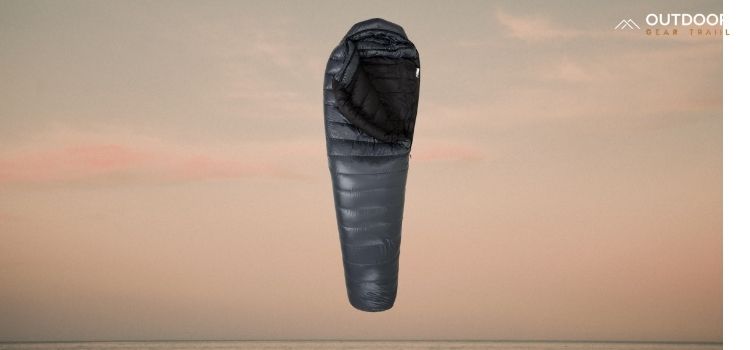
The Western Mountaineering Kodiak MF 0°F is designed for exactly those conditions. It combines 850+ fill-power goose down with a spacious mummy shape, a full down collar, an insulated draft tube, and a weather-resistant MicroLite XP shell.
What makes the Kodiak MF particularly interesting is that it doesn’t follow the typical “warmer means heavier and more restrictive” approach. It offers substantial cold-weather insulation while giving sleepers considerably more room than many traditional mummy bags.
In this review, we’ll look closely at its warmth, comfort, weight, construction, moisture resistance, packed size, advantages, drawbacks, and who should—and shouldn’t—buy it.

Western Mountaineering Kodiak MF at a Glance
| Feature | Specification |
|---|---|
| Type | Cold-weather mummy sleeping bag |
| Temperature Rating | 0°F / -18°C |
| Insulation | 850+ fill-power goose down |
| Shell | 20D MicroLite XP |
| Loft | 7 inches / 18 cm |
| Construction | Continuous baffles |
| Zipper | Full-length #5 YKK |
| Available Lengths | 6’0″, 6’6″, 7’0″ |
| Regular Weight | 2 lb 12 oz / 1,245 g |
| 6’6″ Weight | 2 lb 15 oz / 1,330 g |
| 7’0″ Weight | 3 lb 1 oz / 1,390 g |
| Stuff Size | Approximately 9 × 18 inches |
| Made In | USA |
Specifications can vary slightly by size, so check the manufacturer’s current specifications before purchasing.
Key Features of the Kodiak MF
850+ Fill-Power Goose Down
The heart of the Kodiak MF is its high-quality 850+ fill-power goose down insulation.
Fill power is a measure of how much loft a given amount of down can produce. Higher fill power generally means the insulation can provide substantial warmth without requiring as much weight.
For a winter sleeping bag, this is important. Carrying a large amount of insulation can quickly make a backpacking setup unnecessarily heavy.
The Kodiak MF uses approximately 30 ounces of down in the 6-foot version, helping it achieve an impressive balance between insulation and overall weight.
Spacious Mummy Design
One of the biggest reasons to consider the Kodiak MF is its generous cut.
Many mummy sleeping bags prioritize thermal efficiency by keeping the interior relatively narrow. That can work well for smaller sleepers, but larger users or people who move around during the night may find traditional mummy bags restrictive.
The Kodiak MF takes a different approach. Its wider shoulder and hip dimensions provide noticeably more room to change sleeping positions.
That extra space can also be useful when wearing additional layers or keeping small items such as clothing or a water bottle inside the bag on extremely cold nights.
7 Inches of Loft
The Kodiak MF provides approximately 7 inches (18 cm) of loft.
That loft is one of the reasons the bag can deliver substantial insulation without becoming excessively heavy. Once unpacked and allowed to loft properly, the down creates a thick layer of trapped air around your body.
Continuous Baffle Construction
Another useful feature is the continuous baffle construction.
Instead of permanently locking the down into individual chambers, the design allows the insulation to be shifted. This can give you more control over where the down is concentrated.
For example, you can redistribute insulation depending on conditions and sleeping position.
This is particularly useful in a cold-weather bag because it gives you some flexibility rather than treating the insulation distribution as completely fixed.
Full Down Collar and Draft Tube
Cold air can enter a sleeping bag through gaps around your neck or along the zipper.
The Kodiak MF addresses both areas with a full down-filled collar and insulated draft tube.
The collar helps reduce heat escaping around your neck, while the draft tube runs alongside the zipper to reduce cold spots.
These aren’t flashy features, but they become extremely important when you’re sleeping in genuinely cold conditions.
MicroLite XP Shell
The Kodiak MF uses a lightweight 20D MicroLite XP shell.
The fabric is designed to provide a combination of low weight, breathability, wind resistance, and water resistance. This makes it better suited to cold outdoor conditions than a basic lightweight shell.
However, it is important not to confuse water-resistant with waterproof.
The shell can help protect the down from light moisture, frost, condensation, and brief exposure, but the sleeping bag should still be kept as dry as possible. Down insulation loses insulating performance when it becomes saturated.
Warmth and Cold-Weather Performance
Warmth is the main reason to buy a sleeping bag like the Kodiak MF.
Its 0°F (-18°C) rating, high-loft 850+ down, full collar, draft tube, and generous insulation are designed for serious cold-weather use.
Independent testing has found the Kodiak MF particularly impressive for warmth relative to its weight. However, individual warmth varies considerably between sleepers.
That last point is important.
A temperature rating should not be treated as a guarantee that every person will feel equally warm at exactly 0°F. Your metabolism, clothing, sleeping pad, tent conditions, humidity, wind, and physical condition all affect how warm you feel.
For that reason, I would treat the Kodiak MF as a serious winter sleeping bag rather than assuming that its 0°F rating automatically means everyone will be comfortable at -10°F.
Your sleeping pad is also critical. A highly insulated sleeping bag cannot compensate for a sleeping pad that allows excessive heat loss into the ground.
Comfort: One of the Kodiak MF’s Biggest Strengths
For many sleepers, comfort may actually be the Kodiak MF’s standout feature.
The wide mummy shape provides considerably more usable interior space than many traditional cold-weather mummy bags.
This is particularly beneficial for:
- Broad-shouldered sleepers
- Side sleepers
- Active sleepers who change positions
- People who dislike restrictive mummy bags
- Campers who wear additional layers at night
- Larger users who need extra shoulder and hip room
The generous dimensions don’t mean you should automatically choose the largest size available. A sleeping bag that is unnecessarily oversized can create additional air space that your body has to warm.
Choosing the appropriate length and fit is therefore important.
Weight and Packability
A winter sleeping bag can easily become one of the heaviest items in a backpack.
The Kodiak MF manages its weight impressively for a 0°F-class bag.
The manufacturer’s current specifications list the 6-foot version at approximately 2 lb 12 oz, while the 6’6″ version weighs about 2 lb 15 oz and the 7-foot version about 3 lb 1 oz.
That makes it a compelling option for winter backpacking where warmth matters but every additional pound still counts.
Its high fill-power down also compresses effectively, which helps when you’re trying to fit a bulky winter sleep system into a backpack.
However, there’s an important consideration: the included stuff sack isn’t a substitute for a serious waterproof compression solution if you’re packing in wet conditions.
Moisture Resistance: Good, But Know the Limits
This is one area where it’s worth being realistic.
The MicroLite XP shell provides water resistance, but the Kodiak MF is not a waterproof sleeping bag.
That’s particularly important because down and water don’t make a good combination.
The shell can help with:
- Light condensation
- Frost
- Minor splashes
- Brief exposure to moisture
- Wind
But you should not rely on the shell to protect the sleeping bag from heavy rain or prolonged contact with standing water.
For wet-weather camping, use a well-ventilated shelter and keep the sleeping bag away from wet tent walls, damp clothing, and other moisture sources.
Construction and Durability
Western Mountaineering has built its reputation around straightforward, performance-oriented sleeping gear, and the Kodiak MF follows that philosophy.
The combination of premium down, a lightweight shell, continuous baffles, insulated draft protection, and a full-length zipper creates a sleeping bag designed for repeated outdoor use.
That said, lightweight materials always require some care.
A 20D shell is designed to save weight, not to be treated like heavy-duty canvas. Sharp equipment such as crampons, trekking poles, stove components, or rough surfaces can damage lightweight sleeping-bag fabric.
When using the Kodiak MF in alpine environments, take particular care when getting into and out of the bag.
Pros and Cons
| + Advantages | – Drawbacks |
|---|---|
| Excellent warmth-to-weight ratio | Premium price |
| 850+ fill-power goose down | Too warm for mild-weather camping |
| Very spacious mummy design | Lightweight shell needs careful handling |
| 7 inches of loft | Down requires moisture management |
| Full down collar and draft tube | Included stuff sack isn’t a full compression system |
| Multiple length options | Not waterproof |
Who Is the Western Mountaineering Kodiak MF Best For?
The Kodiak MF makes the most sense for people who regularly camp in genuinely cold conditions and don’t want to sacrifice comfort for warmth.
It’s particularly well suited to:
Winter Backpackers
If you need a warm sleeping bag without carrying a very heavy synthetic alternative, the Kodiak MF deserves serious consideration.
Alpine Climbers and Mountaineers
Cold alpine environments demand dependable insulation, and the Kodiak’s warmth, relatively low weight, and spacious design make it a strong candidate for winter objectives.
Larger or Broad-Shouldered Sleepers
This is one of the bag’s biggest advantages. The generous cut provides more freedom of movement than many traditional mummy sleeping bags.
Cold-Weather Campers
If your camping season extends into winter and you regularly encounter temperatures around freezing or below, the Kodiak MF provides substantially more insulation than a typical three-season sleeping bag.
Who Should Skip the Kodiak MF?
Despite its excellent performance, this isn’t the right sleeping bag for everyone.
You may want to look elsewhere if:
- You mainly camp during warm summer nights.
- You prioritize the absolute lowest possible price.
- You rarely encounter temperatures below freezing.
- You prefer synthetic insulation for wet environments.
- You need a very narrow, minimalist mummy bag.
- You don’t want to spend time protecting and maintaining premium down insulation.
For three-season camping, a lighter sleeping bag can save both money and pack weight.
Is the Kodiak MF Good for Backpacking?
Yes—provided you’re backpacking in conditions where its warmth is actually needed.
At roughly 2.8 pounds for the 6-foot model, it isn’t an ultralight summer sleeping bag, but that isn’t what it’s designed to be.
For a winter bag with this level of insulation and interior space, the weight is quite reasonable.
The important question isn’t simply “Is it lightweight?”
Instead, ask: How much warmth am I getting for the weight I’m carrying?
That’s where the Kodiak MF becomes particularly compelling.
How to Care for the Kodiak MF
Premium down sleeping bags require proper care if you want them to maintain their loft for years.
Keep It Dry
Avoid storing or packing the bag while it is wet. If it becomes damp during a trip, allow it to dry thoroughly as soon as conditions permit.
Don’t Store It Compressed
Compression is useful during transportation, but long-term compressed storage can negatively affect loft.
Use the supplied breathable storage bag or another appropriately sized storage system when storing the sleeping bag at home.
Avoid Unnecessary Washing
Down sleeping bags don’t need frequent washing.
When cleaning is eventually necessary, follow Western Mountaineering’s care instructions and use a cleaner specifically intended for down insulation.
Protect the Shell
Keep sharp equipment away from the sleeping bag. A tiny puncture can allow valuable down to escape.
How Does the Kodiak MF Compare With a Typical 0°F Sleeping Bag?
The Kodiak MF’s biggest differentiators aren’t simply its temperature rating.
Its combination of:
- 850+ fill-power goose down
- Spacious mummy cut
- Continuous baffles
- 7-inch loft
- Full down collar
- Draft tube
- Lightweight 20D shell
makes it particularly attractive to users who want warmth plus room to move.
Many cold-weather bags focus heavily on minimizing interior volume to improve thermal efficiency. The Kodiak MF takes a more comfort-oriented approach while still maintaining impressive warmth.
That makes it especially interesting for larger sleepers and people who find conventional mummy bags claustrophobic.
Final Verdict
The Western Mountaineering Kodiak MF 0°F is a premium cold-weather sleeping bag built for people who take winter camping seriously.
Its greatest strengths are its excellent warmth-to-weight ratio, generous interior, high-quality 850+ fill-power goose down, substantial loft, and effective draft protection. The current model is available in three lengths and remains relatively light for a bag designed around a 0°F rating.
The main disadvantages are equally straightforward: it’s expensive, it’s unnecessary for mild-weather camping, and the lightweight shell requires sensible handling. Its MicroLite XP fabric also provides water resistance rather than waterproof protection, so moisture management remains important.
For winter backpackers, alpine travelers, mountaineers, and larger sleepers who value both warmth and sleeping space, the Kodiak MF is one of the more compelling premium options available.
If you’re primarily a summer or three-season camper, however, spending this much on a 0°F sleeping bag probably doesn’t make sense.
Bottom line: If you need a spacious, premium down sleeping bag for serious cold-weather adventures and are willing to pay for high-end performance, the Kodiak MF is worth putting on your shortlist.
👉 Check the Western Mountaineering Kodiak on Amazon
Frequently Asked Questions
Is the Western Mountaineering Kodiak MF really rated to 0°F?
Yes. Western Mountaineering lists the Kodiak MF with a 0°F (-18°C) temperature rating. However, individual comfort varies, so you should consider your sleeping pad, clothing, metabolism, shelter, and expected conditions when planning a cold-weather trip.
Is the Kodiak MF waterproof?
No. Its MicroLite XP shell is designed to be water-resistant and breathable, not waterproof. Keep the sleeping bag protected from heavy rain, standing water, and prolonged moisture exposure.
How much does the Kodiak MF weigh?
The 6-foot model weighs approximately 2 lb 12 oz (1,245 g), the 6’6″ model about 2 lb 15 oz (1,330 g), and the 7-foot model about 3 lb 1 oz (1,390 g).
Is the Kodiak MF good for winter backpacking?
Yes. Its combination of high-fill-power down, relatively low weight, compressibility, and substantial warmth makes it well suited to winter backpacking and cold alpine trips.
Is the Kodiak MF good for side sleepers?
Its wide mummy design makes it considerably more accommodating than many narrow mummy sleeping bags. Side sleepers and people who move around at night can benefit from the additional shoulder and hip room.
Does the Kodiak MF come in different sizes?
Yes. The current model is available in 6’0″, 6’6″, and 7’0″ lengths, with different weights and interior dimensions for each size.
How should I store the Kodiak MF?
Store it uncompressed in a breathable storage bag in a dry environment. Avoid leaving the down sleeping bag tightly compressed for long periods.