
As an Amazon Associate I earn from qualifying purchases.
If you want cleaner-tasting water without carrying a separate filter, a stainless steel water bottle with a built-in filter can be a practical upgrade. These bottles combine reusable stainless steel construction with filtration designed for different needs—from improving the taste of treated tap water to reducing bacteria, parasites, microplastics, lead, or other contaminants. This guide highlights the best stainless steel water bottle with filter options available today.
However, not every filtered bottle does the same job. Some are designed mainly for chlorine and taste, while others use membrane or multi-stage filtration for a broader range of contaminants. After comparing filtration technology, capacity, filter life, construction, and everyday usability, these are five options worth considering.

5 Best Stainless Steel Water Bottles With Filters
When it comes to staying hydrated, finding the best stainless steel water bottle with filter can make a significant difference in your drinking experience.
- Best Overall: LifeStraw Go Series Tumbler 24 oz
- Best for Everyday Tap Water: Brita Premium Filtering Water Bottle
- Best for Broad Contaminant Reduction: Clearly Filtered Insulated Stainless Steel Bottle
- Best Premium Design: LARQ Bottle Filtered
- Best for Easy Drinking: Contigo Clybourn Chill FreeFlow

1. LifeStraw Go Series Tumbler 24 oz — Best Overall
The LifeStraw Go Series Tumbler 24 oz is the strongest all-around choice in this group because it combines insulated stainless steel with a two-stage filtration system. Its membrane microfilter is designed to protect against bacteria, parasites, and microplastics, while the activated carbon filter reduces chlorine, odors, and organic chemical matter.
LifeStraw rates the membrane filter for up to 1,000 gallons (4,000 L) and the carbon filter for up to 26 gallons (100 L). The 24-ounce stainless steel tumbler is also designed to fit most car cup holders.
Best for: Travel, commuting, gym use, and users who want more than basic taste filtration.
Pros
- Long membrane life
- Two-stage filtration
- insulated stainless steel.
Cons
- Drinking can require more effort.
- Carbon filter needs regular replacement
[psfa_search query=”HIKING SHOES” category=”Electronics” brand=”APPLE” sort=”Price:LowToHigh”]

2. Brita Premium Filtering Water Bottle — Best for Everyday Tap Water
The Brita Premium Filtering Water Bottle is a better fit if your main goal is improving the taste and odor of treated tap water. Its stainless steel version holds 20 ounces, uses a filter inside the straw, and has double-wall insulation.
Brita says the bottle filters up to 40 gallons and the filter lasts about two months. It is WQA certified for reducing chlorine taste and odor and particulates.
This is an important distinction: it is primarily an everyday tap-water filter, not the type of bottle you should automatically choose for untreated streams or unknown water sources.
Best for: Office workers, commuters, students, and everyday tap water.
Pros
- Simple filtration
- Insulated steel
- leak-proof lid.
Cons
- Smaller 20-oz capacity
- limited compared with purifier-style bottles.

3. Clearly Filtered Insulated Stainless Steel Bottle — Best for Broad Contaminant Reduction
If you are specifically looking for a bottle designed to target a wide range of contaminants, the Clearly Filtered Insulated Stainless Steel Bottle deserves a place on the shortlist.
Clearly Filtered says its Affinity filtration technology targets more than 200 contaminants, including chlorine, fluoride, and lead. The 20-ounce model uses insulated 18/8 stainless steel and has a stated filter life of 25 gallons. The company also says its filters have been independently tested against NSF/ANSI standards.
Because the filter is designed for municipal or tap water, this bottle should not be treated as a universal solution for microbiologically unsafe wilderness water.
Best for: Users concerned about contaminants such as lead and fluoride in treated tap water.
Pros
- Broad contaminant targeting
- Stainless steel insulation
- Independently tested
Cons
- Shorter filter life
- Relatively expensive replacement filters
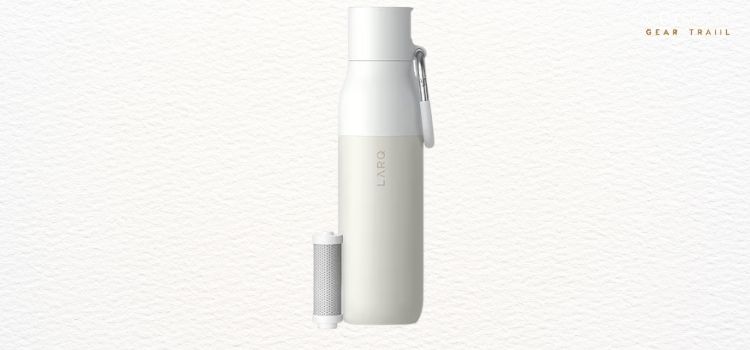
4. LARQ Bottle Filtered — Best Premium Design
The LARQ Bottle Filtered is aimed at users who want filtration without giving up a sleek, travel-friendly design. Its Nano Zero filter is designed to reduce lead, heavy metals, chlorine, and particulates, while the insulated stainless steel construction is designed to keep water cold for up to 24 hours.
The 17-ounce version uses a low-pressure drinking straw and a replaceable filter rated for up to 40 gallons (151 L) or two months.
The main attraction here is convenience and design rather than outdoor-water purification. LARQ’s product instructions specify potable municipal tap water for the filtered bottle, so it should not be used as a substitute for proper disinfection of microbiologically unsafe water.
Best for: Travelers and everyday users who prioritize design and portability.
Pros
- Premium design
- Insulated steel
- Low-pressure drinking.
Cons
- Smaller capacity
- Frequent filter replacement.
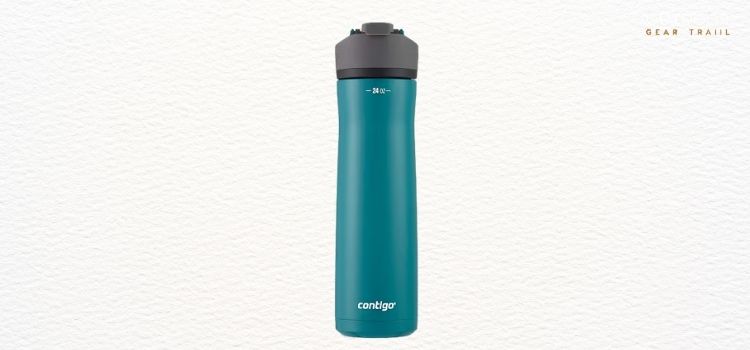
5. Contigo Clybourn Chill FreeFlow — Best for Easy Drinking
The Contigo Clybourn Chill FreeFlow takes a different approach. Instead of requiring you to suck water through a conventional straw filter, its FreeFlow system filters water as you drink without the same suction-style experience.
The 24-ounce bottle uses vacuum-insulated stainless steel and an AUTOSEAL lid. Contigo says its carbon-fiber filter reduces chlorine taste and odor and lasts approximately 4–6 months or 80 gallons. The bottle also meets NSF 42 requirements for reducing chlorine taste and odor and particulates.
Customer feedback on Contigo’s site is generally positive about the insulation and spill resistance, although some users mention that the bottle has more parts to clean and that the drinking mechanism takes some adjustment.
Best for: People who dislike the suction required by some filtered straw bottles.
Pros
- Easy-flow design
- Long filter life
- Spill-proof lid.
Cons
- More components to clean
- Mainly aimed at treated water.
Best Stainless Steel Filtered Water Bottles: Comparison
| Bottle | Size | Filter Life | Best For |
|---|---|---|---|
| LifeStraw Go | 24 oz | 1,000 gal membrane | Overall use & travel |
| Brita Premium | 20 oz | 40 gal | Everyday tap water |
| Clearly Filtered | 20 oz | 25 gal | Broad contaminant reduction |
| LARQ Bottle Filtered | 17 oz | 40 gal | Premium travel |
| Contigo Clybourn Chill | 24 oz | 80 gal | Easy drinking |
How to Choose a Stainless Steel Water Bottle With a Filter
The best bottle depends less on the number of filtration claims and more on what is actually in your water.
- For chlorine and taste: A carbon-filter bottle such as Brita or Contigo can make sense for treated tap water.
- For bacteria and parasites: Choose a bottle with an appropriately rated membrane filtration system, such as LifeStraw.
- For lead and fluoride concerns: Look closely at independent test data and the specific contaminant-removal claims, such as those provided by Clearly Filtered.
- For travel: Consider capacity, insulation, portability, filter availability, and whether the filtration system is actually rated for the water sources you expect to encounter.
- For hiking and camping: Do not assume that a bottle designed for municipal tap water will make untreated stream water safe. Match the filter to the actual biological and chemical risks.
An Important Filtration Warning
“Filtered” does not mean “removes everything.” Carbon filters, membrane filters, and purifier systems have different capabilities. Before using a filtered bottle with unfamiliar water, check exactly which contaminants the manufacturer has tested and certified it to reduce.
This distinction matters especially for hiking and international travel. A bottle designed for municipal tap water should not automatically be used as a replacement for a purifier or disinfection method when microbiological contamination is a concern.
Ready to Upgrade Your Water Bottle?
Find the Right Filtered Bottle for You
Compare today’s options and choose the bottle that matches your water source, filtration needs, and daily routine.
🛒 Check Today’s Best Price →Final Verdict
There is no single filtered stainless steel bottle that is perfect for everyone. The LifeStraw Go Series Tumbler is our strongest overall pick because it combines stainless steel insulation with two-stage filtration and protection against bacteria, parasites, and microplastics.
For straightforward everyday tap-water filtration, Brita is a simpler choice. Clearly Filtered is worth considering when broad contaminant reduction is your priority, while LARQ appeals to buyers who want a more premium design. If easy, low-effort drinking is especially important, the Contigo Clybourn Chill offers a useful alternative with its FreeFlow filtration system.
The most important thing is to match the filtration system to your water source. Check the manufacturer’s current specifications and replacement-filter requirements before buying, because filter performance and availability can change.
Our pick: LifeStraw Go Series Tumbler 24 oz for the best combination of filtration capability, stainless steel construction, insulation, and everyday versatility.
Frequently Asked Questions
What is the best stainless steel water bottle with a filter?
The LifeStraw Go Series Tumbler is our best overall pick because it combines insulated stainless steel construction with two-stage filtration. It is especially suitable for users who want filtration for bacteria, parasites, and microplastics in addition to taste improvement.
Are stainless steel filtered water bottles safe for daily use?
Yes, when used according to the manufacturer’s instructions and with an appropriate water source. However, filtration capabilities vary between models, so check which contaminants the specific filter is designed to reduce.
Can I use a filtered stainless steel bottle for hiking and camping?
Some models are suitable for outdoor use, but not every filtered bottle is designed for untreated water. Before drinking from a stream, lake, or other natural source, verify that the filter is specifically rated for the contaminants you may encounter.
How often should I replace a water bottle filter?
Filter life depends on the model and how frequently you use it. For example, LifeStraw rates its Go Series membrane filter for up to 1,000 gallons, while its activated carbon filter lasts up to 26 gallons. Always follow the manufacturer’s replacement instructions.
Which stainless steel filtered bottle is best for chlorine taste?
Brita, Contigo, and LifeStraw all use filtration that can reduce chlorine taste and odor. Brita and Contigo are particularly suitable for everyday treated tap water, while LifeStraw combines carbon filtration with a membrane microfilter.
Does a filtered water bottle remove bacteria and parasites?
Some do, but it depends entirely on the filtration technology. The LifeStraw Go Series membrane microfilter is specifically designed to protect against bacteria and parasites. A basic carbon filter designed for taste and chlorine should not be assumed to provide the same protection.
Are stainless steel water bottles better than plastic filtered bottles?
Stainless steel bottles are durable, reusable, and can provide insulation when double-wall construction is used. They are generally heavier than plastic, so the better choice depends on whether durability and temperature retention or lower weight is more important to you.
What should I look for when buying a stainless steel water bottle with a filter?
Check the filter’s tested contaminants, filter lifespan, replacement cost, bottle capacity, insulation, cleaning requirements, and whether the filter is designed for tap water or untreated outdoor water. Matching the filter to your actual water source is more important than choosing the bottle with the most marketing claims.
Read more : 5 Best Hiking Daypacks for Day Hikes
Affiliate Disclosure: This article may contain affiliate links. If you purchase through one of our links, we may earn a commission at no additional cost to you. Our recommendations are based on product specifications, filtration capabilities, usability factors, and available customer feedback—not on the commission we may receive.