As an Amazon Associate I earn from qualifying purchases.
Cold nights can quickly turn an enjoyable camping trip into an uncomfortable one. A good heating solution can help you stay warmer, but choosing a heater for a tent requires more than simply looking at heat output or price.

In this guide, we compare seven popular heating options for camping, including propane heaters, electric space heaters, and wood-burning tent stoves. We look at their intended use, key features, advantages, limitations, and the safety considerations you should understand before using a heater at camp.
Important safety note: Never assume that a portable heater is safe inside a tent simply because it is small or marketed as a camping heater. Fuel-burning appliances can produce carbon monoxide, while any heater can create a fire or burn hazard if used incorrectly. Always follow the exact manufacturer’s instructions for your model and tent.
Top Tent Heaters at a Glance
Comparison Of The Best Camp Heaters For Tents
| Heater Type | Best For | Main Advantage | Main Limitation |
|---|---|---|---|
| Electric | Powered campsites | No combustion emissions | Requires reliable electricity |
| Propane | Appropriate outdoor/shelter applications | High heat without mains power | Carbon monoxide and fire considerations |
| Battery | Short-duration personal warmth | Portable and cordless | Usually limited heat/runtime |
| Wood-burning stove | Properly designed hot tents | Strong heat and cooking capability | Requires chimney, fuel, setup, and fire management |
What to Look for in a Tent Heater
The best tent heater depends on your camping environment, tent size, power availability, weather conditions, and how you plan to use the heater. Before buying one, consider the following:
- Power source: Decide whether you have campsite electricity, a portable power station, propane, or access to firewood.
- Tent size: Match the heater’s intended coverage and output to the size of your shelter.
- Heat output: More BTUs or watts do not automatically mean a better choice. Excessive heat can create unnecessary safety and comfort issues.
- Safety features: Look for appropriate automatic shut-off, tip-over protection, overheat protection, and other features specified for the particular model.
- Portability: Backpackers should prioritize weight and packability, while car campers can usually carry larger units.
- Runtime: Consider how long the heater can operate and how easily you can obtain additional fuel or recharge the power source.
- Ventilation: Combustion heaters require special attention to fresh-air requirements. Never ignore the manufacturer’s ventilation instructions.
- Sleeping use: Never assume that a heater is suitable for unattended or overnight operation.
For most campers, the best choice is not necessarily the heater with the highest heat output. It is the model that matches the shelter, power source, conditions, and manufacturer’s approved use.
Types of Tent Heaters
| Type | Power Source | Advantages | Limitations |
|---|---|---|---|
| Electric | Campsite outlet or suitable power source | No combustion emissions; simple operation | Requires adequate electrical power |
| Propane | Propane cylinder | Portable and useful where appropriate | Combustion, carbon monoxide and fire considerations |
| Battery | Rechargeable battery | Cordless and portable | Usually limited heat output and runtime |
| Wood-burning stove | Firewood | Strong heat and cooking capability in suitable hot tents | Requires chimney, fuel and careful setup |

Electric Camping Heaters for Tents
Electric heaters can be a practical option for powered campsites, RV setups, cabins, and other camping environments where the heater and shelter are suitable for electrical heating. They produce heat without burning propane or wood, so there is no combustion occurring inside the shelter.
Common features include adjustable heat settings, thermostats, fan-only modes, tip-over protection, and overheat protection. However, electric heaters still create a fire and electrical hazard if used incorrectly. Make sure the electrical supply is appropriate for the heater’s wattage and keep the unit away from water, bedding, clothing, and other combustible materials.
For powered camping, an electric heater can be convenient because you do not need to carry propane cylinders or firewood. The trade-off is that a typical 1,500-watt heater requires a substantial electrical supply, so a small battery bank may not run it for long.

Propane Camping Heaters for Tents
Propane heaters are popular with campers because they can provide substantial heat without relying on campsite electricity. However, propane combustion can produce carbon monoxide, so the type of heater and its approved environment are extremely important.
Some portable propane heaters are specifically designed and certified for certain indoor or partially enclosed applications, while others are intended for outdoor use only. Never assume that one model’s safety features apply to another model.
The U.S. Consumer Product Safety Commission warns that portable heaters and other fuel-burning camping equipment can cause carbon monoxide poisoning in enclosed areas. It specifically advises campers not to use portable heaters while sleeping in tents, campers, or other enclosed areas.
Our advice: If you choose a propane heater, verify the exact model’s certification, intended use, ventilation requirements, and shut-off features before bringing it camping. Never use a heater that the manufacturer does not approve for your intended environment.

Battery-Powered Camping Heaters for Tents
Battery-powered heaters offer a cordless alternative for campers who want portability without carrying propane. They can be convenient for short-duration personal heating, but battery capacity places a practical limit on both heat output and runtime.
Before buying one, check the battery capacity, charging method, expected runtime, heat settings, and automatic safety features. A heater that looks compact may still consume significant power, so pay close attention to the manufacturer’s runtime claims.
7 Best Tent Heaters for Camping
Below are seven options from the original product list, organized by heating type and intended camping scenario. Because product specifications, certifications, prices, and availability can change, check the current manufacturer’s information before purchasing.
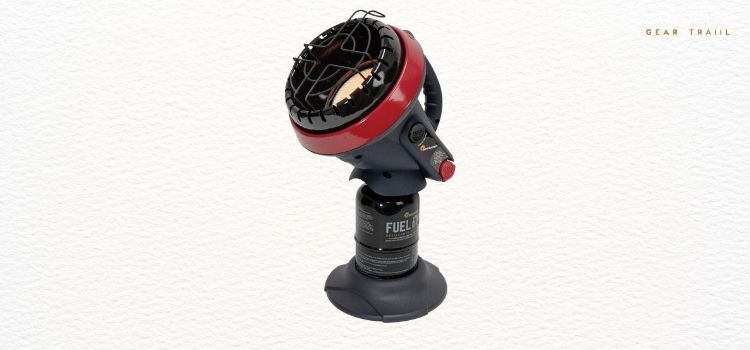
1. Mr. Heater Little Buddy
Best for: Campers looking for a compact propane heating option for an appropriate, manufacturer-approved environment.
The Mr. Heater Little Buddy is a compact propane heater designed for portable heating. Its relatively small size makes it appealing for campers who do not want to carry a large heating appliance.
Type: Propane
Listed output: 3,800 BTU
Key features:
- Compact portable design
- Propane-powered operation
- Safety shut-off features on applicable models
👉 Check Current Price & Availability
Safety note: Even when a portable propane heater includes safety features, never assume it can safely operate unattended inside a tent. CPSC recommends turning camping heaters off before sleeping.
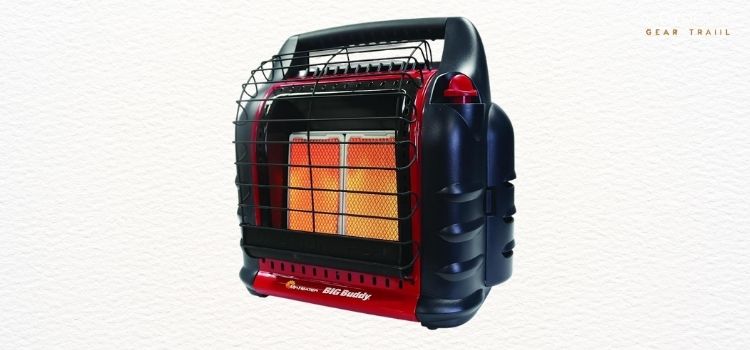
2. Mr. Heater Big Buddy
Best for: Campers who need substantially more heating capacity than a compact portable model.
The Mr. Heater Big Buddy is a larger propane heater with multiple heat settings. Its higher output makes it better suited to larger spaces than compact portable heaters, but its size and fuel requirements also make it less convenient for lightweight camping.
Type: Propane
Listed output: 4,000–18,000 BTU
- Multiple heat settings
- Designed for higher heat output than compact models
- Compatible fuel configurations vary by model and setup
👉 Check Current Price & Availability
Safety note: Never use the heater outside the exact conditions approved by the manufacturer, and never leave a portable heater running unattended in a confined space.
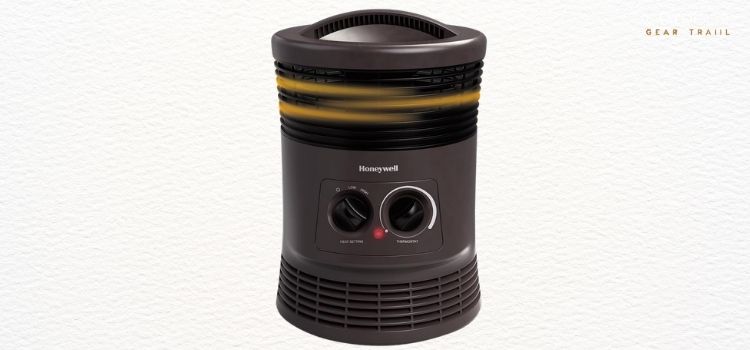
3. Honeywell 360 Surround Heater
Best for: Powered camping environments where an electric heater is appropriate.
The Honeywell 360 Surround Heater is an electric space heater designed to distribute warmth around the unit. For campers with access to suitable electrical power, an electric heater avoids the combustion emissions associated with propane or wood-burning heaters.
Type: Electric
Listed power: Up to 1,500 watts
- 360-degree heat distribution
- Tip-over protection
- Overheat protection
- Adjustable temperature control
Safety note: Electric heaters can still cause fires if placed near combustible materials or used with unsuitable electrical equipment. CPSC recommends keeping portable heaters at least three feet from items that can burn and placing them on stable, level surfaces.
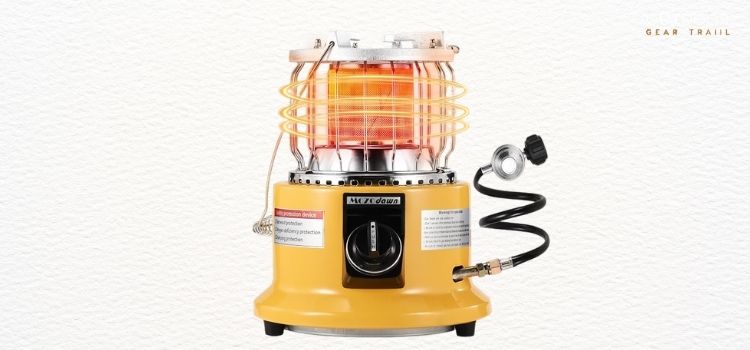
4. Campy Gear Chubby 2-in-1 Heater & Stove
Best for: Campers who want heating and cooking in one compact unit
Type: Propane
Heat Output: Up to 9,000 BTU
Key Features: Adjustable heat, 2-in-1 heating and cooking design, compact construction
The Campy Gear Chubby 2-in-1 Heater & Stove is designed for campers who want more functionality from a single piece of equipment. Instead of carrying a separate camp stove and heater, this compact propane unit combines both functions.
Its adjustable heat output makes it useful for taking the chill off during cold-weather camping, while the cooking function can help reduce the amount of gear you need to pack. That makes it particularly appealing for car campers, overlanders, and minimalist camping setups.
However, because it uses propane and produces combustion gases, you should not treat it as a sleeping heater inside an enclosed tent unless the manufacturer specifically states that your exact setup is approved for that environment. Always follow the manufacturer’s ventilation and clearance requirements.
Safety note: Never use a fuel-burning heater or stove while sleeping. Carbon monoxide can accumulate quickly in enclosed spaces.
👉 Check Current Price & Availability
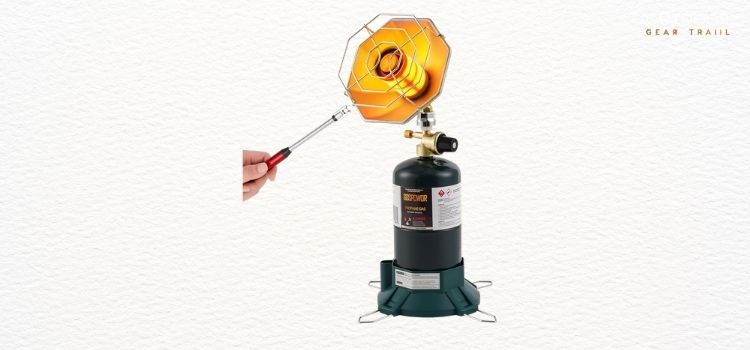
5. Texsport Portable Outdoor Propane Heater
Best for: Mild-weather camping and portable outdoor heating
Type: Propane
Heat Output: Up to 2,890 BTU
Key Features: Stainless-steel burner, compact design, automatic shutoff if the flame goes out
The Texsport Portable Outdoor Propane Heater is a simple option for campers who need lightweight heat around an outdoor campsite. Its relatively compact design makes it convenient to transport, while the stainless-steel burner is built for outdoor use.
With a maximum output of about 2,890 BTU, this heater is better suited to taking the chill off in relatively mild conditions than heating a large camping shelter in freezing weather.
One important distinction is that an outdoor-rated propane heater should not be assumed to be safe inside a tent. Before using any combustion heater in an enclosed or partially enclosed space, check the exact model’s manufacturer’s instructions and certification.
Safety note: Do not bring an outdoor-only propane heater into an enclosed tent. Fuel-burning equipment can produce carbon monoxide and consume oxygen.
👉 Check Current Price & Availability

6. GiveBest Portable Electric Space Heater
Best for: Powered campsites, cabins, and sheltered camping areas
Type: Electric
Power: 750W–1,500W
Key Features: Two heat settings, fan mode, ceramic heating, tip-over and overheat protection
The GiveBest Portable Electric Space Heater is a practical choice when you have access to reliable electricity. Unlike propane and wood-burning heaters, an electric heater does not create combustion gases, making it a cleaner heating option for appropriate indoor or enclosed environments.
The heater offers two power levels and a fan setting, allowing you to adjust the amount of heat depending on conditions. Its compact size also makes it easy to move between locations.
For camping, however, the main limitation is power. You need a suitable electrical connection capable of handling the heater’s wattage. It is therefore much better suited to campground electrical hookups, cabins, RVs, or other approved powered spaces than remote backcountry camping.
Safety note: Use an electric heater only in a suitable dry environment. Plug high-wattage portable heaters directly into an appropriate wall outlet rather than an overloaded power strip or extension setup.
👉 Check Current Price & Availability
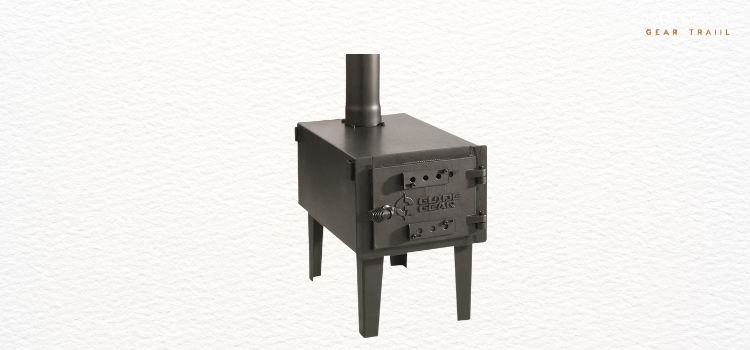
7. Fltom Portable Wood Burning Stove
Best for: Canvas tents, base camps, and extended off-grid camping
Type: Wood-burning
Fuel: Firewood
Key Features: Stainless-steel construction, stovepipe system, wood-burning design
The Fltom Portable Wood Burning Stove is a completely different type of camping heater from the compact electric and propane models above. It is designed around a traditional wood-burning stove system and can be useful for campers staying in compatible canvas or hot tents.
The biggest advantage is fuel availability. In locations where firewood is permitted and readily available, you don’t need to carry propane cylinders or depend on an electrical hookup.
The trade-off is installation. A wood-burning stove requires a suitable tent with an appropriate stove jack, a correctly installed stovepipe, adequate clearances, and careful fire management. It is therefore much more appropriate for base camping and hot-tent setups than ordinary backpacking tents.
Safety note: Only use a wood stove in a shelter specifically designed for stove use. Maintain the manufacturer’s required clearances, inspect the stovepipe regularly, and never leave an active fire unattended.
👉 Check Current Price & Availability
Tent Heater Safety Tips You Should Never Ignore
Heating a tent requires extra caution because tents are small, enclosed spaces made from lightweight materials. A heater that is appropriate for one environment may not be appropriate for a tent.
- Check the manufacturer’s instructions first. Use a heater only in the environment and manner specified by the manufacturer.
- Never ignore carbon monoxide risk. Fuel-burning appliances can produce carbon monoxide, an odorless and potentially deadly gas.
- Do not sleep with a fuel-burning heater running unless the manufacturer specifically states that the exact appliance is approved for that use and provides instructions for it.
- Keep heaters away from sleeping bags, clothing, walls, and other combustible materials.
- Place the heater on a stable, level surface where it cannot easily tip over.
- Use the correct power source. For electric heaters, make sure the campsite electrical supply, extension equipment, and connections are appropriate for the heater’s power requirements.
- Never use a damaged heater, cord, fuel line, or propane connection.
- Consider a battery-powered carbon monoxide alarm when using combustion appliances in situations where the manufacturer permits their use.
- Keep an emergency plan. If you experience headache, dizziness, nausea, weakness, confusion, or unusual fatigue while using a fuel-burning appliance, move into fresh air immediately and seek emergency assistance.
A safety shut-off feature is helpful, but it should never be treated as permission to use a heater in an enclosed tent. The manufacturer’s approved-use instructions come first.
Frequently Asked Questions About Tent Heaters
Are tent heaters safe?
They can be used safely only when the specific heater is approved for the intended environment and operated exactly according to the manufacturer’s instructions. Fuel-burning heaters require particular attention to carbon monoxide, ventilation, and fire risks.
Can I sleep with a tent heater running?
Do not assume that any tent heater is safe to run while sleeping. Check the exact model’s instructions. For fuel-burning heaters, unattended or overnight use can create serious carbon monoxide and fire risks unless specifically approved by the manufacturer.
Can I use an electric heater inside a tent?
An electric heater may be appropriate in a suitable powered shelter if the heater and tent manufacturer’s instructions permit it. Make sure the electrical supply can safely handle the heater’s wattage and keep the heater away from fabric, bedding, and moisture.
What is the best heater for off-grid camping?
For off-grid camping, propane and wood-burning systems are common options, but they are not interchangeable. Propane heaters are generally easier to operate, while wood stoves can provide heat and cooking capability in appropriately designed hot tents. Always follow the manufacturer’s installation, ventilation, and safety requirements.
Do battery-powered heaters work well in tents?
Battery-powered heaters can be convenient, but their heating output and runtime are generally limited by battery capacity. They may work better for personal or small-area warmth than for heating a large tent.
What should I use instead of a tent heater?
For many camping trips, improving insulation can be more practical than heating the entire tent. Use an appropriately insulated sleeping pad, a sleeping bag rated for the expected temperature, warm layers, and a hot-water bottle designed for safe use.
Conclusion
A reliable tent heater makes all the difference between a restless, freezing night and a comfortable outdoor adventure. By choosing a model with built-in safety features like tip-over protection and low-oxygen shutoff sensors, you can enjoy dependable warmth throughout the night. Select the heater that matches your tent size, power availability, and trip style, and step into your next cold-weather camping trip with complete confidence.