As an Amazon Associate I earn from qualifying purchases.
Hiking sticks, also called trekking poles, can make a noticeable difference on uneven trails by providing additional points of contact, improving balance, and helping distribute some of the load between your upper and lower body. But not every hiking pole is right for every trail.
In this guide, we’ll explain the different types of hiking sticks, the benefits and limitations of trekking poles, how to choose the right pair, how to adjust them correctly, and how to use them on uphill, downhill, rocky, muddy, and slippery terrain. We’ll also cover an important travel question: Can I bring hiking sticks on a plane? This is a common concern for many hikers traveling by air.
Whether you’re planning a weekend day hike, a multi-day backpacking trip, or your first mountain adventure, the right trekking poles can be a useful addition to your outdoor gear.
What Are Hiking Sticks?
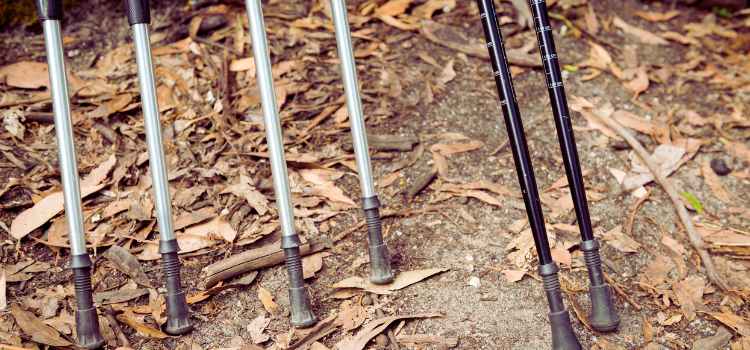
Hiking sticks are poles designed to provide support and stability while walking or hiking outdoors. Trekking poles are usually used as a pair, while a traditional hiking staff is normally a single pole.
Trekking poles are particularly useful on trails with loose rocks, steep descents, muddy sections, stream crossings, or uneven ground. They can also be helpful when carrying a backpack because they provide additional contact with the ground and can change how the load is distributed through the body.
Types of Hiking Sticks and Trekking Poles
Hiking poles come in several designs. The best option depends on your terrain, hiking style, pack weight, storage requirements, and budget.
- Telescoping trekking poles: These poles use adjustable sections that slide into one another. They offer a wide range of length adjustment and are versatile for different terrain.
- Folding trekking poles: Folding poles collapse into several short sections, making them convenient for travel and for hikers who need to store poles inside a backpack.
- Traditional wooden hiking staffs: A wooden staff is generally a single, non-collapsible pole. It can be useful for casual hiking, balance, and walking on relatively moderate trails.
- Nordic walking poles: These are designed specifically for Nordic walking rather than technical hiking. Their straps and tips are optimized for that activity.
- Aluminum trekking poles: Aluminum is commonly chosen for its durability, affordability, and ability to tolerate impacts and bending.
- Carbon-fiber trekking poles: Carbon-fiber models can be lighter and are popular with backpackers and long-distance hikers who prioritize weight.
Read more : Padded Mesh Oversized Folding Chair Review: Is It Worth It?
What Are the Benefits of Hiking Sticks?
Trekking poles are not essential for every hiker, but they can provide several practical advantages. Research on trekking-pole use has found reductions in some lower-extremity loading and improvements in stability, particularly when carrying external loads.
1. Better Balance and Stability
Two trekking poles give you additional points of contact with the ground. This can be particularly useful on loose gravel, muddy trails, uneven rocks, and steep descents where maintaining balance can be difficult.
2. Help With Downhill Hiking
Descending can place substantial mechanical demands on the legs. Research has found that trekking-pole use can reduce certain forces and joint loading in the lower extremities during downhill hiking.
That does not mean trekking poles guarantee injury prevention. They are a support tool, not a replacement for appropriate footwear, conditioning, careful foot placement, or good trail judgment.
3. Useful Support When Carrying a Backpack
When you’re carrying a backpack, trekking poles can help redistribute some of the work between your upper and lower body. Research has found that pole use may reduce lower-extremity muscle activity and improve stability when carrying an external load.
4. Assistance on Steep Climbs
On steep uphill sections, poles can provide an additional point of support and allow you to involve your arms as part of your hiking rhythm. However, pole use can also increase cardiovascular demand because more upper-body muscles are involved.
5. Greater Confidence on Uneven Terrain
For many hikers, one of the biggest practical benefits is confidence. Having a pole available to test a loose surface or steady yourself before taking the next step can make technical sections feel more manageable.
How to Choose the Best Hiking Sticks
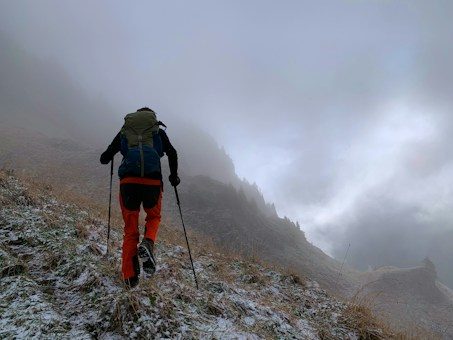
The “best” trekking poles are not necessarily the lightest or most expensive. Look for a combination of appropriate length, comfortable grips, reliable locking mechanisms, suitable materials, and the features you actually need for your type of hiking.
Consider Your Hiking Terrain
If you regularly hike steep and technical trails, prioritize strong locking mechanisms, dependable tips, and a comfortable grip. For easier trails and occasional use, a lighter and more affordable pair may be sufficient.
Choose the Right Pole Material
- Aluminum: Generally durable and affordable. It tends to bend rather than suddenly fail when overloaded.
- Carbon fiber: Lightweight and popular among backpackers and long-distance hikers. However, carbon poles can be more vulnerable to certain impacts.
- Wood: Traditional and durable for general walking, but usually less adjustable and less packable than modern trekking poles.
Look at the Grip Material
Common grip materials include cork, foam, and rubber. Cork can be comfortable for long hikes and tends to handle moisture well. Foam is lightweight and comfortable, while rubber is durable and easy to clean.
Check the Locking Mechanism
A reliable locking system is one of the most important features of an adjustable trekking pole. Before a hike, make sure each section locks securely and does not slide when pressure is applied.
Think About Weight and Packability
If you travel frequently or carry your poles in a backpack, folding poles can be particularly convenient. If compact storage is less important, telescoping poles offer excellent adjustability and versatility.
Amazon Pick: A Practical Pair of Trekking Poles
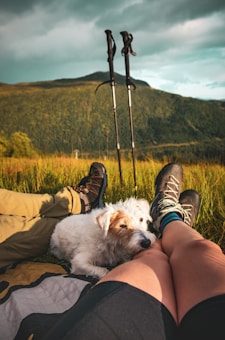
If you’re looking for a pair of hiking sticks for your next outdoor trip, compare the pole length, material, grip, locking mechanism, weight, included baskets and replacement tips before buying. A good pair should match the type of terrain you actually hike rather than simply having the longest list of features.
🥾 Ready for Your Next Hike?
Check out hiking sticks and trekking poles available on Amazon.
Compare current prices, customer reviews, pole materials, adjustability, and available features before choosing the pair that fits your hiking style.
As an Amazon Associate, we may earn from qualifying purchases. Prices and availability may change.
How to Adjust Hiking Sticks to the Correct Height
A good starting point is to adjust the poles so your elbows are approximately at a right angle when you’re standing on level ground and holding the grips naturally.
- Stand upright on level ground while wearing the footwear you normally hike in.
- Hold the pole grips naturally without lifting your shoulders.
- Adjust the pole length until your elbows are approximately 90 degrees.
- Lock every adjustment mechanism securely.
- Test the poles with light downward pressure before beginning your hike.
You can then change the length slightly for specific terrain. Some hikers prefer shorter poles on steep climbs and longer poles on descents, although comfort and personal technique matter.
How to Use Trekking Poles Correctly
Using trekking poles effectively is mostly about developing a natural rhythm rather than aggressively planting the poles with every step.
On Flat Trails
Use a natural alternating rhythm: when your right foot moves forward, your left pole generally moves forward, and vice versa. Keep your shoulders relaxed and avoid gripping the handles too tightly.
Going Uphill
Shorten the poles slightly if that feels more comfortable and plant them where they provide useful support without forcing you to lean excessively forward. On very steep terrain, some hikers prefer using both poles together for an extra push.
Going Downhill
Longer poles can provide a more comfortable reach on descents. Plant each pole securely before committing your weight to the next step, particularly on loose or slippery surfaces.
Crossing Streams
Trekking poles can provide additional balance when crossing shallow streams, but they should not be treated as a guarantee against falling. Test each step carefully, watch the current, and follow local trail-safety guidance.
Rocky or Uneven Trails
Use shorter, controlled pole movements rather than swinging the poles widely. Plant the tips on stable surfaces and avoid relying on loose rocks that could shift under pressure.
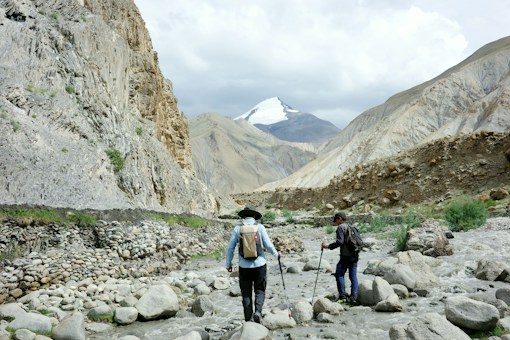
Do Trekking Poles Really Reduce Fatigue?
The answer is more nuanced than simply saying “yes.” Trekking poles can redistribute some of the physical workload and reduce certain lower-extremity demands, but they also recruit the upper body and can increase oxygen consumption and heart rate.
In practical terms, some hikers find poles make long descents or loaded hikes feel more comfortable, while others prefer hiking without them. Your terrain, pack weight, fitness level, technique, and personal preference all matter.
Do Hiking Sticks Prevent Injuries?
Trekking poles may help reduce certain forces and loading on the lower limbs and can improve stability, but it would be inaccurate to claim that they completely prevent hiking injuries.
Think of trekking poles as one part of a broader safety strategy that includes appropriate footwear, physical preparation, sensible pacing, weather awareness, navigation, hydration, and careful movement over challenging terrain.
Hiking Stick Maintenance and Care
- Clean the poles after muddy hikes: Remove dirt and grit before storing them.
- Inspect the locking mechanisms: Make sure adjustment systems continue to hold securely.
- Check the shafts: Look for cracks, severe bends, or other damage.
- Inspect the tips: Replace worn or damaged tips when necessary.
- Dry the poles before long-term storage: This is particularly important after wet hikes.
- Follow the manufacturer’s instructions: Different pole designs require different maintenance procedures.
Hiking Poles and Leave No Trace
Trekking poles can be useful tools, but they should be used responsibly. On sensitive trails, consider using rubber tips where appropriate and avoid deliberately scraping vegetation, damaging rocks, or widening trails with aggressive pole placement.
Follow local trail rules and Leave No Trace principles, and avoid using your poles in a way that unnecessarily damages the surrounding environment.
Can You Bring Hiking Sticks on a Plane?
Do not assume that trekking poles are automatically permitted in carry-on luggage. Airline and airport-security rules can vary by country, airport, and equipment design.
If you’re flying with trekking poles, the safest approach is to check the current rules of your departure airport, security authority, and airline before traveling. If carry-on transportation is not permitted, pack the poles securely in checked baggage according to the airline’s baggage requirements.
Folding trekking poles are often easier to pack than long telescoping poles because they collapse into a smaller package. However, compact size does not automatically mean that a security authority will permit the poles in the cabin.
Travel Tips for Trekking Poles
- Check the current baggage rules before your flight.
- Check your airline’s current carry-on and checked-baggage policies.
- Pack poles securely to prevent damage to the shafts and tips.
- Protect exposed or sharp pole tips when packing.
- For international travel, check the requirements at both your departure and destination airports.
Important: Aviation and security rules can change, so verify the current requirements before every trip rather than relying on an old travel article or a previous flight experience.
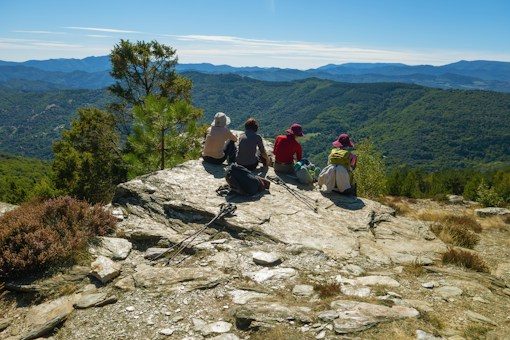
Hiking Sticks vs. Hiking Staff: Which Is Better?
A pair of trekking poles and a single hiking staff serve slightly different purposes.
- Trekking poles: Best suited to hikers who want two points of support, adjustable length, and greater balance on varied terrain.
- Hiking staff: A single staff can be useful for casual hiking, walking, and situations where you prefer a simple traditional design.
For technical trails and backpacking, a pair of trekking poles is generally more versatile. For easy trails and everyday walking, a single staff may be all you need.
Who Should Consider Using Hiking Poles?
Trekking poles can be useful for beginners, experienced hikers, backpackers, and anyone who wants additional stability on uneven terrain. They may also be particularly useful for hikers carrying heavier packs or traveling over steep descents.
However, people with a medical condition, significant balance problems, or an existing injury should not assume trekking poles are a substitute for professional medical or rehabilitation advice.
Our Practical Buying Checklist
Before buying hiking sticks, use this checklist:
- ✓ Appropriate adjustable length
- ✓ Comfortable grips
- ✓ Secure locking mechanism
- ✓ Suitable shaft material
- ✓ Replaceable tips if available
- ✓ Appropriate weight for your hiking style
- ✓ Compact size if you travel frequently
- ✓ Good warranty or manufacturer support
- ✓ Positive reviews from hikers with similar use cases
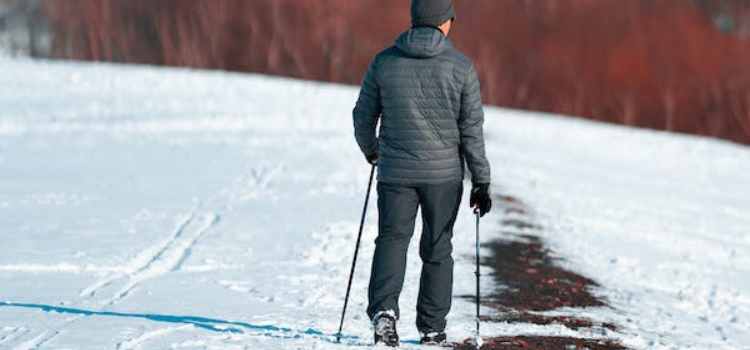
Final Verdict: Are Hiking Sticks Worth It?
For many hikers, yes. Trekking poles can provide useful stability, particularly on uneven terrain, steep descents, stream crossings, and hikes where you’re carrying a backpack. Research supports benefits related to stability and lower-extremity loading, although poles also increase upper-body activity and may increase cardiovascular demand.
The key is choosing poles that fit your hiking style and learning how to use them correctly. You don’t need the most expensive carbon-fiber model to get started. A well-adjusted, properly maintained pair that fits your terrain can be a valuable addition to your hiking gear.
Frequently Asked Questions About Hiking Sticks
What are hiking sticks called?
Hiking sticks are commonly called trekking poles. A single traditional pole is often called a hiking staff or walking staff.
Are trekking poles better than a single hiking stick?
It depends on your needs. Two trekking poles provide support on both sides of the body and are particularly useful on uneven or steep terrain. A single hiking staff is simpler and may be sufficient for casual hiking.
How high should hiking sticks be?
As a starting point, adjust the poles so your elbows are approximately 90 degrees when standing naturally on level ground. You can make small adjustments for comfort and terrain.
Are carbon-fiber hiking poles better than aluminum?
Neither is universally better. Carbon fiber is attractive to hikers who prioritize low weight, while aluminum is often preferred for its durability, affordability, and ability to tolerate impacts.
Can trekking poles help with knee strain?
Trekking poles can reduce certain lower-extremity forces and loading during hiking, particularly during downhill movement, but individual results vary. They should not be considered a treatment for knee pain or an injury.
Can hiking sticks prevent falls?
Trekking poles can provide additional points of contact and may improve stability, but they cannot prevent every fall. Always assess the terrain and use appropriate footwear and hiking technique.
Can children use trekking poles?
Children can use appropriately sized trekking poles when supervised and when the poles are suitable for their height and activity. They should learn basic pole technique before using them on challenging terrain.
How do I clean trekking poles?
Remove dirt and mud with a soft cloth and follow the manufacturer’s cleaning instructions. Allow the components to dry before long-term storage.
Can I bring hiking sticks on a plane?
Air-travel rules vary, so you should check the current requirements of your departure airport, security authority, and airline. Do not assume trekking poles are permitted in carry-on luggage. When in doubt, check whether they need to be transported as checked baggage.
Author & Editorial Note
About this guide: This article is intended to provide practical information for hikers comparing trekking poles and hiking staffs. Product recommendations should be based on the specifications of the individual product, current manufacturer information, and your intended use.
Research note: Information about the physical effects of trekking poles has been checked against published research on hiking and pole use. Evidence indicates that trekking poles can affect lower-extremity loading, stability, muscle activity, and cardiovascular demand; individual experiences can vary.
Last reviewed: September 2026. Always check the manufacturer’s instructions and current airline/security rules for your specific equipment and trip.