Why Do Camping Chairs Cut Off Leg Circulation? (And How to Fix It)
As an Amazon Associate I earn from qualifying purchases.
You sit down by the fire, and ten minutes later your calves tingle. Your feet feel heavy. By the time dinner is ready, you’re shifting around like you’re sitting on a rock.
It’s not you. It’s the chair, and most of the time it’s a fit problem you can fix.
Quick answer: Camping chairs cut off leg circulation when the front edge of the seat presses into the back of your thighs or knees. This usually happens when the seat is too deep, too low, or tilted wrongly for your leg length.
Why it happens
Behind your knees and along your thighs, blood vessels and nerves sit close to the surface. Steady pressure there slows blood flow and irritates nerves. That’s what causes the numbness, pins and needles, or cold feet.
Camping chairs make this worse in four ways:
- Seat is too low for your legs. Your knees rise above your hips, and your weight shifts onto the front edge.
- Seat is too deep. If your back is against the backrest and the edge still hits your calves, the seat is too long for you.
- A hard front bar or tube. Many folding chairs have a frame bar right under the thighs. Fabric sags over it and concentrates the pressure.
- Sling-style seats. One camper quit using bag chairs because they cut off circulation in the back of his legs. Deep slings can squeeze the thighs like a hammock.
Key takeaway: The problem is rarely your body. It’s the gap between your leg length and the chair’s seat height and depth.
How to know if your chair is the problem
Sit in the chair for five minutes. Check these three things:
- Feet flat? Your feet should touch the ground without your knees rising much above your hips.
- Two-finger gap? You should be able to slide two fingers between the seat edge and the back of your knee.
- Edge pressure? Run your hand along the front edge. If you can feel a hard bar or tube through the fabric, that is your pressure point.
If you fail any of these, keep reading.
How to fix it (step by step)
Step 1: Sit back and shift your weight
Sit all the way back so your hips touch the backrest. This moves the pressure away from your knees. Then change position every 10 to 15 minutes. Even small shifts keep blood moving.
Step 2: Pad the front edge
Roll a towel, fleece, or spare jacket and lay it over the front edge of the seat. This spreads the pressure out. A foam sit pad works even better.
Step 3: Use a footrest
If your feet dangle or your knees feel jammed, put your feet on a cooler, a log, or a small stool. Raising your feet takes the load off the back of your thighs.
Step 4: Raise the seat
If the chair is too low, a folded blanket or foam pad under you adds height. Taller folks who stretch their legs out should also check that nothing presses into the hamstrings.
Step 5: Break up the sit
Stand up and walk around every 30 minutes or so. Rotate your ankles. Squeeze your calves a few times. It takes ten seconds and it works.
Key takeaway: Pad the edge, support your feet, sit back, and move often. These four habits fix most cases.
Common mistakes
- Crossing your legs for long periods. It adds pressure behind the knee.
- Slouching forward. This shoves your weight onto the front edge.
- Buying by weight rating only. A chair can carry 300 lbs and still have a seat that is too deep for you.
- Tightening the seat fabric. Some chairs let you adjust tension. A taut seat can dig in harder.

What to look for in a chair that won’t cut off circulation
When fixes aren’t enough, it’s time for a better chair. Look for these features:
- Seat height around knee level or slightly higher. This is easier on shorter legs and easier to stand up from.
- A shorter seat depth. Good if you’re short, or if you’ve been fighting the front edge.
- Curved or padded front edge. A rounded, down-turned lip avoids pressing on the thighs.
- No hard bar under the thighs. This is a personal call, since some campers prefer a bar for relaxing while others skip it for long sits. If you get numb legs, choose the barless design. pickfu
- Breathable, slightly stiff fabric. Mesh seats spread weight better than baggy slings.
- Adjustable recline or footrest. These let you change leg position through the evening.
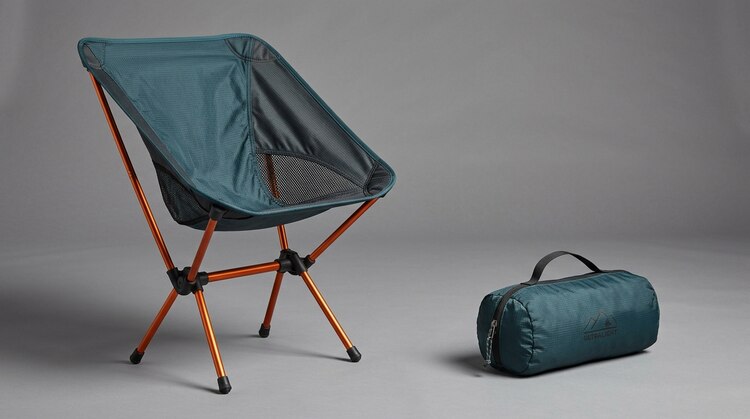
Gear types worth comparing: high-back camping chairs with a rounded seat edge, chairs with built-in footrests, low-profile loungers with full-length support, and padded seat cushions you can add to any chair you already own.
Even well-reviewed chairs get this complaint. A reviewer who liked an ultralight chair still noted the design cut off circulation behind his knees as someone with short legs. A good chair for one person may be a bad one for another, so check the fit rather than the hype.
When numb legs are more than annoying
Brief tingling that goes away when you stand is common and usually harmless. See a doctor if you have:
- Swelling, warmth, or redness in one leg
- Pain that doesn’t go away after moving
- Numbness that returns every time you sit
- Any chest pain or shortness of breath alongside leg symptoms
Long periods of pressure and no movement are a known concern for circulation, so don’t ignore symptoms that keep coming back.
Read more: How to Easily Get Out of a Low Camping Chair (Knee-Friendly Tips)
FAQ
Why do my legs go numb in camping chairs but not at home?
Camping chairs are usually lower, with harder edges and less adjustability. Home furniture tends to match leg length better.
Are chairs with a support bar bad for circulation?
Not always. A bar adds pressure under the thighs for some people, but it doesn’t bother others. If you get numb legs, go barless or pad the bar.
What seat height is best?
One that lets your feet rest flat with your knees at about hip level. Shorter people often do better with lower seats and shallower depth, and taller people with higher seats.
Can a cushion fix it?
Often, yes. A foam or inflatable cushion on the seat spreads pressure over a bigger area.
How often should I get up?
Every 30 minutes is a good rule. Even a short walk helps.
Final thoughts
Camping chairs cut off circulation because the seat doesn’t fit your legs. Sit back, pad the edge, prop your feet up, and keep moving. If that doesn’t work, pick a chair with the right seat height, a shorter depth, and a rounded edge.