As an Amazon Associate I earn from qualifying purchases.
Mesh camping chairs are comfortable, breathable, and easy to carry, but they can collect sweat, body oils, dirt, and moisture after outdoor adventures. If you pack your chair while it is still damp, mold and mildew may develop on the mesh. This guide will help you with How to Clean Mold and Sweat from Mesh Camping Chairs.
The good news is that most everyday dirt and sweat stains can be cleaned with mild soap, lukewarm water, and a soft brush. In this guide, I’ll show you How to Clean Mold and Sweat from Mesh Camping Chairs, remove unpleasant odors, deal with mold carefully, and prevent the problem from coming back.

What You’ll Need to Clean a Mesh Camping Chair
Before you start, gather a few basic cleaning supplies. You probably already have most of them at home.
- Mild dish soap or gentle laundry detergent
- Lukewarm water
- Soft-bristled brush or old toothbrush
- Microfiber cloth or soft sponge
- Clean bucket
- Garden hose or clean water for rinsing
- Dry towel
- Protective gloves when handling visible mold
- White vinegar, only if suitable for your chair’s fabric and care instructions
Pro tip: Avoid harsh detergents, stiff wire brushes, and abrasive cleaners. Some mesh camping chairs have protective coatings that can be damaged by aggressive cleaning.
Step 1: Check the Chair Before Cleaning
Start by opening the chair completely and inspecting the seat, backrest, armrests, seams, and underside. Look for loose stitching, torn mesh, rust, or damaged folding joints.
- Check the manufacturer’s care label.
- Remove any cushions or accessories that can be cleaned separately.
- Inspect the mesh for tears or weak areas.
- Look inside the folding joints for sand and dirt.
- Make sure the chair is suitable for water-based cleaning.
If the chair has special coatings, electrical components, or removable fabric, follow the manufacturer’s cleaning instructions before applying any solution.
Step 2: Remove Loose Dirt, Sand, and Debris
Do not immediately soak a dirty camping chair. Dry dirt, sand, leaves, and food crumbs should be removed first. Once they become wet, they can turn into a muddy layer that is harder to clean from the mesh.
- Shake the chair outdoors to remove loose debris.
- Use a soft brush to clean the seat and backrest.
- Brush the underside of the chair.
- Pay attention to seams, pockets, and corners.
- Use an old toothbrush to remove sand from folding joints.
My outdoor cleaning tip: Sand often hides inside the hinges and beneath the seat. Remove it before washing so it does not turn into gritty mud or scratch the frame while you fold the chair.
Step 3: Prepare a Mild Cleaning Solution
For ordinary sweat, dirt, and body-oil buildup, mild soap and lukewarm water are usually the best starting point.
Simple Cleaning Mixture
- 1 gallon (3.8 liters) of lukewarm water
- 1–2 teaspoons of mild dish soap
Mix the soap into the water. You do not need a bucket full of thick suds. Too much detergent can leave residue inside the mesh and attract more dirt later.
Important: Always check the chair’s care instructions before using vinegar, bleach, oxygen bleach, or another chemical cleaner. Different mesh fabrics and coatings have different tolerances.
Step 4: Clean Sweat and Body-Oil Stains
Sweat stains commonly develop on the seat, backrest, armrests, and headrest. These areas collect body oils, sunscreen, dust, and perspiration during hot-weather camping.
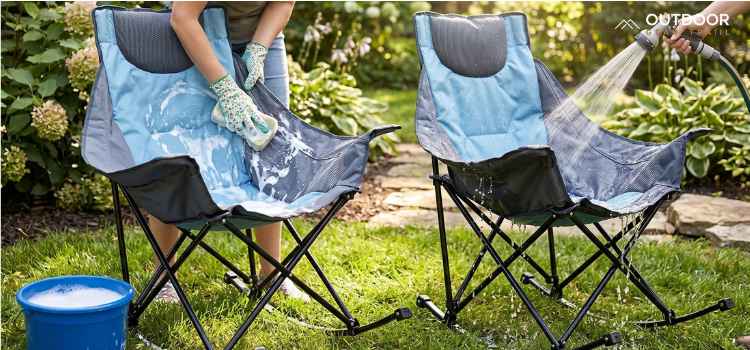
- Dip a soft sponge or microfiber cloth into the soapy water.
- Wring it out so it is damp rather than dripping wet.
- Wipe the seat and backrest gently.
- Use a soft-bristled brush for stubborn dirt.
- Clean the armrests and high-contact areas carefully.
- Work in small sections instead of flooding the whole chair.
For stubborn sweat stains, repeat the mild soap treatment rather than immediately switching to strong chemicals. Gentle cleaning is less likely to damage the mesh or its coating.
Pro tip: The armrests and upper backrest often need more attention than the rest of the chair. They collect sweat and skin oils even when the seat looks reasonably clean.
Step 5: Remove Mold and Mildew from Mesh
Mold and mildew can appear when a camping chair is stored wet after rain, dew, or a humid camping trip. You may notice dark spots, fuzzy growth, or a musty smell.
Safety First
If you see substantial mold growth, avoid aggressive brushing indoors. Work outdoors or in a well-ventilated area and wear gloves. People with allergies or asthma should avoid handling moldy materials when possible.
How to Clean Surface Mold
- Move the chair outdoors or to a well-ventilated location.
- Open the chair fully so you can reach the affected areas.
- Remove loose surface dirt gently.
- Check the fabric care instructions before using a cleaner.
- Apply a mild detergent solution suitable for the mesh.
- Gently scrub the affected area with a soft brush.
- Rinse thoroughly with clean water.
- Allow the chair to dry completely before storage.
Cleaning visible mold does not always eliminate all contamination. If mold has deeply penetrated the fabric, keeps returning, or covers a large area, replacing the affected fabric or chair may be safer and more practical.
Can You Use White Vinegar?
White vinegar is sometimes used for odor and mildew-cleaning applications, but it is not a guaranteed mold killer. It may also affect certain fabrics, coatings, or metal finishes.
- Check the manufacturer’s cleaning instructions first.
- Test the solution on a small hidden area.
- Use only a dilution suitable for the fabric.
- Rinse thoroughly after cleaning.
- Never mix vinegar with bleach or other cleaning chemicals.
My advice: Start with mild soap and water for ordinary dirt. Use a fabric-safe mold-cleaning product only when the care instructions allow it. Do not assume that a homemade vinegar mixture will solve deeply embedded mold.
Step 6: Rinse the Mesh Camping Chair Thoroughly
After scrubbing, remove all soap and cleaning residue. Detergent left inside the mesh can attract dust and leave the fabric feeling sticky.
- Use clean water from a bucket or a gentle garden hose.
- Rinse the seat, backrest, armrests, and underside.
- Pay attention to the mesh openings and seams.
- Continue rinsing until no soap residue remains.
- Avoid high-pressure water jets.
Do not force water into folding mechanisms or electrical components. If the frame has moving parts, keep them as dry as practical during the cleaning process.
Step 7: Dry the Chair Completely
Drying is one of the most important parts of cleaning a mesh camping chair. A chair that looks clean can still hold moisture inside seams, folds, and fabric layers.
- Open the chair completely.
- Use a clean towel to remove excess water.
- Place it in a well-ventilated area.
- Allow air to circulate through the mesh.
- Turn the chair over if necessary.
- Check the underside, seams, and frame joints.
- Store the chair only after it is completely dry.
Pro tip: Never fold a damp camping chair and place it inside a storage bag. Trapped moisture is one of the easiest ways to create a musty smell and encourage mildew.
Step 8: Clean the Frame and Folding Joints
While cleaning the mesh, do not forget the frame. Dirt, sand, and moisture can collect around the hinges, leg feet, armrests, and connection points.
- Wipe aluminum or steel tubing with a damp cloth.
- Use mild soap for greasy or dirty areas.
- Clean plastic armrests and handles.
- Remove sand from hinges with a soft toothbrush.
- Dry metal parts thoroughly.
- Check for rust, cracks, or loose screws.
Avoid spraying lubricant or oil onto the mesh. If a hinge needs lubrication, use only a product recommended for that chair’s mechanism.

Pros and Cons of Cleaning a Mesh Camping Chair at Home
➕ Pros
- Affordable and easy to do at home.
- Mild soap removes ordinary sweat and dirt.
- Helps reduce unpleasant odors.
- Can extend the useful life of the chair.
- No special equipment is usually needed.
➖ Cons
- Deep mold may be difficult to remove.
- Some fabrics cannot tolerate strong cleaners.
- Drying can take time in humid weather.
- Damaged mesh may need replacement.
- Improper scrubbing can weaken the fabric.
Quick Troubleshooting Guide
| Problem | What to Do |
|---|---|
| Sweat stains remain | Repeat mild soap cleaning and gently brush the affected area. |
| Musty smell after washing | Check seams and the underside for trapped moisture or mold. |
| Black or green mold spots | Clean outdoors with a suitable fabric-safe cleaner. Persistent mold may require replacement. |
| Mesh feels sticky | Rinse again with clean water to remove soap residue. |
| Fabric looks faded | Avoid harsh chemicals and prolonged direct sunlight. |
| Sand stuck in joints | Use a soft toothbrush and remove debris carefully. |
| Chair still smells | Inspect hidden seams, padding, and areas that may remain damp. |

How Often Should You Clean a Mesh Camping Chair?
Your cleaning schedule depends on how often you use the chair and the weather conditions during your trips.
- After every camping trip: Remove loose dirt, wipe visible sweat, and dry the chair.
- Every few uses: Clean the seat and backrest with mild soap if you notice grime or odor.
- After rainy or humid trips: Dry the chair immediately and inspect it for mildew.
- Before long-term storage: Give the chair a thorough cleaning and make sure every part is dry.
How to Prevent Mold and Sweat Buildup
Prevention is much easier than removing stubborn mold later. A few simple habits can keep your camping chair fresh between adventures.
- Keep the Chair Dry:Do not store the chair while it is wet from rain, dew, or washing. Give the mesh enough time to dry completely.
- Improve Airflow:Avoid leaving a damp chair folded inside a tightly packed camping bag. Open it up in a ventilated area whenever possible.
- Wipe Sweat Regularly:A quick wipe of the armrests and backrest after a hot day can reduce sweat and body-oil buildup.
- Keep Food and Drinks Away:Spilled drinks and food residue attract dirt and can contribute to unpleasant odors. Clean spills as soon as possible.
- Store the Chair in a Dry Place:Choose a clean, ventilated storage area instead of a damp garage corner, wet tent, or humid storage room.
- Inspect Before Every Trip:Check for mold spots, loose stitching, rust, and damaged folding parts before taking the chair outdoors.
Related Reading: Padded Mesh Oversized Folding Chair Review
If you are looking for a comfortable mesh chair for camping, relaxing outdoors, or spending time around the campfire, check out our detailed review of the Padded Mesh Oversized Folding Chair.
Our review covers the chair’s comfort, mesh design, size, and features to consider before buying. It is a useful next step if you want to compare cleaning needs with the features of a padded oversized folding chair.

Frequently Asked Questions
Can I put a mesh camping chair in the washing machine?
Usually, no. Most folding camping chairs have attached frames and are not designed for machine washing. Check the manufacturer’s instructions before attempting to remove or machine-wash the fabric.
Can I use baking soda to remove the smell?
Baking soda may help absorb some odors, but it will not reliably remove mold contamination. Clean the fabric appropriately and dry it thoroughly.
Is vinegar safe for mesh camping chairs?
It depends on the fabric and coating. Vinegar can affect certain materials, so check the care instructions and test a small hidden area before using it on the entire chair.
Can I use a pressure washer?
A pressure washer is generally too aggressive for mesh fabric, stitching, and protective coatings. Use a gentle hose or bucket instead.
Why does my chair smell bad after cleaning?
The most common possibilities include trapped moisture, soap residue, or mold remaining in hidden seams and padding. Inspect the entire chair and allow it to dry fully.
Should I replace a moldy camping chair?
If the mold is extensive, deeply embedded, repeatedly returns, or the chair cannot be cleaned safely according to its care instructions, replacement may be the more practical option.
Final Thoughts
Cleaning mold and sweat from a mesh camping chair does not have to be difficult. Start by removing loose dirt, use mild soap and lukewarm water, gently scrub the mesh, rinse thoroughly, and let the chair dry completely.
Avoid harsh chemicals and high-pressure cleaning unless the manufacturer specifically allows them. The most important habit is simple: never store your mesh camping chair while it is damp.
A few extra minutes of drying after each camping trip can help keep your chair fresh, comfortable, and ready for your next outdoor adventure.